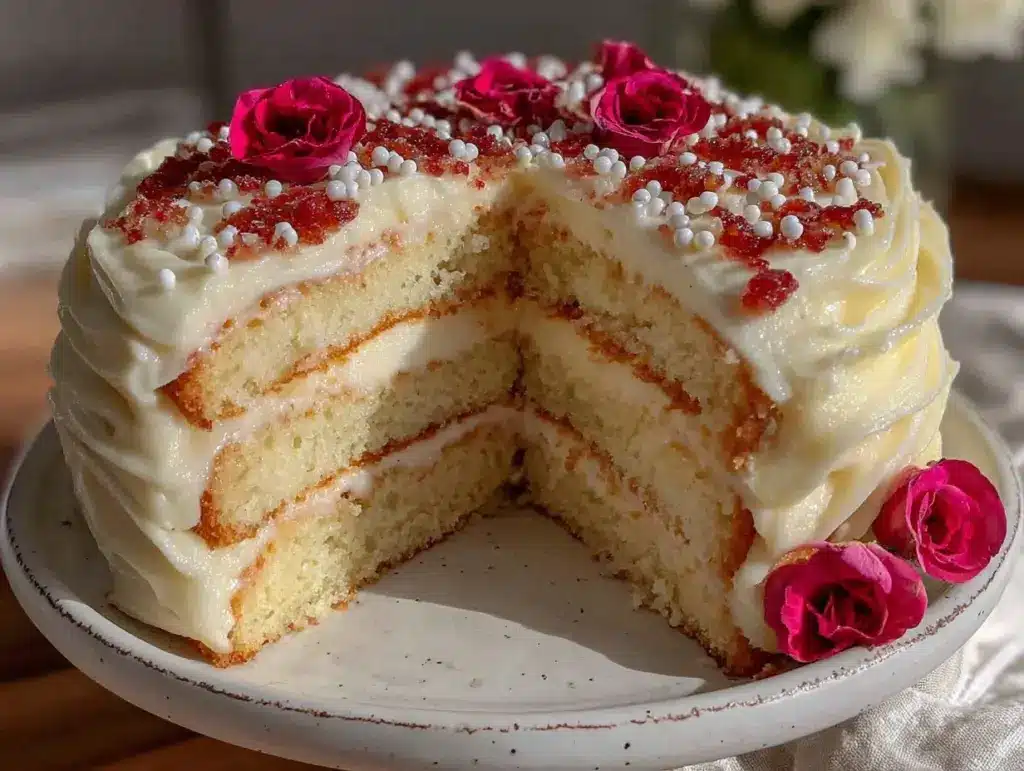
“You’ve got to try this—trust me!” That’s what my friend Jenna insisted one breezy spring afternoon as she handed me a slice of this Perfect Rose and Champagne Layer Cake with Buttercream Frosting. Honestly, I was a bit skeptical at first. A cake that combines the delicate aroma of roses with the festive sparkle of champagne? Seemed almost too fancy for my usual weeknight baking. But then that first bite happened—light, fluffy layers tinged with floral notes, balanced by the subtle fizz of champagne, all wrapped up in a smooth buttercream that just melts on your tongue. It was unexpected, comforting, and surprisingly approachable all at once.
That cake became my go-to whenever I needed to impress without stress. I’d make it for brunches that stretched into late afternoons or those quiet evenings when a little celebration felt right, even if it was just for me. The rose essence isn’t overpowering—it whispers, really—and the champagne adds a touch of warmth and festivity without any harsh bite. It’s like the cake knows how to keep things elegant but cozy, which is kind of how I like my desserts to be.
Every time I bring this cake out, people ask for the recipe, and it’s become a subtle tradition at our gatherings. The buttercream frosting, silky and just sweet enough, holds it all together like a good conversation that leaves you smiling long after it’s ended. So, if you’re looking for a cake that’s both a little fancy and totally doable, this one’s got your name on it. You might find yourself making it more often than you planned—like I did.
Why You’ll Love This Recipe
After testing this Perfect Rose and Champagne Layer Cake with Buttercream Frosting several times (yes, I admit it, I’ve baked it more times than I can count this month!), I can say it’s genuinely one of those recipes that hits all the right notes. Here’s why it deserves a spot in your baking repertoire:
- Quick & Easy: This cake comes together in about 1 hour and 15 minutes, including baking and frosting—ideal for last-minute celebrations or spontaneous baking moods.
- Simple Ingredients: No need for exotic or hard-to-find items. Most are pantry staples, with rose water and champagne adding a unique twist you probably already have or can easily grab.
- Perfect for Special Occasions: Whether it’s a bridal shower, birthday brunch, or just a Sunday treat, this cake carries a festive vibe without fuss.
- Crowd-Pleaser: Kids, adults, the picky and adventurous eaters alike have all given this cake rave reviews. The balance of flavors is just right.
- Unbelievably Delicious: The texture is moist and tender, while the buttercream frosting is silky smooth, with just a hint of rose to keep things interesting.
What really sets this cake apart is the technique of folding champagne into the batter—this adds a subtle lift and flavor that makes each bite feel like a celebration. Plus, the buttercream frosting is whipped just right to be fluffy but stable, which means you can decorate it beautifully without stress. It’s not just another rose-flavored cake; it’s the rose and champagne combo that you’ll find yourself craving again and again.
Honestly, this recipe makes me close my eyes after that first bite and think, “Yep, this is the good stuff.” It’s a cake that feels fancy but isn’t intimidating—perfect for anyone wanting to impress without the hassle.
What Ingredients You Will Need
This recipe uses simple, wholesome ingredients to deliver bold flavor and satisfying texture without the fuss. You’ll find that most ingredients are common, with just a couple of special touches to bring in that signature rose and champagne flair.
- For the Cake Batter:
- All-purpose flour – 2 ½ cups (310 g), sifted
- Baking powder – 2 ½ teaspoons
- Salt – ½ teaspoon
- Unsalted butter – 1 cup (226 g), softened (I prefer Land O’Lakes for creaminess)
- Granulated sugar – 1 ¾ cups (350 g)
- Large eggs – 4, room temperature
- Whole milk – 1 cup (240 ml), room temperature
- Champagne – ½ cup (120 ml), preferably brut-style (avoid sweet varieties for balance)
- Rose water – 1 teaspoon (use a quality brand like Waters of Alchemy for subtle floral notes)
- Vanilla extract – 1 teaspoon
- For the Buttercream Frosting:
- Unsalted butter – 1 cup (226 g), softened
- Powdered sugar – 4 cups (480 g), sifted
- Heavy cream – 2 to 3 tablespoons (30-45 ml)
- Rose water – ½ teaspoon (adjust to taste)
- Salt – pinch
- Pink gel food coloring – optional, for that rosy hue
If you want to keep the cake gluten-free, swapping the all-purpose flour with a 1:1 gluten-free baking flour blend works well, though the texture will be a bit different. For a dairy-free version, use coconut milk instead of whole milk and a vegan butter substitute for the butter.
Pro tip: When choosing champagne, I like to pick a brut or extra brut style, which provides a crisp dryness that contrasts beautifully with the sweetness of the buttercream. Also, be careful not to overdo the rose water—it can get overpowering quickly, and the goal is a gentle floral note, just like in the rose-shaped apple tarts I made last year.
Equipment Needed
- Two 8-inch (20 cm) round cake pans – nonstick or well-greased
- Mixing bowls – medium and large
- Electric hand mixer or stand mixer – indispensable for whipping that buttercream to perfection
- Measuring cups and spoons – precise measurements help keep the champagne cake light and balanced
- Rubber spatula – for folding ingredients gently without deflating the batter
- Cooling racks – to cool cakes evenly and prevent sogginess
- Offset spatula – ideal for smooth frosting application
- Parchment paper – for lining pans to ensure easy cake release
If you don’t have a stand mixer, a hand mixer works just fine—I’ve made this cake with both. For budget-friendly pans, aluminum ones with a nonstick coating do the trick. Just make sure you grease and flour them well or use parchment circles to avoid any sticking disasters.
One tip I learned the hard way: always let your cake layers cool completely before frosting. Trying to frost warm cakes? The buttercream melts, and it’s a slippery mess. Patience pays off, I promise.
Preparation Method
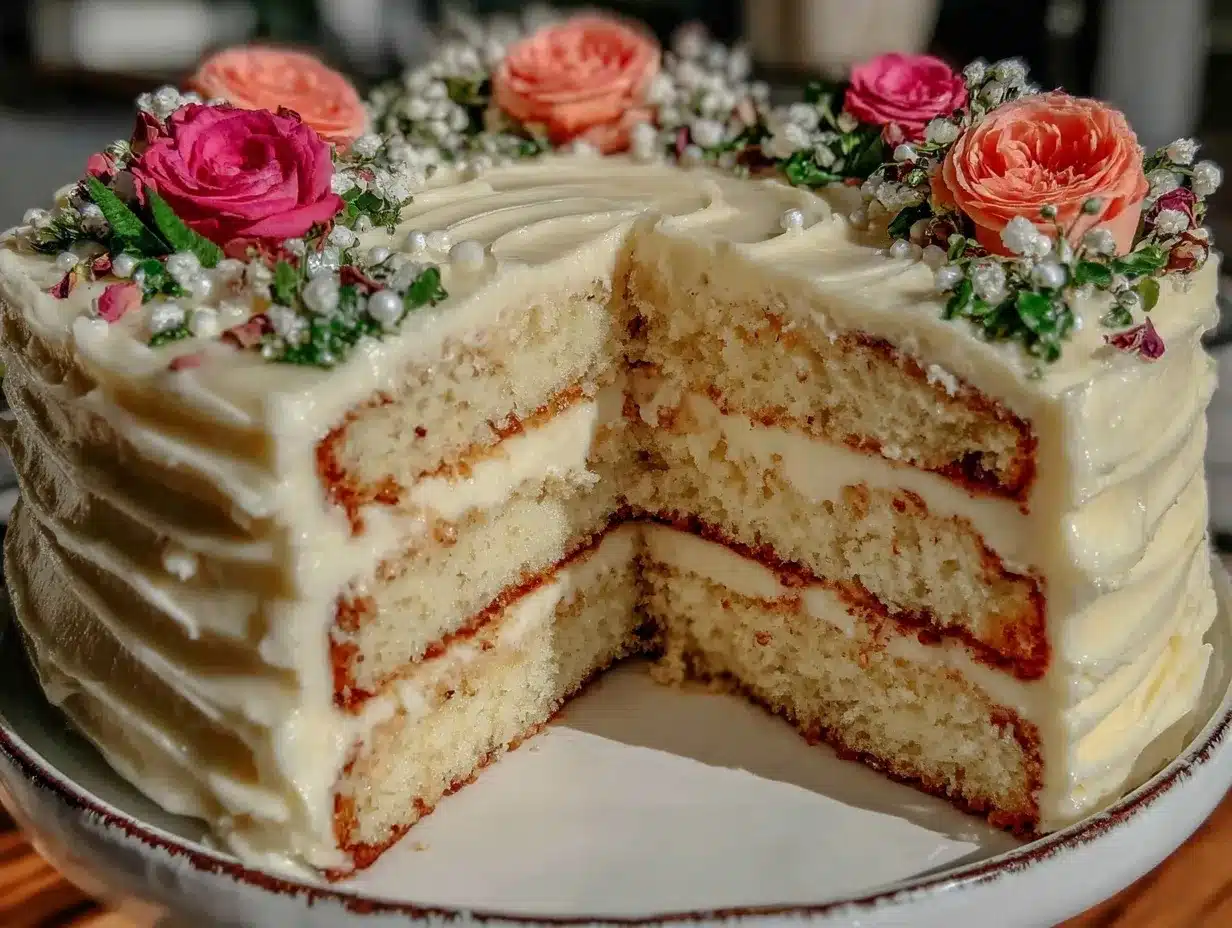
- Prep your pans and preheat the oven: Preheat the oven to 350°F (175°C). Grease two 8-inch cake pans thoroughly and line the bottoms with parchment paper circles for easy removal. This step takes about 10 minutes.
- Sift dry ingredients: In a medium bowl, sift together 2 ½ cups (310 g) all-purpose flour, 2 ½ teaspoons baking powder, and ½ teaspoon salt. Set aside. This ensures an even rise and tender crumb.
- Cream butter and sugar: In a large bowl, use your mixer to beat 1 cup (226 g) softened unsalted butter and 1 ¾ cups (350 g) granulated sugar until light and fluffy—about 3 to 5 minutes. You’ll notice the color lighten and the texture become airy, which is a good sign.
- Add eggs one at a time: Crack in 4 large eggs, one by one, beating well after each addition. This helps maintain the batter’s stability and volume.
- Combine liquids: In a separate bowl, whisk together 1 cup (240 ml) whole milk, ½ cup (120 ml) champagne, 1 teaspoon rose water, and 1 teaspoon vanilla extract.
- Alternate adding dry and wet ingredients: With the mixer on low speed, add the dry flour mixture in three parts, alternating with the milk-champagne mixture in two parts. Start and finish with the dry ingredients. Mix just until combined—overmixing can make the cake dense.
- Divide and bake: Evenly pour the batter into the two prepared pans and smooth the tops with a spatula. Bake for 25 to 30 minutes, or until a toothpick inserted in the center comes out clean. The cake should spring back lightly when pressed.
- Cool completely: Let the cakes cool in the pans for 10 minutes, then turn them out onto cooling racks. Cool fully before frosting—about 1 hour.
- Make the buttercream: Beat 1 cup (226 g) softened unsalted butter on medium speed until creamy, about 2 minutes. Gradually add 4 cups (480 g) powdered sugar, one cup at a time, beating on low speed to combine. Add 2 to 3 tablespoons (30-45 ml) heavy cream, ½ teaspoon rose water, and a pinch of salt. Increase mixer speed to high and whip until fluffy, about 3 to 5 minutes. Add pink gel food coloring if you want that pretty rosy hue.
- Assemble the cake: Place one cake layer on your serving plate. Spread a thick, even layer of buttercream on top. Gently place the second cake layer on top and frost the entire cake with the remaining buttercream. Use an offset spatula to smooth the sides and top. Chill for 20 minutes to set if desired.
Pro tip: If your buttercream feels too stiff, add a splash more cream. Too soft? Add a bit more powdered sugar. And if you want a lighter champagne flavor, try champagne cupcakes for an alternative treat using a similar approach.
Cooking Tips & Techniques
One thing I learned early on is that folding the champagne into the batter gently is key. You want to keep as much air as possible, so your cake stays light and fluffy rather than turning dense or soggy. Use a rubber spatula and fold with care, you know?
Another tip: don’t skip sifting the flour and baking powder. It might feel like an extra step, but it really makes the crumb finer and the rise more even. Trust me, I’ve baked plenty of cakes that came out heavy because I rushed this part.
When it comes to buttercream, temperature matters. If your butter is too cold, it won’t whip up well, and if it’s too warm, the frosting gets greasy. Room temperature is your friend here—soft but not melting.
Also, patience is crucial. Let the cakes cool fully before frosting. If you frost warm layers, the buttercream melts and runs, and no one wants that mess. I’ve learned this the hard way more than once!
Finally, when layering and frosting, use an offset spatula for smoother, neater finishes. If you want to get fancy, chilling the cake briefly between crumb coats helps create a clean finish.
Variations & Adaptations
Want to switch things up? Here are a few ideas I’ve tried or thought about:
- Floral Twist: Swap rose water for lavender extract for a different floral note, inspired by my experiments with lavender lemon bars. It’s a lovely, subtle change.
- Fruit Addition: Add a layer of fresh raspberries or strawberries between the cake and frosting for a juicy contrast. This works well in spring and summer when berries are at their peak.
- Champagne Substitute: Use sparkling white grape juice for a non-alcoholic version that still brings the bubbly vibe.
- Frosting Flavors: Try swapping half the buttercream for cream cheese frosting for tang and richness.
- Gluten-Free: Use a gluten-free flour blend as a 1:1 swap—though texture shifts a bit, it still tastes fantastic.
Personally, I once swapped rose water with a splash of orange blossom water and added chopped pistachios on top for a Middle Eastern-inspired twist. It was a hit at a family brunch!
Serving & Storage Suggestions
Serve this cake at room temperature to let all the delicate flavors shine through. A slice with a cup of tea or a glass of chilled champagne is just dreamy. If you want to make a whole celebration around it, pairing it with light, fresh dishes like a spring vegetable frittata balances the richness nicely.
Store any leftovers in an airtight container in the refrigerator for up to 4 days. The flavors actually deepen after a day or two, so if you can wait, the cake tastes even better the next day. Just remember to take it out about 30 minutes before serving to soften the buttercream.
If you want to freeze it, wrap the cake tightly in plastic wrap and foil. Freeze for up to 2 months. Thaw overnight in the fridge, then bring to room temperature before serving. The texture remains surprisingly fresh.
Nutritional Information & Benefits
This cake is a treat, but using real ingredients like butter, eggs, and champagne means you’re getting quality flavors without artificial fuss. A typical slice (1/12th of the cake) has roughly 350-400 calories, with moderate protein from eggs and butter.
Rose water is known for its antioxidant properties and can have mild calming effects, while champagne’s alcohol content mostly bakes out during cooking, leaving only subtle flavor behind. This recipe is naturally gluten-full, but you can make it gluten-free with the right flour swaps.
It’s not low-carb or low-fat, but it’s not loaded with preservatives or artificial flavorings either. For me, it fits into a balanced approach to eating—indulging thoughtfully and savoring every bite.
Conclusion
This Perfect Rose and Champagne Layer Cake with Buttercream Frosting is a recipe I keep coming back to—not just because it tastes amazing, but because it feels like a little celebration every time I slice into it. It’s approachable enough for a casual weekend, yet elegant enough to impress guests without breaking a sweat.
Feel free to tweak the floral notes or add your favorite fillings to make it truly yours. I love that it’s a canvas for creativity, yet reliably delicious every time. If you’ve enjoyed this recipe, I’d love to hear how you make it your own or what occasions you bake it for—there’s something special about sharing these moments.
So go ahead, try this cake and let it surprise you like it did me. It’s a treat worth savoring.
Frequently Asked Questions
- Can I use sparkling wine instead of champagne? Yes! Any dry sparkling wine will work well and add a similar bubbly flavor.
- What if I don’t have rose water? You can omit it or replace it with a small amount of vanilla or almond extract, although the floral note will be missing.
- How do I prevent the cake from drying out? Don’t overbake it—check for doneness at 25 minutes. Also, store leftovers wrapped tightly and chilled.
- Can I make this cake ahead of time? Absolutely! Bake the layers a day ahead and keep them wrapped in the fridge, then frost just before serving.
- Is the buttercream stable for decorating? Yes, this buttercream holds up well at room temperature for a few hours and pipes beautifully for decorations.
Pin This Recipe!
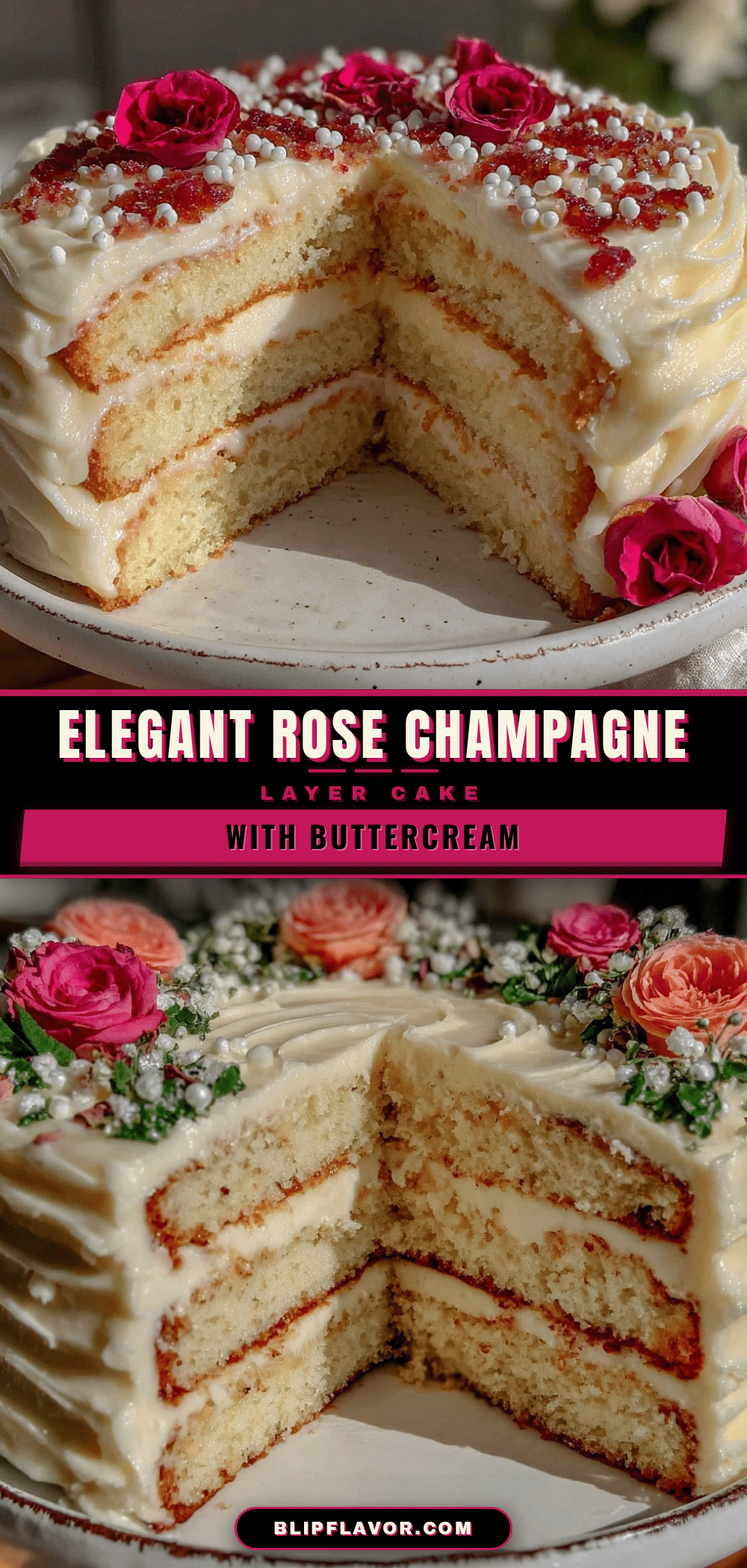
Perfect Rose and Champagne Layer Cake with Buttercream Frosting
A light and fluffy layer cake combining delicate rose aroma with festive champagne flavor, wrapped in silky smooth buttercream frosting. Perfect for special occasions and approachable enough for any baker.
- Prep Time: 25 minutes
- Cook Time: 30 minutes
- Total Time: 1 hour 15 minutes
- Yield: 12 servings 1x
- Category: Dessert
- Cuisine: American
Ingredients
- 2 ½ cups (310 g) all-purpose flour, sifted
- 2 ½ teaspoons baking powder
- ½ teaspoon salt
- 1 cup (226 g) unsalted butter, softened
- 1 ¾ cups (350 g) granulated sugar
- 4 large eggs, room temperature
- 1 cup (240 ml) whole milk, room temperature
- ½ cup (120 ml) champagne, preferably brut-style
- 1 teaspoon rose water
- 1 teaspoon vanilla extract
- For the Buttercream Frosting:
- 1 cup (226 g) unsalted butter, softened
- 4 cups (480 g) powdered sugar, sifted
- 2 to 3 tablespoons (30–45 ml) heavy cream
- ½ teaspoon rose water
- Pinch of salt
- Pink gel food coloring (optional)
Instructions
- Preheat the oven to 350°F (175°C). Grease two 8-inch cake pans and line bottoms with parchment paper.
- Sift together flour, baking powder, and salt in a medium bowl; set aside.
- In a large bowl, beat softened butter and granulated sugar with a mixer until light and fluffy, about 3 to 5 minutes.
- Add eggs one at a time, beating well after each addition.
- In a separate bowl, whisk together milk, champagne, rose water, and vanilla extract.
- With mixer on low, alternately add dry ingredients in three parts and wet mixture in two parts, starting and ending with dry. Mix just until combined.
- Divide batter evenly between pans and smooth tops. Bake 25 to 30 minutes or until a toothpick comes out clean.
- Cool cakes in pans for 10 minutes, then transfer to racks to cool completely, about 1 hour.
- For buttercream, beat softened butter on medium speed until creamy, about 2 minutes.
- Gradually add powdered sugar one cup at a time on low speed. Add heavy cream, rose water, and salt. Increase speed to high and whip until fluffy, 3 to 5 minutes. Add pink gel coloring if desired.
- Place one cake layer on serving plate. Spread thick layer of buttercream on top. Place second layer on top and frost entire cake. Smooth with offset spatula.
- Chill cake for 20 minutes to set if desired.
Notes
Fold champagne gently into batter to keep cake light and fluffy. Let cake layers cool completely before frosting to prevent buttercream from melting. Adjust buttercream consistency with more cream or powdered sugar as needed. Use brut or extra brut champagne for best flavor. For gluten-free, substitute flour with gluten-free blend; for dairy-free, use coconut milk and vegan butter.
Nutrition
- Serving Size: 1 slice (1/12th of c
- Calories: 375
- Sugar: 38
- Sodium: 180
- Fat: 18
- Saturated Fat: 11
- Carbohydrates: 52
- Fiber: 1
- Protein: 4
Keywords: rose cake, champagne cake, layer cake, buttercream frosting, floral cake, celebration cake, easy cake recipe