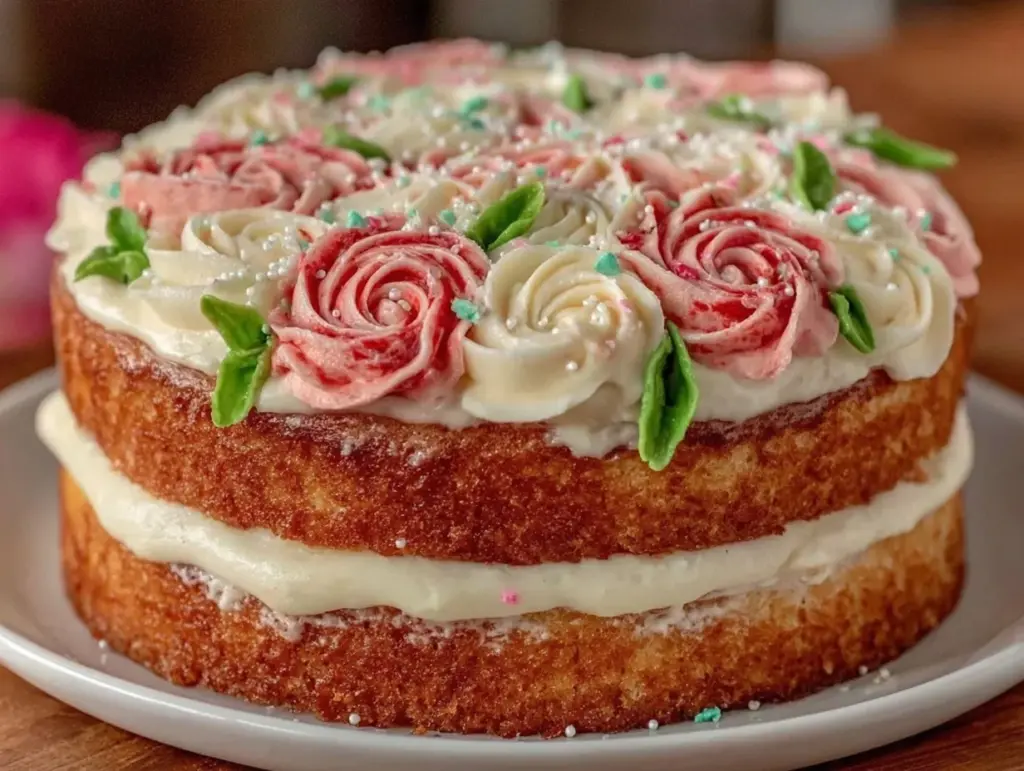
“Can you believe this cake is homemade?” my friend gasped, eyes wide as she admired the delicate buttercream roses crowning the vanilla layers. That moment—standing in my tiny kitchen with flour dust on my hands and a piping bag in mine—felt like a quiet victory. Honestly, I never imagined I’d tackle a cake this fancy on a random Tuesday evening. The idea sparked when I was scrolling through pictures of spring gardens, and somehow, the thought of transforming that soft, blooming beauty into a cake just stuck. The light vanilla sponge paired with those subtle floral buttercream swirls seemed like the perfect way to capture that fleeting spring magic.
At first, I was skeptical about piping buttercream roses myself. I mean, I’m no professional baker, and those intricate flowers looked intimidating. But after a few tries and some trial-and-error (spoiler: a little powdered sugar helps smooth the texture), I found a rhythm that turned out better than expected. The recipe became my go-to for celebrations, or even just to impress guests without the stress of complicated decorating. There’s something about the elegance of a spring flower vanilla layer cake that feels both special and surprisingly doable.
What’s stuck with me is how this cake manages to be both stunning and comforting—like a soft hug in dessert form. It’s the kind of recipe that makes you pause for a moment, savor the taste, and maybe even snap a photo before it disappears. If you’re someone who loves a touch of artistry in your baking but also craves straightforward steps, this recipe will quietly become a favorite too.
Why You’ll Love This Recipe
This elegant spring flower vanilla layer cake with buttercream roses isn’t just a pretty face. After testing this recipe multiple times, I found it ticks all the right boxes for both bakers and cake lovers alike. Here’s what makes it stand out:
- Quick & Easy: The cake layers come together in under 45 minutes, making it surprisingly manageable for a weeknight or last-minute celebration.
- Simple Ingredients: Nothing fancy here—just pantry staples like flour, sugar, eggs, and high-quality vanilla extract. No need for specialty stores or exotic items.
- Perfect for Spring Gatherings: Whether it’s a birthday, bridal shower, or just a sunny afternoon tea, the floral theme fits right in.
- Crowd-Pleaser: The vanilla sponge is moist and tender, while the buttercream roses add that elegant touch that always gets compliments from kids and adults alike.
- Unbelievably Delicious: The smooth, buttery frosting balances the light vanilla layers so well that it’s easy to forget you made it yourself.
What sets this cake apart is the buttercream rose technique. Unlike some frosting that can be grainy or stiff, this recipe guides you to a silky texture perfect for piping beautiful, natural-looking flowers. I’ve even swapped in rose-shaped apple tart inspiration for a dessert table one time, and this vanilla layer cake held its own as the centerpiece.
You know, this cake is more than just dessert—it’s a little creative escape. The process of crafting those roses is calming (really!), and the final result feels like a tiny celebration of spring’s arrival. It’s a recipe that makes you feel proud, even when you’re just baking for yourself.
What Ingredients You Will Need
This recipe uses simple, wholesome ingredients to deliver that classic vanilla flavor and a smooth, rich buttercream perfect for floral decorating. Most are pantry staples, and substitutions are easy if needed.
- For the Vanilla Cake Layers:
- All-purpose flour – 2 ½ cups (320 g), sifted for light texture
- Baking powder – 2 ½ teaspoons (10 g) to give the cake a gentle rise
- Salt – ½ teaspoon (3 g) to balance the sweetness
- Unsalted butter – 1 cup (226 g), softened (I prefer Plugrá for a creamy crumb)
- Granulated sugar – 2 cups (400 g), for that classic sweetness
- Large eggs – 4, room temperature (helps with better rise and texture)
- Pure vanilla extract – 1 tablespoon (15 ml), choose a high-quality brand for the best aroma
- Whole milk – 1 cup (240 ml), room temperature, adds moisture
- For the Buttercream Roses:
- Unsalted butter – 1 cup (226 g), softened but not melted
- Powdered sugar – 4 cups (480 g), sifted to avoid lumps
- Pure vanilla extract – 2 teaspoons (10 ml)
- Heavy cream or whole milk – 2-3 tablespoons (30-45 ml), to adjust consistency
- Gel food coloring (optional) – soft pinks, greens, or other pastel shades for the roses and leaves
For a dairy-free option, swap butter with vegan butter sticks and use almond or oat milk instead of whole milk. If you want a gluten-free cake, almond flour can replace all-purpose flour, though the texture will be denser. I’ve found that using fresh farm eggs makes a subtle difference in richness, but store-bought is perfectly fine.
Equipment Needed
- Two 8-inch (20 cm) round cake pans – nonstick or well-greased to get clean layers
- Electric mixer – either stand or hand mixer works well for smooth batter and buttercream
- Mixing bowls – medium and large sizes for batter and frosting
- Offset spatula – essential for spreading frosting evenly on layers
- Piping bags and petal piping tips (#104 or similar) – for creating those elegant buttercream roses
- Turntable (optional) – makes frosting and decorating easier but not mandatory
- Cake leveler or serrated knife – for trimming layers flat
- Cooling racks – to cool cakes evenly and avoid sogginess
If you’re on a budget, a simple plastic turntable or even a lazy Susan works great for decorating. When it comes to piping tips, investing in a good-quality metal set will last much longer than plastic ones. I’ve also learned that cleaning tips immediately after use prevents stubborn buttercream buildup.
Preparation Method
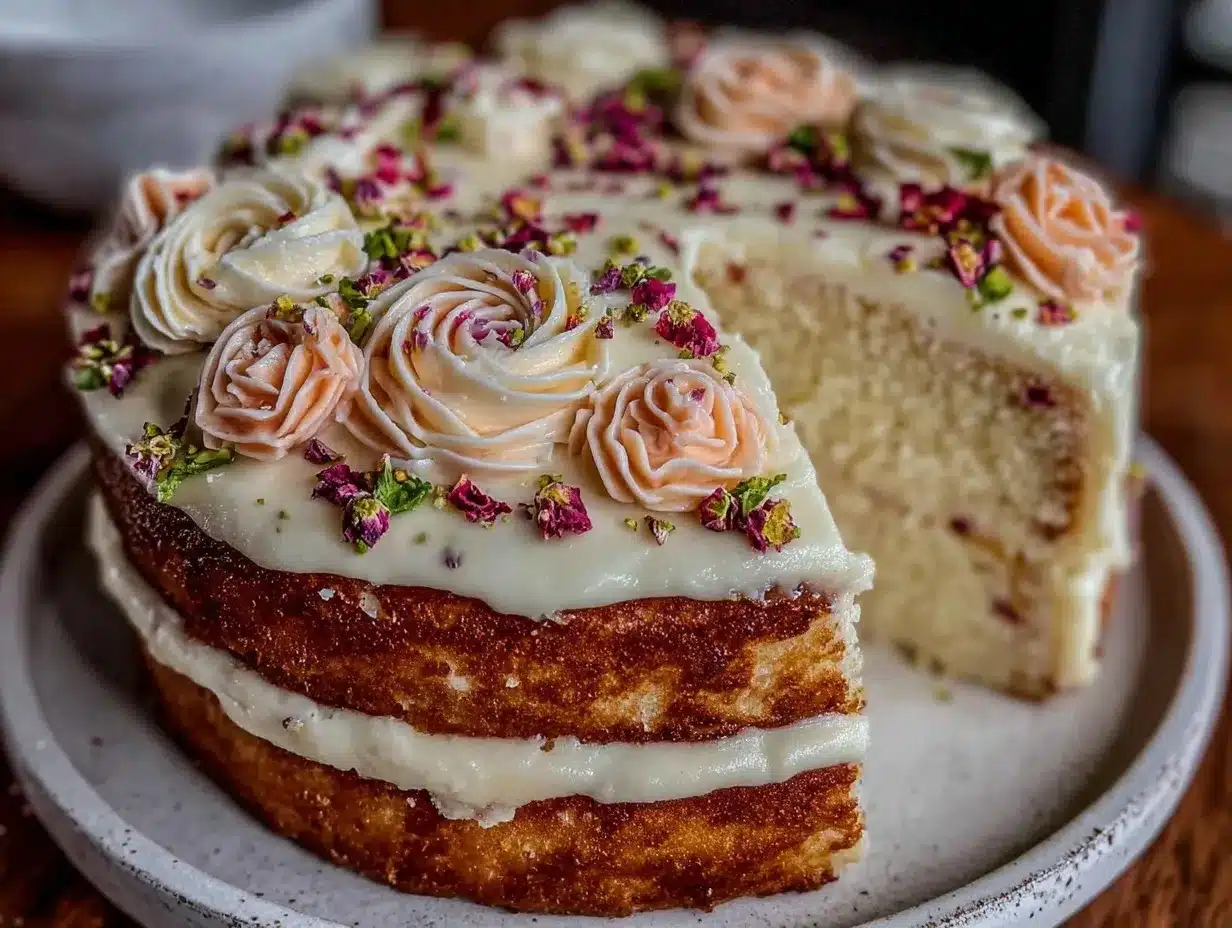
- Preheat and Prep: Set your oven to 350°F (175°C). Grease and flour your 8-inch pans or line with parchment paper. This step saves you from sticky layers later.
- Mix Dry Ingredients: In a bowl, whisk together 2 ½ cups (320 g) sifted all-purpose flour, 2 ½ teaspoons (10 g) baking powder, and ½ teaspoon (3 g) salt. Set aside.
- Cream Butter and Sugar: Using your mixer, beat 1 cup (226 g) softened unsalted butter with 2 cups (400 g) granulated sugar on medium-high speed for about 3-4 minutes. The mixture should become light and fluffy—don’t rush this part, it really affects the crumb.
- Add Eggs and Vanilla: One at a time, beat in 4 room-temperature eggs, ensuring each is fully incorporated before adding the next. Then add 1 tablespoon (15 ml) vanilla extract. This helps the batter stay stable and flavorful.
- Alternate Adding Dry Ingredients and Milk: Reduce mixer speed to low. Add the dry ingredients in three parts, alternating with 1 cup (240 ml) whole milk (start and end with flour). Mix just until combined—overmixing can make the cake tough.
- Divide Batter and Bake: Pour batter evenly into pans (about 3 cups / 700 ml per pan). Smooth the tops with a spatula. Bake for 30-35 minutes, or until a toothpick inserted in the center comes out clean. Rotate pans halfway for even baking.
- Cool Completely: Let cakes cool in pans for 10 minutes, then invert onto cooling racks. Don’t frost until layers are fully cooled, or frosting may melt.
- Prepare Buttercream: Beat 1 cup (226 g) softened butter on medium speed until creamy (about 2 minutes). Gradually add 4 cups (480 g) sifted powdered sugar, mixing on low to avoid a cloud of sugar dust. Add 2 teaspoons (10 ml) vanilla and 2-3 tablespoons (30-45 ml) heavy cream, beating until fluffy. Adjust consistency with more cream or sugar as needed.
- Color the Frosting: Divide buttercream into small bowls and tint with gel food coloring for roses and leaves. Use pastel shades for a spring vibe.
- Level and Assemble: Using a serrated knife or cake leveler, trim domed tops from cakes so layers stack evenly. Place one cake layer on your serving plate or turntable. Spread a thick, even layer of buttercream on top (about ½ cup / 120 ml). Repeat with second layer.
- Crumb Coat: Apply a thin layer of frosting over the entire cake to seal in crumbs. Chill for 15-20 minutes to set.
- Pipe Buttercream Roses: Fit a piping bag with a petal tip. Hold the bag at a 45-degree angle and pipe petals around a small buttercream cone to form roses. Arrange them on top and sides of the cake with green leaves piped in between. Take your time—practice makes a difference!
- Final Chill: Refrigerate the cake for 30 minutes before serving to set the buttercream and enhance flavors.
Cooking Tips & Techniques
One trick I picked up is to sift your powdered sugar before adding it to the buttercream. It makes all the difference in getting that smooth, silky texture needed for piping roses without clumps. Also, don’t rush the creaming step for the cake batter; fluffy butter and sugar give you that tender crumb that melts in your mouth.
I once tried piping buttercream roses straight from the fridge and ended up with cracked petals—lesson learned: room temperature buttercream is key. If your frosting feels too soft, pop it in the fridge for a few minutes, but not too long, or it’ll be tough to pipe.
Timing your decorating is crucial. I like to chill the crumb-coated cake before piping flowers to prevent crumbs from mixing with the final frosting layer. Using a turntable made it easier to rotate the cake smoothly while piping roses, but a steady hand and patience work just fine if you don’t have one.
Multitasking helps—while the cake layers bake, whip up your buttercream. This way, you won’t waste time waiting for the frosting later. Lastly, when piping roses, start from the center and swirl outwards gently; this little tip makes petals look natural and elegant.
Variations & Adaptations
Want to mix things up? This cake is a great canvas for creativity:
- Flavor Variations: Add lemon zest to the batter for a fresh citrus twist, or swap vanilla extract with almond extract for a nutty note.
- Color Themes: Use different gel food colors for the buttercream roses—lavender and soft yellow make a charming spring palette.
- Dietary Adaptations: Substitute all-purpose flour with gluten-free flour blend for gluten sensitivity. Use vegan butter and coconut milk for a dairy-free version; just expect a slightly different crumb and frosting texture.
- Decorating Alternatives: Instead of buttercream roses, try piping simple rosettes and sprinkle edible pearls or fresh edible flowers for a rustic look.
- Seasonal Twist: Pair the cake with fresh berry compote or thinly sliced strawberries between layers for added moisture and seasonal flair.
Personally, I once adapted this recipe into mini cupcakes adorned with buttercream roses for a bridal shower, which looked adorable and saved time on slicing and serving. If you’re interested in other elegant yet approachable desserts, you might appreciate the champagne cupcakes with gold sprinkles I shared recently—they have a similar vibe but with a bubbly twist.
Serving & Storage Suggestions
This cake is best served at room temperature to let the buttercream soften slightly and release its full flavor. A thin slice goes perfectly with a cup of tea or coffee during a light spring brunch, especially alongside something savory like a classic quiche Lorraine. The floral look also makes it a stunning centerpiece for celebrations.
To store, cover the cake loosely with plastic wrap or place it in an airtight container. It keeps well in the refrigerator for up to 4 days. Before serving again, allow it to sit out for 30-40 minutes for that perfect texture. You can also freeze the cake layers (without frosting) for up to 2 months; thaw overnight in the fridge before assembling.
When reheating slices, avoid the microwave if you want to keep the frosting intact. Instead, bring to room temperature naturally. Over time, the flavors meld, making it even more delightful the next day (if it lasts that long!).
Nutritional Information & Benefits
This vanilla layer cake is a treat, so moderation is key. Per slice (based on 12 slices), you’re looking at roughly 350-400 calories, with 18g fat, 50g carbohydrates, and 4g protein. The cake uses real ingredients like eggs and butter, which provide protein and essential fats.
Vanilla extract contains antioxidants, and the butter in the frosting adds richness, though it’s best enjoyed as an occasional indulgence. For anyone watching carbs, swapping sugar for erythritol and almond flour for wheat flour can reduce carbs, but the texture will differ.
While this cake contains gluten and dairy, substitutions are straightforward for those with dietary needs. The recipe’s simplicity means you control what goes in, avoiding preservatives and additives common in store-bought cakes.
Conclusion
This elegant spring flower vanilla layer cake with buttercream roses is a recipe that feels fancy without the fuss. It invites you to slow down and enjoy the art of baking, even if you’re not a pro. I love how this cake manages to be both a visual delight and a comforting classic, perfect for any occasion where you want a touch of sweetness and charm.
Feel free to tweak the colors, flavors, or decorations to suit your mood or event. Baking this cake has become a little ritual for me—it’s like crafting a piece of spring that you can eat. I’d love to hear how your buttercream roses turn out or any creative spins you put on it, so don’t hesitate to share your thoughts!
Give it a try, and let this cake bring a bit of floral joy to your table.
FAQs
- Can I make the cake layers ahead of time? Yes! You can bake the layers up to 2 days in advance and store them wrapped tightly at room temperature or in the fridge. Just bring them to room temperature before frosting.
- What if I don’t have a piping bag or tips? You can use a plastic sandwich bag with a small corner snipped off for basic piping, though the rose shapes may not be as precise.
- How do I fix runny buttercream? Chill it in the fridge for 10-15 minutes, then whip again until it firms up enough to pipe.
- Can I substitute the buttercream with cream cheese frosting? Yes, but cream cheese frosting is softer and less stable for intricate piping, so the roses might not hold their shape as well.
- What’s the best way to color buttercream? Use gel food coloring instead of liquid to avoid thinning the frosting and achieve vibrant pastels.
Pin This Recipe!
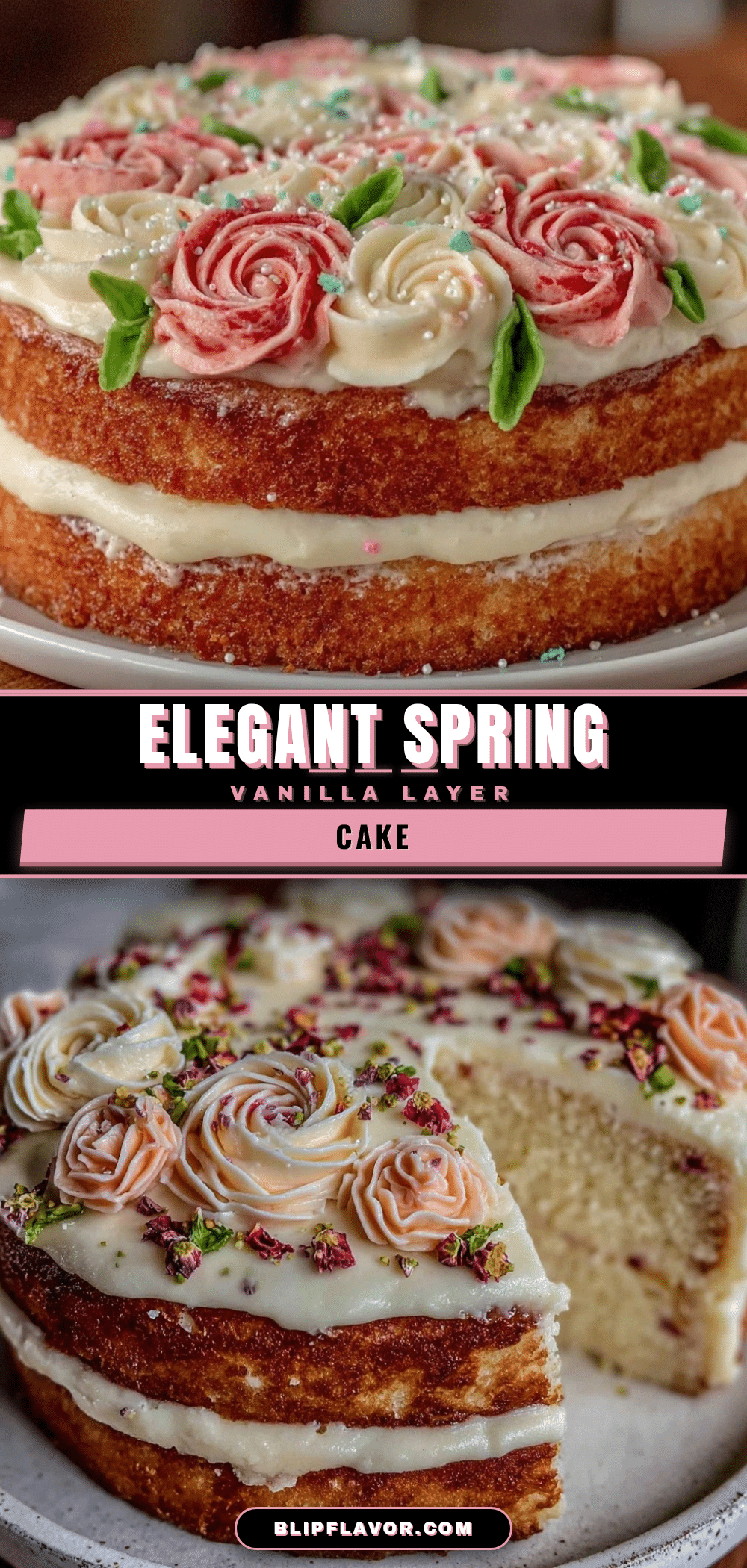
Elegant Spring Flower Vanilla Layer Cake Recipe with Easy Buttercream Roses Tutorial
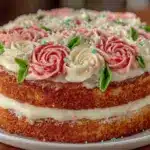
A stunning yet approachable vanilla layer cake decorated with delicate buttercream roses, perfect for spring celebrations and special occasions.
- Prep Time: 15 minutes
- Cook Time: 35 minutes
- Total Time: 50 minutes
- Yield: 12 servings 1x
- Category: Dessert
- Cuisine: American
Ingredients
- 2 ½ cups (320 g) all-purpose flour, sifted
- 2 ½ teaspoons (10 g) baking powder
- ½ teaspoon (3 g) salt
- 1 cup (226 g) unsalted butter, softened
- 2 cups (400 g) granulated sugar
- 4 large eggs, room temperature
- 1 tablespoon (15 ml) pure vanilla extract
- 1 cup (240 ml) whole milk, room temperature
- 1 cup (226 g) unsalted butter, softened (for buttercream)
- 4 cups (480 g) powdered sugar, sifted
- 2 teaspoons (10 ml) pure vanilla extract (for buttercream)
- 2–3 tablespoons (30–45 ml) heavy cream or whole milk (for buttercream)
- Gel food coloring (optional) – soft pinks, greens, or pastel shades
Instructions
- Preheat oven to 350°F (175°C). Grease and flour two 8-inch round cake pans or line with parchment paper.
- In a bowl, whisk together sifted flour, baking powder, and salt. Set aside.
- Using a mixer, beat softened butter and granulated sugar on medium-high speed for 3-4 minutes until light and fluffy.
- Add eggs one at a time, beating well after each addition. Then add vanilla extract.
- Reduce mixer speed to low. Add dry ingredients in three parts, alternating with milk, starting and ending with flour. Mix just until combined.
- Divide batter evenly between prepared pans (about 3 cups per pan). Smooth tops with spatula.
- Bake for 30-35 minutes or until a toothpick inserted in the center comes out clean. Rotate pans halfway through baking.
- Cool cakes in pans for 10 minutes, then invert onto cooling racks to cool completely.
- For buttercream, beat softened butter on medium speed until creamy (about 2 minutes). Gradually add powdered sugar on low speed to avoid dust clouds.
- Add vanilla extract and heavy cream or milk, beat until fluffy. Adjust consistency as needed.
- Divide buttercream into small bowls and tint with gel food coloring for roses and leaves.
- Level cake layers by trimming domed tops with serrated knife or cake leveler.
- Place one cake layer on serving plate or turntable. Spread about ½ cup buttercream evenly on top. Repeat with second layer.
- Apply a thin crumb coat over entire cake and chill for 15-20 minutes to set.
- Fit piping bag with petal tip. Pipe buttercream roses by holding bag at 45-degree angle and swirling petals around a small buttercream cone.
- Arrange roses on top and sides of cake, piping green leaves in between.
- Refrigerate cake for 30 minutes before serving to set buttercream and enhance flavors.
Notes
Sift powdered sugar before adding to buttercream for smooth texture. Use room temperature buttercream for piping roses to avoid cracking. Chill crumb-coated cake before decorating to prevent crumbs mixing with frosting. Practice piping roses starting from center swirling outwards for natural petals. You can substitute ingredients for dairy-free or gluten-free versions as noted.
Nutrition
- Serving Size: 1 slice (1/12 of cak
- Calories: 375
- Sugar: 38
- Sodium: 180
- Fat: 18
- Saturated Fat: 11
- Carbohydrates: 50
- Fiber: 1
- Protein: 4
Keywords: vanilla layer cake, buttercream roses, spring cake, floral cake, easy cake recipe, homemade cake, celebration cake