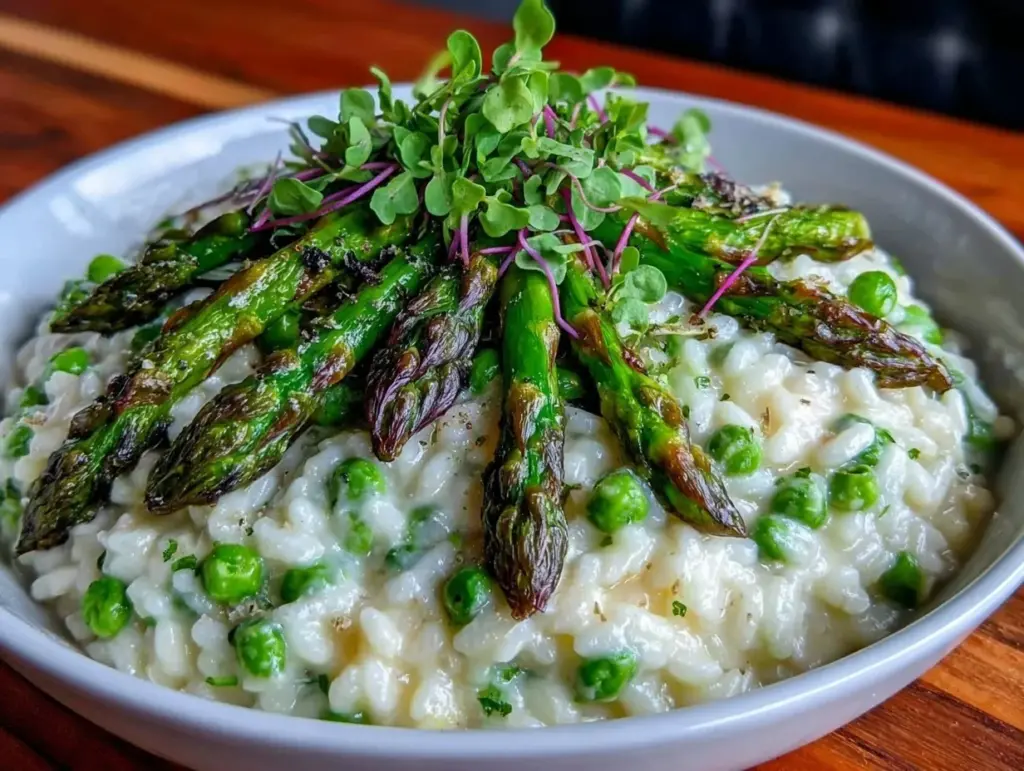
The kitchen was unusually quiet that evening — just me, a pot simmering gently on the stove, and the faint scent of fresh asparagus wafting through the air. Honestly, I was feeling a little scattered, a bit too frazzled to pull off anything too complicated. But there was a bunch of asparagus sitting in the fridge, and a small bag of fresh pea shoots I’d snagged at the farmer’s market earlier that day. So, I figured, why not take a moment to make something simple but soothing? That’s how this creamy spring asparagus risotto with fresh pea shoots came to be — born of a need for calm and something comforting without a fuss.
At first, I had my doubts. Risotto has a reputation for being a bit high-maintenance, and I wasn’t exactly in the mood for a kitchen marathon. But as the arborio rice absorbed the broth and the asparagus softened just right, I realized that this recipe wasn’t about perfection — it was about patience, presence, and a few good ingredients coming together in a way that felt like a fresh breeze on a cool spring evening.
Now, every time spring rolls around, I find myself making this dish again and again. It’s that kind of recipe that quietly sneaks into your rotation and refuses to leave. The texture is luxuriously creamy but not heavy, and the fresh pea shoots add a lively, peppery snap that keeps things interesting. It’s a simple pleasure, really, but one that’s made me appreciate those slower, quieter moments in the kitchen — the ones that don’t scream for attention but reward you with something deeply satisfying.
That’s why this creamy spring asparagus risotto recipe has stuck with me. It’s a little reset button wrapped in a bowl, perfect for when you want to slow down and savor something fresh, bright, and honestly, a little bit special without the stress.
Why You’ll Love This Creamy Spring Asparagus Risotto Recipe
After making this risotto more times than I can count, I can say with confidence it nails the kind of springtime comfort that feels both fresh and indulgent — without the hours of fuss. Here’s what makes this recipe stand out:
- Quick & Easy: Ready in about 35 minutes, it fits perfectly into busy weeknights or last-minute dinner plans.
- Simple Ingredients: No rare finds here — just pantry staples like arborio rice, broth, and that seasonal asparagus and pea shoots you can grab at any good market.
- Perfect for Spring: This dish celebrates the season’s best produce, making it ideal for cozy dinners or a light lunch that still feels special.
- Crowd-Pleaser: The creamy texture and bright flavors make it a hit with both family members and guests — even those who aren’t big vegetable fans.
- Unbelievably Delicious: The risotto’s silky consistency paired with the fresh, slightly sweet notes of asparagus and the peppery zing of pea shoots is just next-level comfort food.
What sets this recipe apart, honestly, is the way it balances richness with freshness. The little twist of fresh pea shoots stirred in at the end adds a snap and a pop of color that you don’t usually find in traditional risottos. Plus, I use a quick homemade vegetable broth that really lifts the flavors without being overpowering — if you want, you can swap in chicken broth for a richer taste.
This isn’t just another creamy risotto; it’s one that feels light and vibrant but still has that indulgent, soul-soothing mouthfeel you crave. And I can’t help but think it’s perfect alongside something like the honey lemon glazed salmon I made last week — a combo that honestly makes any weeknight feel like a treat.
What Ingredients You Will Need
This recipe keeps things straightforward with fresh, seasonal ingredients that deliver big flavor without fuss. The asparagus and pea shoots are the stars, but each element plays its part to create that creamy, dreamy risotto texture.
- Arborio rice – 1 ½ cups (300g), the classic risotto rice for that creamy, starchy finish.
- Fresh asparagus – 1 bunch (about 1 lb/450g), trimmed and cut into 1-inch pieces (adds a tender crunch and fresh earthiness).
- Fresh pea shoots – 1 cup (about 30g), gently stirred in at the end for vibrant flavor and color.
- Vegetable broth – 5 cups (1.2 liters), homemade or store-bought (look for low-sodium to control seasoning).
- Dry white wine – ½ cup (120ml), optional but recommended for a touch of acidity and depth.
- Unsalted butter – 3 tablespoons (45g), divided (one for sautéing, one for finishing the risotto).
- Shallot – 1 medium, finely chopped (adds a subtle sweetness that complements asparagus).
- Garlic – 2 cloves, minced (for aromatic depth).
- Parmesan cheese – ¾ cup grated (75g), freshly grated for the best melting and flavor.
- Olive oil – 2 tablespoons, extra virgin preferred.
- Salt and freshly ground black pepper – to taste.
- Fresh lemon juice – 1 tablespoon (optional), adds a bright finishing touch.
For best results, I recommend using a quality extra virgin olive oil like California Olive Ranch and Parmigiano-Reggiano cheese for authentic flavor. If you need a dairy-free option, swap butter for a plant-based spread and omit the cheese or use nutritional yeast for a cheesy punch.
In the warmer months, you can swap out pea shoots with fresh baby spinach or microgreens for a similar fresh effect. And if you want to make this gluten-free, rest assured arborio rice is naturally gluten-free, so no worries there.
Equipment Needed
- Large heavy-bottomed skillet or sauté pan: At least 10 inches in diameter. This helps distribute heat evenly and prevents burning — I find a good stainless steel pan works best.
- Medium saucepan: For warming your broth, so it stays hot while you cook the risotto.
- Wooden spoon or heatproof spatula: For stirring the risotto consistently without scratching your pan.
- Measuring cups and spoons: Precision matters here, so I always measure out the rice and liquids carefully.
- Fine grater: To grate fresh Parmesan cheese — nothing beats freshly grated for flavor and melt.
If you don’t have a heavy-bottomed skillet, a deep sauté pan with a thick base can work, but watch your heat closely to prevent scorching. Also, keeping your broth warm in a separate pot makes the whole stirring and absorption process smoother. For budget-friendly options, basic stainless steel pans from brands like Cuisinart or Tramontina do a solid job without breaking the bank.
Preparation Method
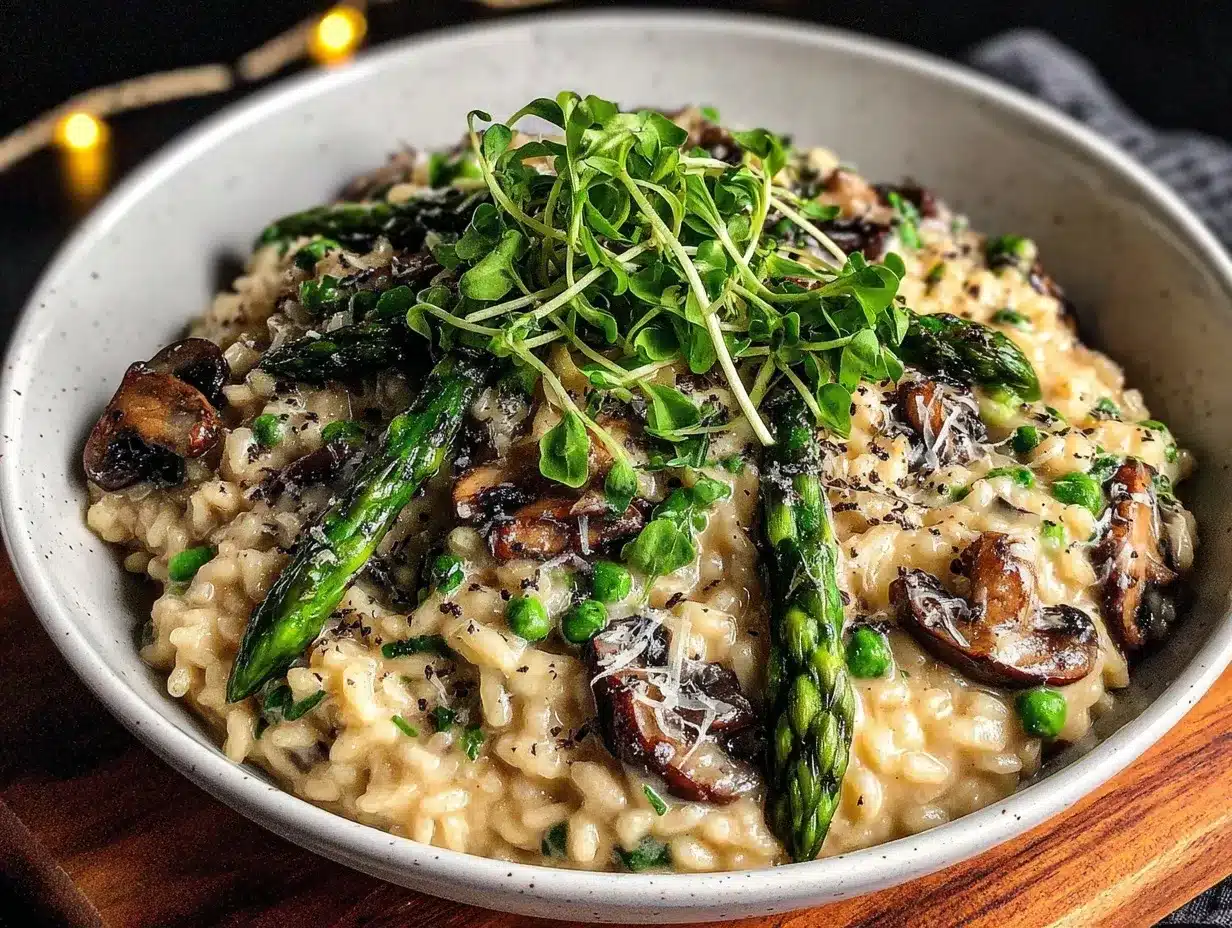
- Prepare the broth: Pour your vegetable broth into a medium saucepan and keep it at a gentle simmer over low heat — this ensures the rice cooks evenly as it absorbs the warm liquid.
- Sauté aromatics: In your large skillet, heat 1 tablespoon of olive oil and 1 tablespoon of butter over medium heat. Add the chopped shallot and sauté for about 2-3 minutes, until translucent and fragrant. Toss in the minced garlic and cook for another minute, careful not to let it brown.
- Toast the rice: Add the arborio rice to the skillet, stirring constantly for about 2 minutes. The grains should become slightly translucent around the edges but remain opaque in the center — this step is crucial for that iconic risotto bite.
- Deglaze with wine: Pour in the dry white wine and stir until it’s almost fully absorbed. This adds brightness and complexity to the dish — if you’re skipping wine, just move on to broth.
- Add broth gradually: Begin adding the warm broth one ladle (about ½ cup or 120ml) at a time. Stir gently but constantly, allowing the liquid to absorb before adding the next ladle. This process should take about 20-25 minutes. The risotto will slowly become creamy and tender but still have a slight bite.
- Add asparagus: About 10 minutes into adding broth, stir in the asparagus pieces so they cook tender but retain a little crunch. Keep stirring gently to encourage creaminess.
- Finish with butter and cheese: Once all broth is absorbed and the risotto is creamy and al dente, remove from heat. Stir in the remaining 2 tablespoons of butter and the grated Parmesan cheese. This step gives the risotto that luscious, velvety finish. Season with salt and pepper to taste.
- Fold in pea shoots: Just before serving, gently fold in the fresh pea shoots. They’ll wilt slightly from the residual heat but keep their bright, peppery flavor and vibrant green color.
- Add lemon juice: For a fresh lift, squeeze in a tablespoon of fresh lemon juice right at the end — it’s subtle but really wakes up the flavors.
Watch the texture carefully toward the end — the risotto should be creamy but not soupy, with each grain distinct yet tender. If it gets too thick before you’re done, stir in a splash more warm broth or water. I usually find this method easy to multitask around, and if I’m feeling fancy, serve it alongside a simple grilled protein like salmon or chicken.
Cooking Tips & Techniques
Risotto can intimidate, but a few key tips make all the difference:
- Keep broth warm: Adding cold broth slows cooking and can make the texture uneven. I always keep broth simmering on the stove next to my risotto pan.
- Stir gently but consistently: Stirring releases the rice’s starches, creating that signature creaminess. But you don’t need to be a maniac — a steady, gentle swirl every 30 seconds or so works well.
- Don’t rush the liquid: Adding broth too quickly can leave the rice undercooked or sticky. Patience is key here; let each ladle absorb fully before adding more.
- Choose quality ingredients: Good broth and fresh vegetables make all the difference. I learned the hard way that pre-grated cheese just doesn’t melt the same.
- Watch your heat: Medium to medium-low heat is best. Too hot and you risk burning the bottom or drying the rice out.
- Test the rice: Taste your risotto a few times toward the end — it should be tender with a slight bite, never mushy.
I once accidentally turned the heat up too high and ended up with a clumpy mess. Lesson learned: low and slow wins the race. Also, while stirring, I like to hold the pan handle with one hand to keep it steady — it just feels more controlled. And if you want to impress guests without fuss, pairing this risotto with a bright side like a crisp salad or a chilled white wine is always a winner — reminds me of how well it pairs with the fresh flavors in the spring garden vegetable frittata.
Variations & Adaptations
This risotto recipe is a great starting point, and you can tweak it to suit preferences or dietary needs:
- Vegan version: Replace butter with olive oil or vegan margarine, and swap Parmesan for nutritional yeast or a vegan cheese alternative. Use vegetable broth to keep it plant-based.
- Protein boost: Stir in cooked shrimp, grilled chicken, or crispy pancetta for a heartier meal. Just add these near the end to keep them tender.
- Seasonal swaps: In late spring or summer, swap asparagus for fresh peas or green beans. For fall, roasted butternut squash or mushrooms add warmth and depth.
- Herb additions: Fresh herbs like tarragon, chives, or basil stirred in at the end can brighten the dish. I love a sprinkle of lemon thyme for a subtle twist.
- Lower-carb option: Use cauliflower rice instead of arborio, cooking similarly with broth and folding in the vegetables. Texture will differ, but the flavor combo stays fresh.
One variation I tried recently was adding a dollop of ricotta on top just before serving — it added a creamy tang that complemented the asparagus beautifully. If you’re curious about other fresh spring dishes, the fresh spring roll bowls with peanut sauce is another light, vibrant recipe worth trying alongside this risotto for a complete meal.
Serving & Storage Suggestions
This risotto is best served immediately, while it’s still warm and creamy. I like to plate it with a little extra grated Parmesan on top and a few fresh pea shoots for a pretty, fresh finish.
For a simple, elegant meal, pair it with a crisp green salad or roasted spring vegetables. A chilled glass of Sauvignon Blanc or Pinot Grigio complements the fresh flavors nicely — perfect for a relaxed weekend dinner or a casual dinner party.
If you have leftovers, store them in an airtight container in the fridge for up to 2 days. Risotto thickens as it cools, so when reheating, add a splash of broth or water and gently warm it on the stove over low heat, stirring frequently to bring back its creaminess. Microwave reheating works in a pinch, but stirring halfway through helps.
Flavors tend to deepen overnight, so leftovers can actually taste even better the next day if you’re okay with a slightly thicker texture. Just remember to add moisture when reheating.
Nutritional Information & Benefits
This creamy spring asparagus risotto recipe offers a balanced mix of carbohydrates, healthy fats, and vitamins, making it both nourishing and satisfying. Arborio rice provides a steady source of energy thanks to its complex carbohydrates, while asparagus and pea shoots pack in vitamins A, C, and K along with antioxidants that support immune health.
The Parmesan and butter add a bit of richness and calcium, though you can adjust for dietary needs. Using vegetable broth keeps it lighter and suitable for vegetarians, and the fresh produce contributes fiber and essential nutrients.
Per serving, you can expect approximately 350-400 calories, depending on portion size and any added proteins. This dish is naturally gluten-free and can easily be adapted for dairy-free diets.
From a personal wellness perspective, this risotto feels like a gentle balance — creamy and comforting without tipping into heaviness, and fresh enough to remind me that eating well can still feel indulgent.
Conclusion
This creamy spring asparagus risotto with fresh pea shoots has become one of those recipes I turn to when I want something that feels like a hug in a bowl but still celebrates the season’s best. It’s approachable, satisfying, and versatile enough to make your own — whether you add a protein, swap veggies, or keep it pure and simple.
I love how it brings a little quiet joy to the table, perfect for those moments when you want to slow down and enjoy something fresh, creamy, and just a little bit special. If you try it, I’d love to hear how you make it yours or what you pair it with — sharing those little twists is part of what makes cooking fun.
Here’s to many cozy spring dinners filled with fresh flavors and good company.
Frequently Asked Questions
Can I make this risotto ahead of time?
Risotto is best enjoyed fresh, but you can prepare it a day ahead and reheat gently with some extra broth to restore creaminess. Avoid reheating in the microwave without stirring to prevent uneven texture.
What can I substitute for fresh pea shoots?
Baby spinach, arugula, or microgreens make great substitutes if pea shoots aren’t available. Add them at the end just like pea shoots to maintain freshness.
Is it necessary to use white wine in this recipe?
Not at all — the wine adds depth and a touch of acidity, but you can skip it or replace it with an equal amount of broth if preferred.
How do I know when the risotto is done?
The rice should be tender but still have a slight bite or “al dente” texture. It should be creamy and loose enough to spread slightly on a plate.
Can I freeze leftover risotto?
Freezing risotto isn’t recommended as the texture changes upon thawing. It’s better to refrigerate and consume within a couple of days.
Pin This Recipe!
Creamy Spring Asparagus Risotto Recipe with Fresh Pea Shoots
A simple and soothing creamy risotto featuring fresh asparagus and vibrant pea shoots, perfect for spring dinners or light lunches.
- Prep Time: 10 minutes
- Cook Time: 25 minutes
- Total Time: 35 minutes
- Yield: 4 servings 1x
- Category: Main Course
- Cuisine: Italian
Ingredients
- 1 ½ cups Arborio rice (300g)
- 1 bunch fresh asparagus (about 1 lb/450g), trimmed and cut into 1-inch pieces
- 1 cup fresh pea shoots (about 30g)
- 5 cups vegetable broth (1.2 liters), homemade or store-bought, low-sodium recommended
- ½ cup dry white wine (120ml), optional
- 3 tablespoons unsalted butter (45g), divided
- 1 medium shallot, finely chopped
- 2 cloves garlic, minced
- ¾ cup grated Parmesan cheese (75g), freshly grated
- 2 tablespoons extra virgin olive oil
- Salt and freshly ground black pepper, to taste
- 1 tablespoon fresh lemon juice, optional
Instructions
- Prepare the broth: Pour vegetable broth into a medium saucepan and keep it at a gentle simmer over low heat.
- Sauté aromatics: In a large skillet, heat 1 tablespoon olive oil and 1 tablespoon butter over medium heat. Add chopped shallot and sauté for 2-3 minutes until translucent. Add minced garlic and cook for another minute without browning.
- Toast the rice: Add Arborio rice to the skillet, stirring constantly for about 2 minutes until grains are slightly translucent around edges but opaque in center.
- Deglaze with wine: Pour in dry white wine and stir until almost fully absorbed. If skipping wine, proceed to next step.
- Add broth gradually: Add warm broth one ladle (about ½ cup) at a time, stirring gently but constantly. Allow liquid to absorb before adding next ladle. Continue for 20-25 minutes until risotto is creamy and tender with slight bite.
- Add asparagus: About 10 minutes into adding broth, stir in asparagus pieces to cook tender but retain crunch.
- Finish with butter and cheese: Once broth is absorbed and risotto is creamy and al dente, remove from heat. Stir in remaining 2 tablespoons butter and grated Parmesan cheese. Season with salt and pepper to taste.
- Fold in pea shoots: Just before serving, gently fold in fresh pea shoots to wilt slightly but keep bright flavor and color.
- Add lemon juice: Squeeze in 1 tablespoon fresh lemon juice for a fresh lift, optional.
Notes
Keep broth warm to ensure even cooking. Stir gently but consistently to release rice starches for creaminess. Add broth slowly, allowing absorption before adding more. Use quality ingredients for best flavor. Risotto is best served immediately but can be reheated gently with added broth. For dairy-free, substitute butter with plant-based spread and Parmesan with nutritional yeast or vegan cheese.
Nutrition
- Serving Size: 1 cup risotto
- Calories: 375
- Sugar: 4
- Sodium: 450
- Fat: 14
- Saturated Fat: 7
- Carbohydrates: 50
- Fiber: 3
- Protein: 10
Keywords: risotto, asparagus, pea shoots, spring recipe, creamy risotto, vegetarian, easy dinner