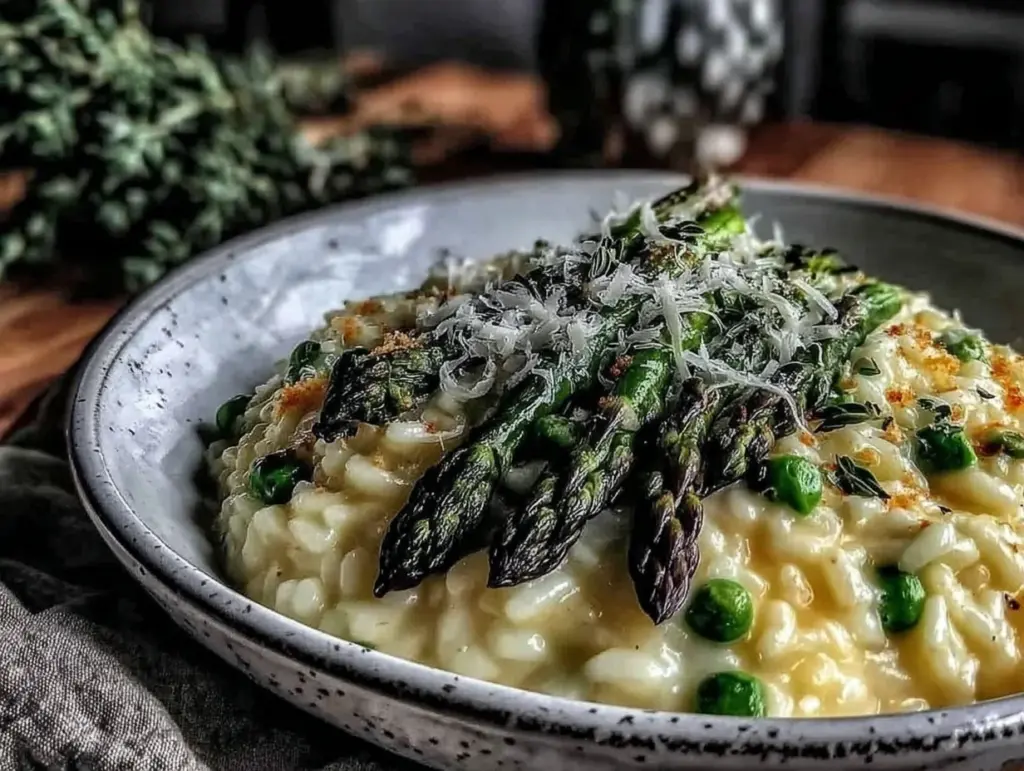
“Hey, you sure you want to make risotto tonight? That’s a lot of stirring,” my friend texted me one evening. Honestly, I was skeptical too. I’d always thought risotto was a fancy dinner reserved for special occasions or those with hours to spare. But that spring night, armed with a bunch of fresh asparagus and frozen peas, I decided to give it a shot—partly because I needed something comforting and partly because I was too tired to think about dinner ideas.
What happened next was kind of magical. The creamy texture, the sweetness of the peas, and that subtle, earthy bite from the asparagus made me pause mid-stir. It was like the kitchen suddenly smelled like a little Italian trattoria. Funny thing—this recipe was born from a rushed grocery run and a half-empty fridge, not a gourmet plan. Yet, that night, it became one of my go-to meals, popping up more than once over the next week.
There’s something about the way the parmesan melts in, wrapping every grain of rice in that rich, velvety goodness. And the fresh green veggies? They add just enough brightness, making each bite feel like a fresh spring morning. It’s not just food; it’s a quiet moment in a busy day, a gentle reminder that simple ingredients can turn into something unexpectedly delightful.
This creamy asparagus risotto with peas and parmesan stuck with me because it feels like a little celebration of spring’s best flavors, without fuss or fancy tricks. It’s honest, comforting, and surprisingly easy—a recipe that quietly wins you over.
Why You’ll Love This Creamy Asparagus Risotto with Peas and Parmesan
After making this risotto several times (yes, I was in full obsession mode), I realized it checks all the boxes for a weeknight or special meal. Here’s why it might become your new favorite too:
- Quick & Easy: This recipe comes together in about 35 minutes, which is perfect for when you want something cozy but don’t have hours to stand by the stove.
- Simple Ingredients: No need to hunt for exotic items. You probably have arborio rice, parmesan, and frozen peas in your pantry or fridge already.
- Perfect for Spring Dinners: The asparagus and peas bring a fresh, seasonal vibe, making this risotto ideal for those light but satisfying meals as the weather warms up.
- Crowd-Pleaser: I’ve served this to friends (and picky eaters) who went back for seconds without hesitation.
- Unbelievably Delicious: The creamy texture combined with the sweet pop of peas and nutty parmesan is downright addictive.
This isn’t just any risotto recipe—it’s the one I trust to deliver that silky creaminess without fuss. The trick? Slow, patient stirring and adding broth gradually, so the rice cooks perfectly and soaks up all the fresh flavors. Plus, blending in parmesan at the end gives it that signature cheesy punch that makes you close your eyes after the first bite.
This dish feels like comfort food reimagined—healthier, lighter, yet soul-soothing. If you’ve ever loved a rich quiche like the Quiche Lorraine or enjoyed a creamy spring pea soup, this risotto fits right into that family of dishes that make you feel cozy and satisfied without weighing you down.
What Ingredients You Will Need
This recipe uses simple, wholesome ingredients to deliver bold flavor and satisfying texture without the fuss. Most are pantry staples, while the fresh asparagus and peas bring that seasonal pop of green.
- Arborio rice (1 ½ cups / 300 g) – The star for creamy risotto, able to absorb liquid without losing its bite.
- Fresh asparagus (1 bunch, about 12 oz / 350 g) – Trimmed and cut into 1-inch pieces; adds a crisp, fresh flavor.
- Frozen peas (1 cup / 150 g) – Sweet and tender, these brighten the dish and balance the richness.
- Parmesan cheese (¾ cup grated / 75 g) – Use a good-quality parmesan like Parmigiano-Reggiano for the best flavor and melt.
- Vegetable or chicken broth (5 cups / 1.2 liters) – Warmed; this is slowly added to cook the rice perfectly.
- Dry white wine (½ cup / 120 ml) – Adds acidity and depth (optional, but highly recommended).
- Unsalted butter (3 tablespoons / 45 g) – For richness and silkiness.
- Olive oil (1 tablespoon) – For sautéing the aromatics.
- Onion (1 small, finely chopped) – Adds subtle sweetness and foundation flavor.
- Garlic (2 cloves, minced) – For a gentle aromatic kick.
- Salt and freshly ground black pepper – To taste, seasoning throughout.
- Fresh lemon zest (optional, 1 teaspoon) – Adds a bright note that pairs beautifully with asparagus.
For best results, pick firm asparagus spears without woody ends. If you want to swap the chicken broth for a vegetarian option, vegetable broth works just as well. And if you’re avoiding wine, just increase the broth slightly—though the wine really lifts the flavors.
Equipment Needed
- Large heavy-bottomed skillet or sauté pan: A wide pan helps the rice cook evenly and gives you room to stir without spills.
- Medium saucepan: To keep the broth warm while you cook the risotto, which helps the rice cook evenly.
- Wooden spoon or silicone spatula: For stirring the risotto without damaging the pan.
- Measuring cups and spoons: To keep ingredient amounts precise.
- Grater: For fresh parmesan and lemon zest.
If you don’t have a heavy-bottomed pan, just avoid stainless steel pans that heat unevenly. A nonstick skillet can work but sometimes doesn’t give that perfect caramelization. In my experience, a well-seasoned cast iron skillet also does the trick, though you have to watch the heat carefully.
Keeping broth warm in a separate pan might feel like extra work, but trust me, it makes a big difference in how the risotto cooks—plus, it’s a nice multitasking moment while prepping other ingredients.
Preparation Method
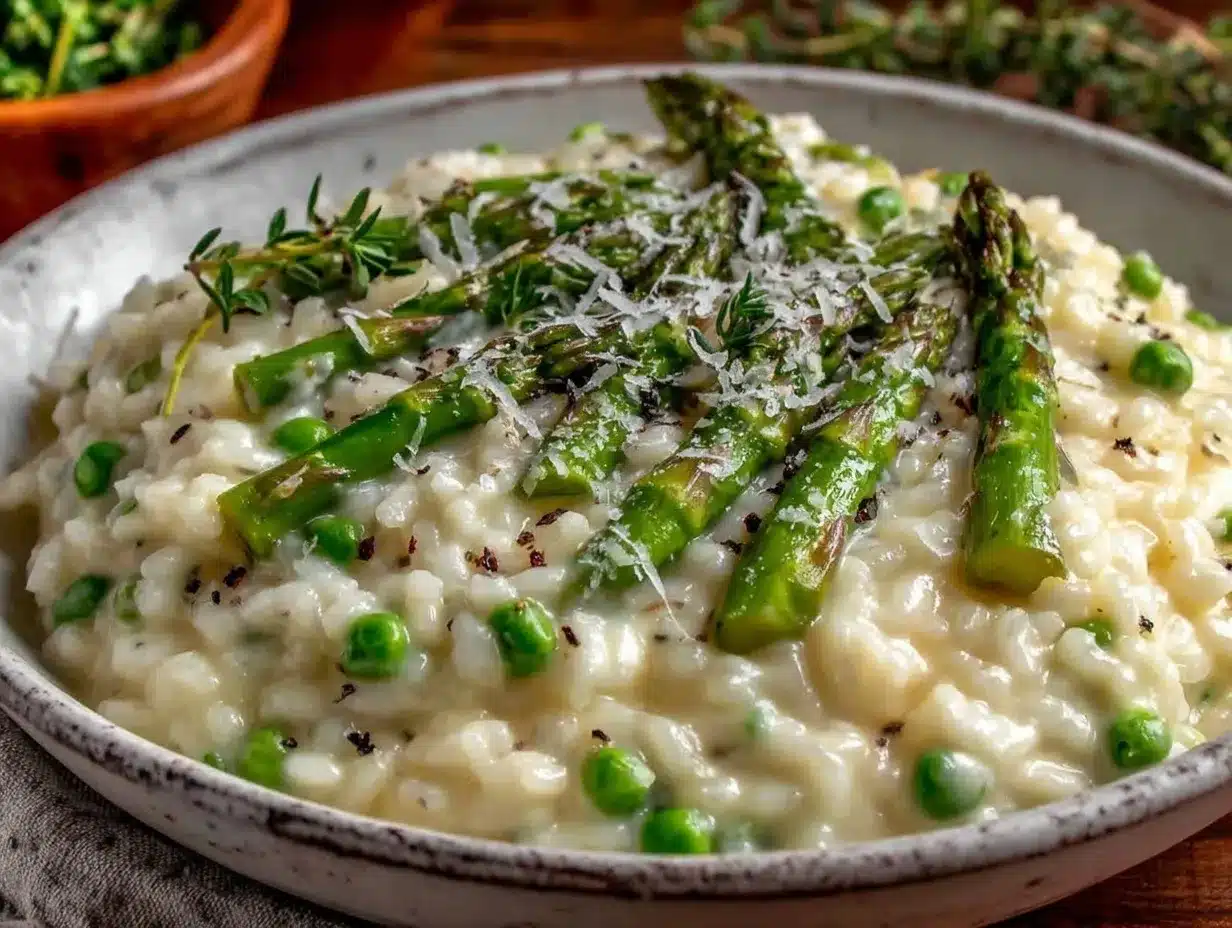
- Prep the asparagus: Rinse and trim the asparagus, cutting into 1-inch pieces. Set aside. (5 minutes)
- Warm the broth: In a medium saucepan, heat the broth to a gentle simmer on low heat. Keep it warm throughout the cooking process. (5 minutes)
- Sauté aromatics: In your large pan, heat olive oil and 1 tablespoon butter over medium heat. Add the chopped onion and sauté until translucent but not browned, about 3-4 minutes. Add minced garlic and cook for another 30 seconds until fragrant.
- Toast the rice: Add the arborio rice to the pan, stirring constantly for 2 minutes. The rice should look slightly translucent at the edges but still opaque in the center. This step helps develop that creamy texture.
- Deglaze with wine: Pour in the white wine and stir until the liquid is mostly absorbed. If you skip wine, start adding broth now.
- Cook the risotto: Begin adding warm broth ½ cup (120 ml) at a time, stirring gently but continuously. Wait until the liquid is mostly absorbed before adding more. This process takes about 20-25 minutes. The rice should be tender but still have a slight bite (al dente).
- Add asparagus and peas: About 7 minutes before the risotto is done, stir in the asparagus pieces. Add the frozen peas in the last 3-4 minutes so they stay bright and tender.
- Finish with cheese and butter: Turn off the heat and stir in the remaining 2 tablespoons butter and grated parmesan cheese until melted and creamy. Add salt, pepper, and lemon zest if using. Taste and adjust seasoning.
- Rest and serve: Let the risotto sit for a minute to thicken slightly before serving. The texture should be creamy and slightly loose, not dry.
Keep an eye on the consistency during cooking — risotto is forgiving but tricky. If it looks too thick, add a splash more broth or water. If too thin, let it cook a bit longer off heat. Stirring gently is key; too vigorous and you’ll bruise the rice, too little and it may stick.
Cooking Tips & Techniques
Risotto can feel intimidating, but it’s really about patience and paying attention. Here are the best tips I’ve picked up:
- Keep broth warm: Adding cold broth slows down cooking and can make the rice mushy. I always keep a simmering pot on the stove next to me.
- Stir gently but often: Stirring helps release the rice’s starch, creating that signature creaminess. But don’t overdo it — gentle folds work better than vigorous scrapes.
- Don’t rush adding broth: Wait until most liquid is absorbed before adding more. This helps the rice cook evenly and absorb flavors.
- Use quality parmesan: Freshly grated parmesan melts better and gives richer flavor than pre-grated varieties.
- Season gradually: Add salt in stages, especially if your broth is salty. Taste often.
I remember the first time I tried to speed through risotto, adding all the broth at once—it turned into a gluey mess. Slow and steady wins the race here, honestly. Also, adding the asparagus too early can make it mushy, so timing is everything.
While you stir, it’s a good time to prep a simple salad or set the table, making the whole cooking experience feel connected and manageable. For a special treat, finish the meal with a light dessert like the rose-shaped apple tarts to keep the spring vibe going.
Variations & Adaptations
This risotto recipe is quite flexible, so you can tweak it to suit your tastes or dietary needs:
- Vegan version: Swap butter for olive oil or vegan margarine, and use nutritional yeast or vegan parmesan for that cheesy flavor.
- Gluten-free option: Arborio rice is naturally gluten-free, so no worries there. Just double-check your broth for any hidden gluten.
- Seasonal veggies: Swap peas and asparagus with spring veggies like artichokes or baby spinach, or add fresh herbs like mint or basil for a flavor twist.
- Protein boost: Stir in cooked shrimp or grilled chicken for a heartier meal.
- Cheese variations: Try swapping parmesan with pecorino romano for a sharper bite, or add a dollop of mascarpone for extra creaminess.
I once tried this risotto with roasted cherry tomatoes and it turned into a summer favorite. Also, switching the wine for a splash of fresh lemon juice at the end works well if you want a lighter tang.
Serving & Storage Suggestions
Risotto is best enjoyed fresh off the stove, warm and creamy, but sometimes leftovers happen. Here’s how to make the most of it:
- Serving: Spoon onto warm plates, garnish with extra parmesan and a sprinkle of black pepper. A drizzle of good olive oil adds a nice touch.
- Pairings: Goes beautifully with a crisp green salad or roasted vegetables. For drinks, a chilled glass of white wine or sparkling water with lemon complements the flavors perfectly.
- Storage: Store leftovers in an airtight container in the refrigerator for up to 2 days. The risotto will thicken, so add a splash of broth or water when reheating.
- Reheating: Warm gently on the stove over low heat, stirring and adding liquid as needed to loosen the texture. Microwave reheating works too, but stir halfway through.
- Flavor development: Resting for a few hours in the fridge lets the flavors meld nicely, but fresh is always best for that signature creamy texture.
Nutritional Information & Benefits
This creamy asparagus risotto with peas and parmesan is a nourishing yet indulgent dish. Estimated nutrition per serving (makes 4 servings):
| Calories | ~380 kcal |
|---|---|
| Protein | 12 g |
| Carbohydrates | 50 g |
| Fat | 12 g |
| Fiber | 4 g |
The asparagus and peas add fiber, vitamins A and C, and antioxidants, supporting immune health and digestion. Parmesan contributes calcium and protein, while the olive oil and butter provide healthy fats in moderation.
This recipe is naturally gluten-free and can be adapted for dairy-free or vegan diets, making it a versatile choice for many eating preferences. I find it satisfying without feeling heavy—perfect for a balanced dinner that doesn’t leave you overly full or sluggish.
Conclusion
This creamy asparagus risotto with peas and parmesan has become a quiet favorite in my kitchen for good reason. It’s approachable, comforting, and truly delicious without feeling complicated or time-consuming. Whether you’re looking to impress at a casual dinner or just want a meal that feels like a little break from the usual, this recipe fits the bill.
Don’t hesitate to make it your own—add your favorite veggies, switch up the cheese, or even turn it into a main dish with some protein. I love how this risotto marries simplicity with rich flavor, giving that satisfying creamy texture I can’t get enough of.
If you try this recipe, I’d love to hear how you make it your own or what sides you paired it with. Sharing food stories always brightens my day. Happy cooking!
Frequently Asked Questions
Can I make risotto without wine?
Absolutely! You can skip the wine and just start with the broth. The wine adds acidity and depth, but the risotto will still be creamy and flavorful without it.
How do I know when the risotto is done?
The rice should be tender but still have a slight bite (al dente). It should look creamy and slightly loose—not dry or mushy. Taste testing is the best way to tell.
Can I use frozen asparagus instead of fresh?
Fresh asparagus works best for texture and flavor, but if frozen is what you have, thaw and drain it well before adding to avoid excess water in the risotto.
Is Arborio rice necessary for risotto?
Arborio rice is preferred because of its high starch content, which creates creaminess. You can use other short-grain varieties like Carnaroli or Vialone Nano, but long-grain rice won’t give the same texture.
How do I store leftover risotto?
Keep leftovers in an airtight container in the fridge for up to 2 days. When reheating, add a splash of broth or water to loosen the texture and warm gently on the stove or in the microwave.
Pin This Recipe!
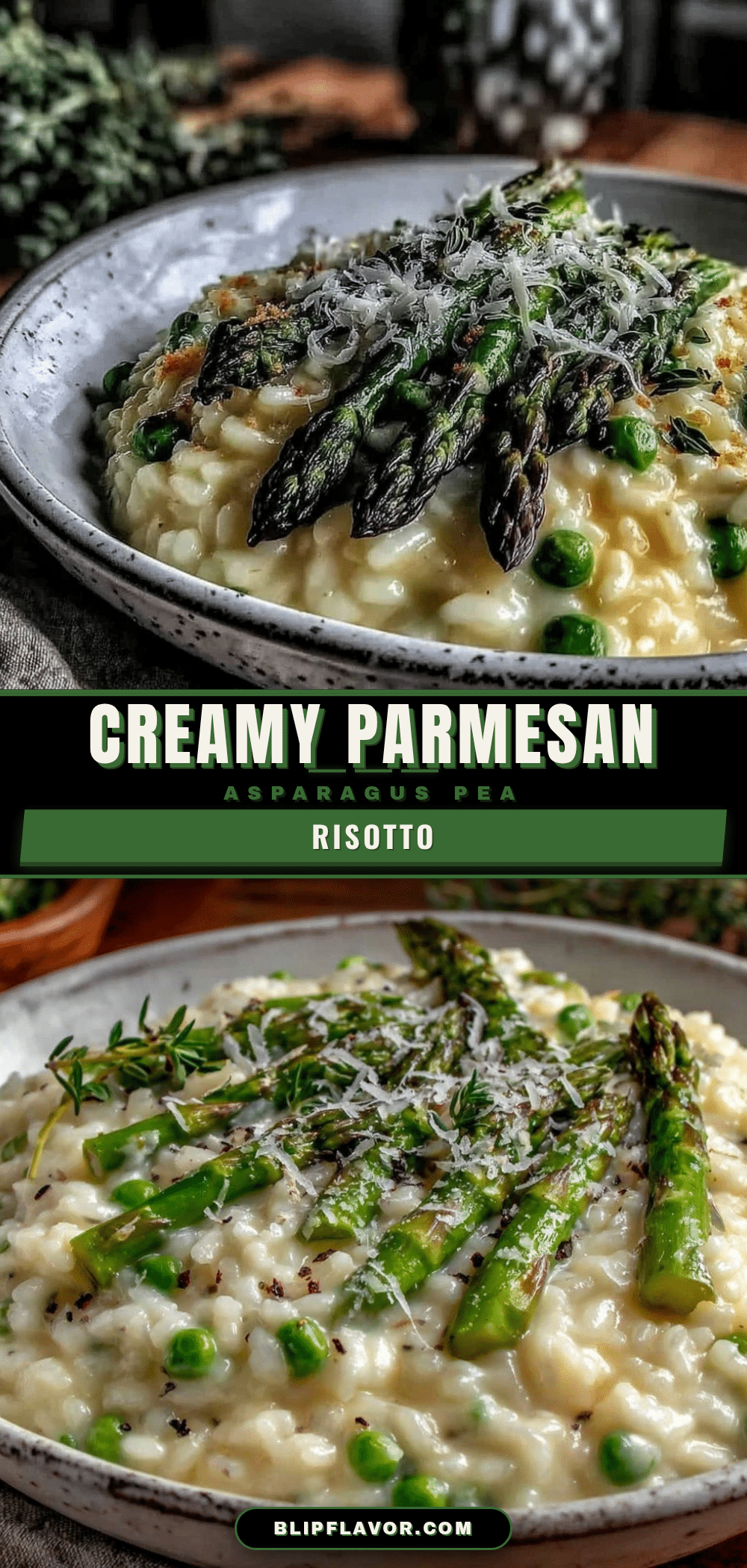
Creamy Asparagus Risotto with Peas and Parmesan

A comforting and creamy risotto featuring fresh asparagus, sweet peas, and nutty parmesan cheese. Perfect for a quick spring dinner that feels like a special occasion.
- Prep Time: 10 minutes
- Cook Time: 25 minutes
- Total Time: 35 minutes
- Yield: 4 servings 1x
- Category: Main Course
- Cuisine: Italian
Ingredients
- 1 ½ cups Arborio rice (300 g / 10.5 oz)
- 1 bunch fresh asparagus (about 12 oz / 350 g), trimmed and cut into 1-inch pieces
- 1 cup frozen peas (150 g / 5.3 oz)
- ¾ cup grated Parmesan cheese (75 g / 2.6 oz)
- 5 cups vegetable or chicken broth (1.2 liters / 40 fl oz), warmed
- ½ cup dry white wine (120 ml / 4 fl oz) – optional
- 3 tablespoons unsalted butter (45 g / 3/4 oz)
- 1 tablespoon olive oil
- 1 small onion, finely chopped
- 2 cloves garlic, minced
- Salt and freshly ground black pepper, to taste
- 1 teaspoon fresh lemon zest (optional)
Instructions
- Rinse and trim the asparagus, cutting into 1-inch pieces. Set aside. (5 minutes)
- In a medium saucepan, heat the broth to a gentle simmer on low heat. Keep it warm throughout the cooking process. (5 minutes)
- In a large heavy-bottomed skillet or sauté pan, heat olive oil and 1 tablespoon butter over medium heat. Add the chopped onion and sauté until translucent but not browned, about 3-4 minutes. Add minced garlic and cook for another 30 seconds until fragrant.
- Add the Arborio rice to the pan, stirring constantly for 2 minutes until the rice looks slightly translucent at the edges but still opaque in the center.
- Pour in the white wine and stir until the liquid is mostly absorbed. If skipping wine, start adding broth now.
- Begin adding warm broth ½ cup (120 ml / 4 fl oz) at a time, stirring gently but continuously. Wait until the liquid is mostly absorbed before adding more. Continue this process for about 20-25 minutes until the rice is tender but still al dente.
- About 7 minutes before the risotto is done, stir in the asparagus pieces. Add the frozen peas in the last 3-4 minutes so they stay bright and tender.
- Turn off the heat and stir in the remaining 2 tablespoons butter and grated Parmesan cheese until melted and creamy. Add salt, pepper, and lemon zest if using. Taste and adjust seasoning.
- Let the risotto sit for a minute to thicken slightly before serving. The texture should be creamy and slightly loose, not dry.
Notes
Keep broth warm to ensure even cooking and creamy texture. Stir gently but often to release starch without bruising the rice. Add broth gradually and wait for absorption before adding more. Use quality Parmesan for best flavor. Adjust seasoning gradually, especially salt. For vegan version, substitute butter with olive oil or vegan margarine and Parmesan with nutritional yeast or vegan cheese. Risotto is best served fresh but can be stored for up to 2 days in the fridge; reheat gently with added broth.
Nutrition
- Serving Size: 1 cup risotto
- Calories: 380
- Sugar: 4
- Sodium: 600
- Fat: 12
- Saturated Fat: 7
- Carbohydrates: 50
- Fiber: 4
- Protein: 12
Keywords: risotto, asparagus, peas, parmesan, creamy risotto, spring recipe, easy dinner, vegetarian, gluten-free