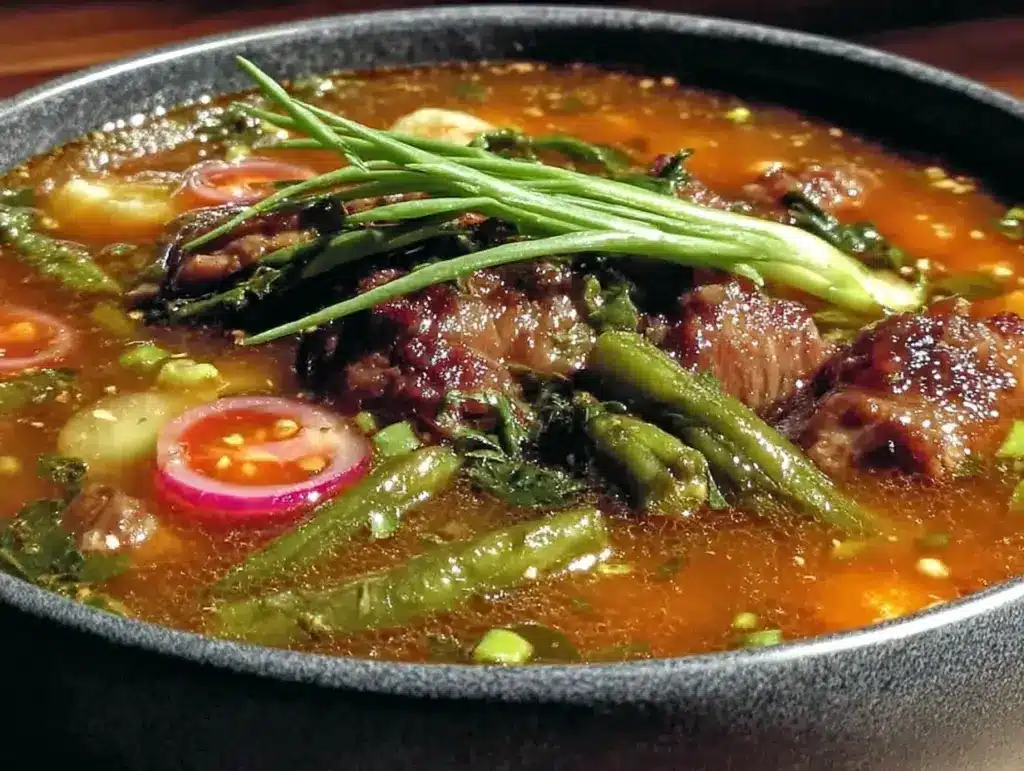
Let me tell you, the scent of simmering tamarind and fresh vegetables filling the kitchen is enough to make anyone’s mouth water. The first time I made this comforting sinigang soup recipe, I was instantly hooked—there’s just something about that tangy tamarind broth that hits all the right notes. Honestly, it’s the kind of moment where you pause, take a deep breath, and just smile because you know you’re onto something truly special.
When I was knee-high to a grasshopper, my lola (grandma) would whip up sinigang on rainy days, the kind that makes you feel right at home, no matter the weather. Years ago, I stumbled upon this recipe trying to recreate that nostalgic taste, and I wish I’d discovered it sooner—it’s dangerously easy and delivers pure, nostalgic comfort every single time. My family couldn’t stop sneaking bowls of this tangy tamarind broth soup, and I can’t really blame them. Let’s face it, sinigang is perfect for cozy dinners, brightening up dreary days, or simply when you want a warm hug in a bowl.
After testing this recipe multiple times in the name of research, of course, it became a staple for family gatherings and gifting to friends who needed a little taste of home. If you’re looking for a comforting sinigang soup recipe with tangy tamarind broth that’s both authentic and easy, you’re going to want to bookmark this one.
Why You’ll Love This Comforting Sinigang Soup Recipe
Having made this recipe countless times, I can confidently say it’s a winner for so many reasons. Here’s what makes this comforting sinigang soup recipe with tangy tamarind broth stand out:
- Quick & Easy: Comes together in under an hour, perfect for busy weeknights or when you need a warm meal fast.
- Simple Ingredients: No need for fancy or hard-to-find items; everything’s pantry-friendly and fresh.
- Perfect for Cozy Dinners: This soup warms you up from the inside out—ideal for chilly evenings or when you need a pick-me-up.
- Crowd-Pleaser: Kids and adults alike love the balance of tangy and savory, making it a hit at any family table.
- Unbelievably Delicious: The tangy tamarind broth is just the right amount of sour, with a rich depth that keeps you coming back for more.
This isn’t just any sinigang recipe—it’s my best version, perfected through trial and error. The secret? Blending fresh tamarind with just the right seasoning, and simmering the broth until it’s packed with flavor but still light enough to enjoy anytime. It’s comfort food, yeah, but it’s also bright, fresh, and utterly satisfying. Whether you want to impress guests without stress or need a simple meal that feels like a warm hug, this recipe has your back.
What Ingredients You Will Need
This comforting sinigang soup recipe uses simple, wholesome ingredients to deliver bold flavor and satisfying texture without the fuss. Most of these are pantry staples, and the fresh produce is easy to find at any market. Here’s what you’ll need:
- For the broth:
- 2 cups fresh tamarind pulp (or 1/2 cup tamarind paste for convenience)
- 8 cups water (1.9 liters)
- 1 medium onion, quartered
- 2 medium tomatoes, quartered
- 2 tablespoons fish sauce (patis) (adjust to taste)
- Salt and pepper, to taste
- For the protein:
- 1 lb pork ribs or pork shoulder, cut into chunks (you can swap for shrimp or fish if preferred)
- For the vegetables:
- 1 medium daikon radish, peeled and sliced
- 1 cup long green beans, trimmed
- 1 medium taro root, peeled and quartered (optional, adds creaminess)
- 1 cup spinach or kangkong (water spinach) leaves
- 2 medium green chili peppers (siling haba), whole
Tip: I recommend fresh tamarind for the best tang, but tamarind paste works well if you’re short on time. For pork, I like using pork ribs for that rich flavor, but shrimp is a tasty twist for a lighter version. Also, feel free to swap out kangkong with fresh spinach if unavailable.
Equipment Needed
- Large stockpot or deep saucepan (at least 6-quart capacity)
- Strainer or fine sieve (for straining tamarind pulp if using fresh)
- Cutting board and sharp knife
- Wooden spoon or ladle for stirring
- Measuring cups and spoons
- Optional: Slotted spoon (to remove scum or foam from broth)
If you don’t have a large stockpot, a Dutch oven works wonders here too. Honestly, I’ve made this soup in everything from a simple saucepan to my trusty cast iron pot. Just make sure the pot is large enough so the broth can simmer without spilling over. Keeping your tools clean and sharp really helps with prep speed—especially that knife for slicing veggies and meat.
Preparation Method
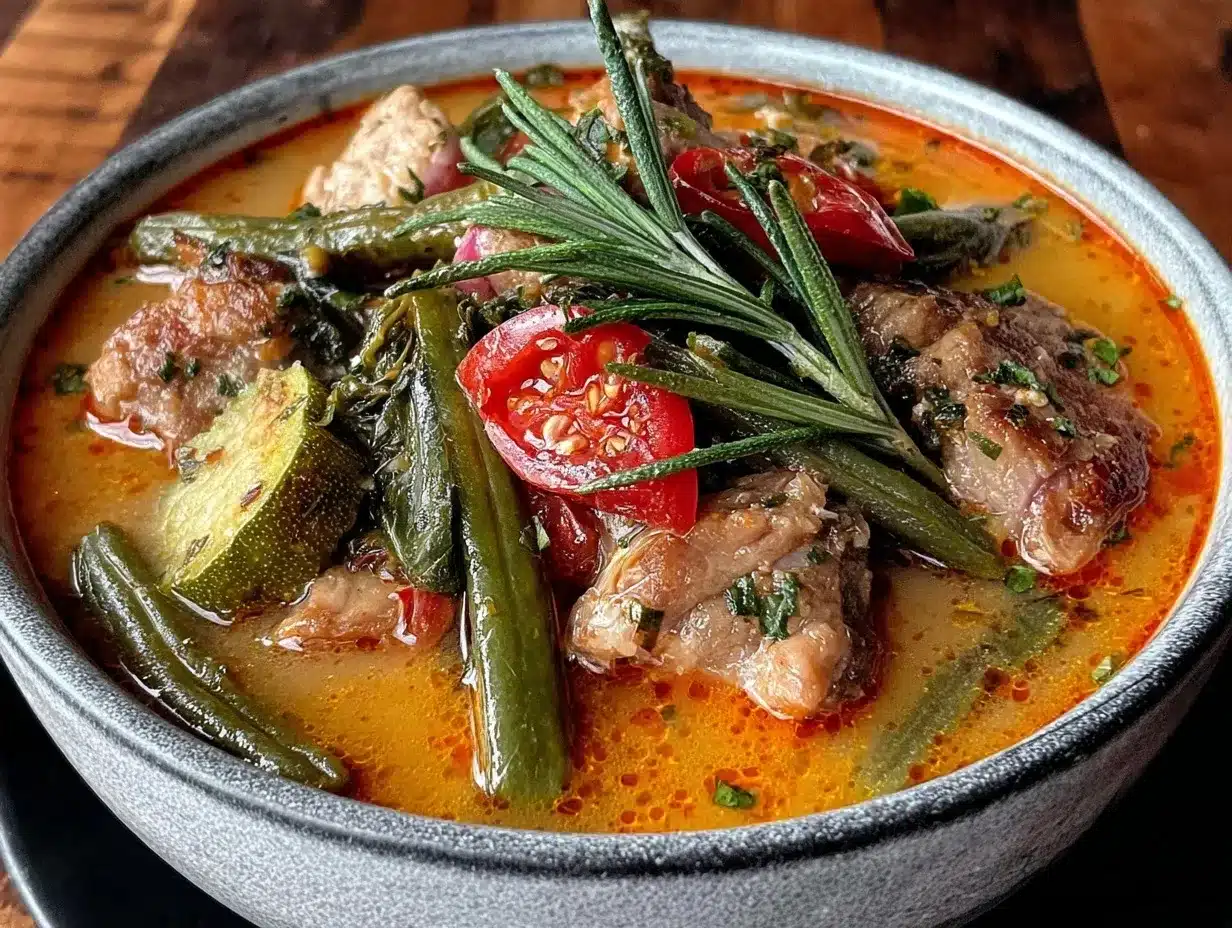
- Prepare the tamarind broth: If using fresh tamarind, soak the tamarind pulp in 2 cups (480 ml) of warm water for about 20 minutes. Mash it gently to extract the juice, then strain through a fine sieve, pressing to get all the flavor out. Set the tamarind juice aside.
- Cook the pork: In your large stockpot, combine the pork chunks, quartered onion, and tomatoes with 8 cups (1.9 liters) of water. Bring to a boil over medium-high heat, then reduce to a gentle simmer. Skim off any scum or foam that rises to the top during the first 10 minutes.
- Simmer the broth: Cover the pot partially and let the pork simmer for about 45 minutes to 1 hour, or until the meat is tender and almost falling off the bone.
- Add the tamarind juice: Pour the prepared tamarind juice into the pot. Add fish sauce and season with salt and pepper to taste. Simmer for another 10 minutes to marry all the flavors.
- Add vegetables: Add sliced daikon radish, taro root (if using), and green chili peppers. Cook for 10 minutes, then add the green beans and simmer for another 5 minutes until vegetables are tender but still vibrant.
- Finish with greens: Stir in the spinach or kangkong leaves and simmer for 1-2 minutes until just wilted.
- Taste and adjust: Give your comforting sinigang soup a final taste. Add more fish sauce or salt if needed. If you want it tangier, a squeeze of calamansi or a little extra tamarind paste can do the trick.
- Serve hot: Ladle the soup into bowls, making sure everyone gets a bit of meat, veggies, and broth. Serve with steamed rice for the full Filipino experience.
Pro tip: Keep an eye on the pot while simmering; too high heat can toughen the pork. Also, don’t rush the simmering process—slow and steady wins the flavor race. I usually make this on weekends when I have the time to let it bubble away. The smell alone is worth the wait!
Cooking Tips & Techniques
Cooking the perfect sinigang soup is all about balance and patience. Here are some things I’ve learned the hard way:
- Skim the foam: When boiling pork, scum can cloud the broth. Use a slotted spoon to skim it off early on for a clearer, cleaner broth.
- Don’t overcook vegetables: Add your veggies in stages—root veggies first, leafy greens last—to keep texture and color just right.
- Tamarind tricks: If you find fresh tamarind too sour or not sour enough, adjust with a pinch of sugar or extra tamarind paste, but go easy to keep that authentic tang.
- Fish sauce is king: It adds umami depth, but start with less and build up; too much can overpower the broth.
- Multitasking: While the pork simmers, prep your vegetables and tamarind juice. It saves time and keeps things flowing smoothly.
Honestly, the first time I didn’t skim the broth, it turned out cloudy and a bit bitter—lesson learned! Keeping the heat low during simmering helps the pork stay tender and juicy. And don’t be shy to taste often; it’s the best way to make the broth sing.
Variations & Adaptations
This comforting sinigang soup recipe is super versatile. Here are a few ways I’ve played around with it:
- Protein swap: Use shrimp or white fish instead of pork for a lighter, seafood-based sinigang. Just simmer shrimp for 5 minutes at the end to avoid rubbery texture.
- Vegetarian version: Skip the meat, use vegetable broth, and add hearty mushrooms or tofu. Boost the tamarind flavor with extra paste or lemon juice.
- Low-sodium option: Reduce fish sauce and salt, and add more fresh tomatoes for natural acidity.
- Seasonal veggies: In summer, try swapping daikon for fresh green papaya or adding okra for a different twist.
Once, I made a batch with chicken instead of pork, and it was just as comforting—great when you want a lighter soup but still crave that tangy broth. This recipe really adapts well to what you have on hand or your dietary needs.
Serving & Storage Suggestions
Sinigang is best served hot with a side of fluffy steamed white rice—trust me, the rice helps soak up that tangy broth perfectly. For extra zest, offer calamansi or sliced chili peppers on the side so everyone can tweak their bowl to taste.
Leftovers keep well in the fridge for up to 3 days. The broth thickens and flavors deepen overnight, making the next day’s bowl even better (if you can wait that long!). To reheat, warm gently on the stove—avoid microwaving too long to keep the pork tender.
If you want to freeze sinigang, separate the broth and meat from the fresh greens, which are best added fresh after thawing. Freeze in airtight containers for up to 2 months.
Nutritional Information & Benefits
This comforting sinigang soup recipe is not only delicious but also nourishing. A typical serving provides:
| Nutrient | Approximate Amount per Serving |
|---|---|
| Calories | 280-350 kcal |
| Protein | 25-30 g |
| Carbohydrates | 15-20 g |
| Fat | 10-15 g |
| Fiber | 3-5 g |
Key ingredients like tamarind provide antioxidants and vitamin C, while the fresh vegetables add fiber and essential nutrients. Using lean pork or seafood keeps the fat content moderate. This soup fits well into balanced diets and can be adapted for gluten-free or low-carb lifestyles by serving with cauliflower rice or skipping taro.
Conclusion
Honestly, this comforting sinigang soup recipe with tangy tamarind broth is a keeper. It’s simple enough for a weeknight but special enough to share with family and friends. You can customize the protein, veggies, and seasoning to suit your taste, making it truly your own. I love how it brings a bit of home and warmth to the table every time I make it.
If you try this recipe, please drop a comment and let me know how it went or what variations you tried. Sharing food stories and tips makes cooking even more fun! Remember, a good bowl of sinigang feels like a warm hug—you’re going to want to keep this recipe close.
Frequently Asked Questions
What can I use if I can’t find fresh tamarind?
You can use tamarind paste or tamarind soup base mix, which are common in Asian markets. If those aren’t available, a mix of lemon juice and a pinch of brown sugar can mimic the tangy flavor.
Can I make sinigang soup ahead of time?
Yes! The flavors actually deepen overnight in the fridge. Just add delicate greens like spinach or kangkong fresh when reheating.
What’s the best protein for sinigang?
Pork ribs are traditional and flavorful, but shrimp, fish, or even beef work great. Adjust cooking times accordingly to avoid overcooking.
Is sinigang gluten-free?
Yes, as long as you use gluten-free fish sauce or tamarind paste. Always check labels if you have gluten sensitivities.
How do I make sinigang less sour?
Add a pinch of sugar or increase the amount of broth to balance the sourness. Adding more fresh tomatoes also helps mellow the tang.
Pin This Recipe!

Comforting Sinigang Soup Recipe Easy Tangy Tamarind Broth Guide

A comforting Filipino sinigang soup featuring a tangy tamarind broth, tender pork, and fresh vegetables. Perfect for cozy dinners and easy to prepare in under an hour.
- Prep Time: 20 minutes
- Cook Time: 1 hour
- Total Time: 1 hour 20 minutes
- Yield: 4 servings 1x
- Category: Main Course
- Cuisine: Filipino
Ingredients
- 2 cups fresh tamarind pulp (or 1/2 cup tamarind paste for convenience)
- 8 cups water (1.9 liters)
- 1 medium onion, quartered
- 2 medium tomatoes, quartered
- 2 tablespoons fish sauce (patis) (adjust to taste)
- Salt and pepper, to taste
- 1 lb pork ribs or pork shoulder, cut into chunks (can swap for shrimp or fish)
- 1 medium daikon radish, peeled and sliced
- 1 cup long green beans, trimmed
- 1 medium taro root, peeled and quartered (optional)
- 1 cup spinach or kangkong (water spinach) leaves
- 2 medium green chili peppers (siling haba), whole
Instructions
- If using fresh tamarind, soak the tamarind pulp in 2 cups (480 ml) of warm water for about 20 minutes. Mash gently to extract juice, then strain through a fine sieve. Set tamarind juice aside.
- In a large stockpot, combine pork chunks, quartered onion, and tomatoes with 8 cups (1.9 liters) of water. Bring to a boil over medium-high heat, then reduce to a gentle simmer. Skim off any scum or foam during the first 10 minutes.
- Partially cover the pot and simmer pork for 45 minutes to 1 hour until meat is tender and nearly falling off the bone.
- Pour prepared tamarind juice into the pot. Add fish sauce and season with salt and pepper to taste. Simmer for another 10 minutes.
- Add sliced daikon radish, taro root (if using), and green chili peppers. Cook for 10 minutes, then add green beans and simmer for another 5 minutes until vegetables are tender but vibrant.
- Stir in spinach or kangkong leaves and simmer for 1-2 minutes until just wilted.
- Taste and adjust seasoning with more fish sauce, salt, or tamarind paste as desired.
- Serve hot with steamed rice.
Notes
Use fresh tamarind for best flavor or tamarind paste for convenience. Skim foam early for clearer broth. Add vegetables in stages to preserve texture. Adjust sourness with sugar or extra tamarind paste. Fish sauce adds umami but add gradually. For seafood version, add shrimp last to avoid rubbery texture. Leftovers taste better after overnight refrigeration. Freeze broth and meat separately from greens.
Nutrition
- Serving Size: 1 bowl (approximatel
- Calories: 280350
- Fat: 1015
- Carbohydrates: 1520
- Fiber: 35
- Protein: 2530
Keywords: sinigang, tamarind soup, Filipino soup, pork sinigang, tangy broth, comfort food, easy soup recipe