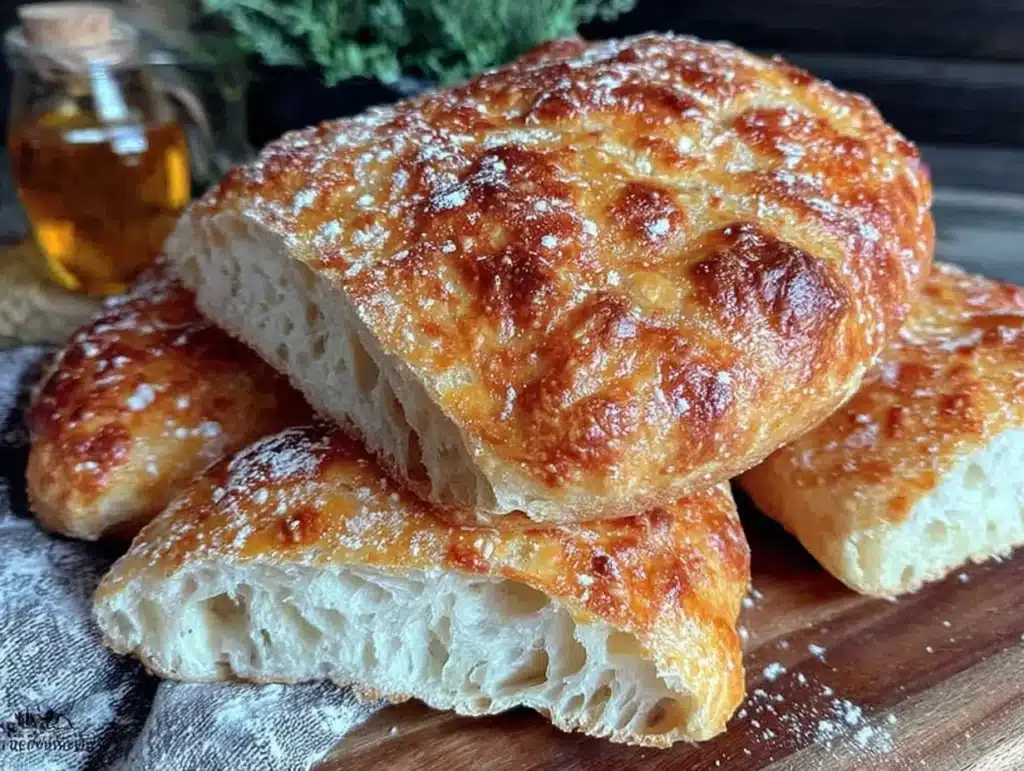
Imagine pulling a loaf of warm, crusty ciabatta bread out of your oven—the golden crust crackling as you slice it open, revealing a tender, airy crumb that’s just begging to be slathered with butter or dipped into olive oil. The aroma alone is enough to transport you straight to a cozy little Italian bakery. Honestly, the first time I made this ciabatta bread, I couldn’t believe how easy it was to achieve bakery-quality results right in my own kitchen. That first bite was a total revelation—the kind of moment where you pause, close your eyes, and let the flavors take over.
Years ago, I thought homemade bread was out of my league. I mean, who has the time to knead dough for hours or the patience to wait for it to rise? But then I discovered this simple recipe for ciabatta, and let me tell you—it changed everything. Not only is it ridiculously easy to make, but the results are so impressive that my family always thinks I must have bought it from a fancy bakery. (Spoiler alert: it’s all me!) This bread has quickly become a staple at our family dinners, weekend brunches, and even as a gift for friends. Trust me, you’re going to want to bookmark this one.
Why You’ll Love This Recipe
- Simple Ingredients: You don’t need a pantry full of specialty items—this recipe keeps it basic.
- Beginner-Friendly: No fancy equipment required, and no need for hours of kneading.
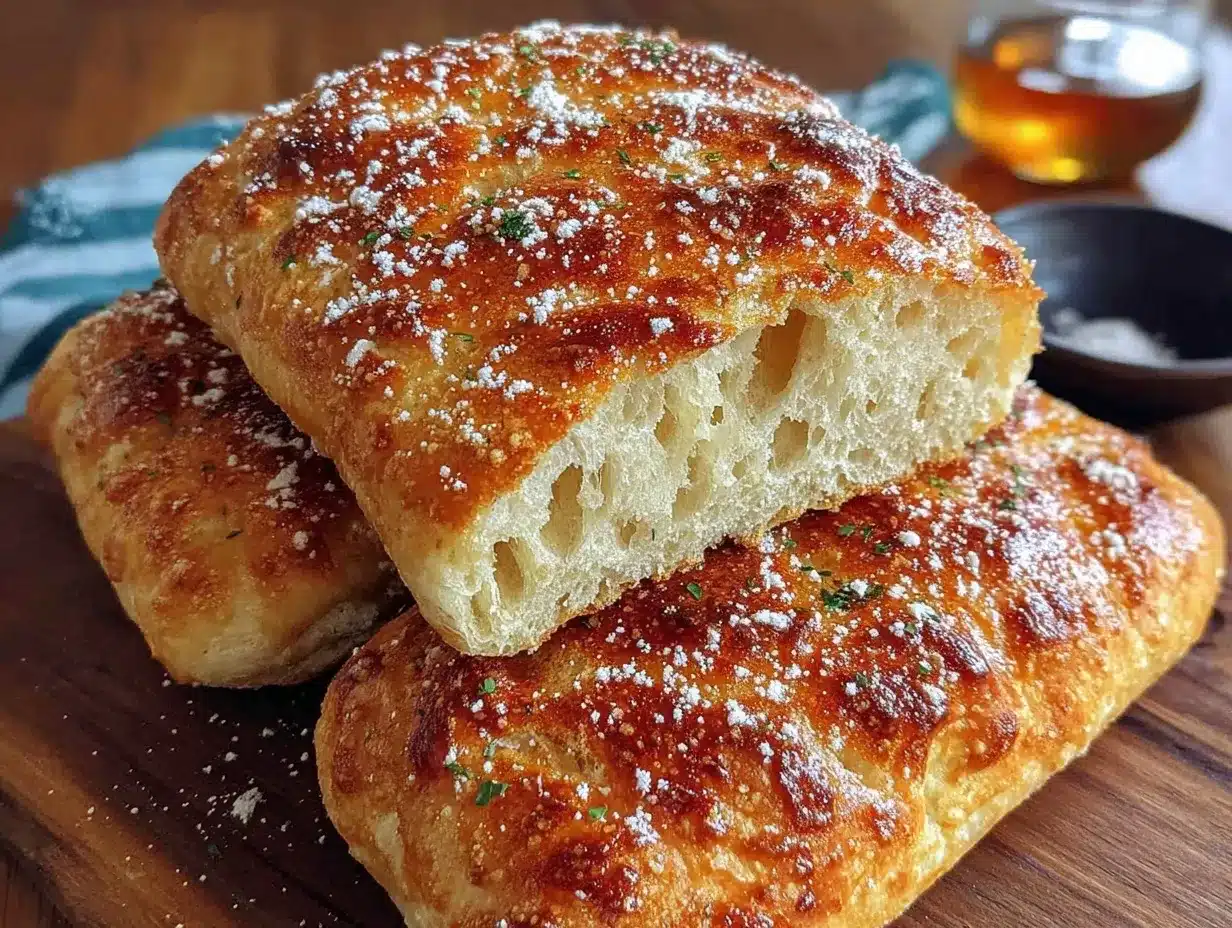
- Perfect Texture: Light, airy crumb with just the right amount of chewiness.
- Versatile: Perfect for sandwiches, dipping in soups, or enjoying with olive oil and balsamic vinegar.
- Impressively Authentic: This bread looks and tastes like it came straight out of an Italian bakery.
- Easy to Follow: Step-by-step instructions make it accessible for bread-baking newbies.
What sets this recipe apart is its simplicity. There’s no kneading involved—yes, you heard that right! Instead, the dough is left to develop its flavor and structure through a slow fermentation process. This method creates those beautiful air pockets and a soft interior that makes ciabatta so irresistible. Plus, the crust is just the right balance of crisp and chewy, giving you all the texture you could ask for in a bread. With just a little patience and minimal effort, you’ll have a loaf that’s perfect for any occasion.
What Ingredients You Will Need
This recipe uses simple, wholesome ingredients to deliver that classic airy texture and rich flavor without the fuss.
- All-purpose flour (500g or 4 cups): The base of the dough; you can also use bread flour for a chewier texture.
- Water (400ml or 1 2/3 cups, lukewarm): Helps hydrate the flour and activate the yeast.
- Yeast (2 tsp): Instant yeast works best for this recipe, but active dry yeast can be used with slight adjustments.
- Salt (2 tsp): Enhances the flavor of the bread.
- Olive oil (2 tbsp): Adds a touch of richness and helps with the crust formation.
If you’re feeling adventurous, you can add herbs, like rosemary or thyme, to the dough for a unique twist. Want a nuttier flavor? Try substituting a portion of the all-purpose flour with whole wheat flour. Gluten-free? Use your favorite gluten-free flour blend, but keep in mind the texture might be slightly different.
Equipment Needed
You don’t need a ton of fancy gear to make this ciabatta bread. Here’s what you’ll want to have on hand:
- Mixing bowl: A large one to hold the dough while it rises.
- Wooden spoon: For mixing the ingredients together.
- Bench scraper or spatula: Helps you handle the sticky dough without a mess.
- Baking sheet: A sturdy sheet for baking your ciabatta.
- Clean kitchen towel: For covering the dough during proofing.
If you don’t have a bench scraper, a rubber spatula works just fine for handling the dough. And while a baking sheet is ideal, a pizza stone will give you an even crispier crust.
Preparation Method
- Mix the Dough: In a large mixing bowl, combine the flour, salt, and yeast. Gradually add the lukewarm water and olive oil, stirring with a wooden spoon until a sticky dough forms. This will take about 5 minutes.
- Let It Rest: Cover the bowl with a clean kitchen towel and let the dough rest for 15 minutes. Then, lightly stretch and fold the dough over itself a few times to develop the gluten. Repeat this process every 30 minutes for the next 2 hours. Don’t worry—it’s easier than it sounds!
- First Rise: After the stretching and folding, cover the bowl again and let the dough rise for 1-2 hours, or until it has doubled in size. You’ll know it’s ready when it’s puffed up and jiggly.
- Shape the Loaves: Generously flour your work surface and gently turn out the dough. Divide it into two equal portions, being careful not to deflate it too much. Shape each piece into a rough rectangle by folding the edges inward.
- Second Rise: Place the shaped loaves on a well-floured baking sheet, cover them with a towel, and let them rise for another 30-45 minutes. Preheat your oven to 450°F (230°C) while they rise.
- Bake: Once the dough has risen, bake the loaves in the preheated oven for 20-25 minutes, or until the crust is golden brown and sounds hollow when tapped. Let cool on a wire rack before slicing.
Pro Tip: If your dough feels too sticky to handle, sprinkle extra flour onto your hands and work surface. It’s supposed to be wet, so don’t add too much flour!
Cooking Tips & Techniques
Here are some tried-and-true tips to make sure your ciabatta bread turns out perfect every time:
- Keep the Dough Wet: Ciabatta dough is meant to be sticky and wet—that’s how you get those beautiful air pockets in the final loaf.
- Don’t Overwork: Resist the urge to knead excessively. The stretch-and-fold technique is what develops the gluten without overworking the dough.
- Use High Heat: A hot oven is essential for a crisp crust. Preheat your oven fully before baking.
- Steam for Crust: Place a pan of hot water on the bottom rack of your oven while baking. The steam helps create that signature crispy crust.
- Let It Cool: As tempting as it is, let the bread cool completely before slicing to avoid squishing the soft interior.
If at first your loaves don’t come out perfect, don’t give up! It takes a couple of tries to get the hang of handling sticky dough, but once you do, it’s worth it.
Variations & Adaptations
The beauty of ciabatta bread is how versatile it is. Here are a few ways to switch things up:
- Herbed Ciabatta: Add 2 tablespoons of freshly chopped rosemary or thyme to the dough for an herby twist.
- Whole Wheat Ciabatta: Replace half of the all-purpose flour with whole wheat flour for a heartier loaf.
- Gluten-Free Option: Substitute all-purpose flour with a high-quality gluten-free baking mix, but note the texture may be slightly different.
If you’re feeling creative, you can even try adding ingredients like roasted garlic, sun-dried tomatoes, or olives to give your bread a delicious flavor boost.
Serving & Storage Suggestions
Ciabatta bread is best enjoyed fresh, but there are so many ways to serve it:
- Classic: Slice and serve with olive oil and balsamic vinegar for dipping.
- Sandwiches: Perfect for paninis or as a base for gourmet sandwiches.
- Soups: Pair with a hearty soup or stew—it’s great for soaking up broths and sauces.
To store, wrap the cooled bread in a clean kitchen towel and keep it at room temperature for up to two days. For longer storage, wrap it tightly in plastic wrap and freeze for up to a month. To reheat, simply pop it into a 350°F (175°C) oven for 10 minutes until warmed through.
Nutritional Information & Benefits
Here’s an approximate nutritional breakdown for one slice of ciabatta bread:
- Calories: 120
- Carbohydrates: 24g
- Protein: 4g
- Fat: 1g
- Sodium: 190mg
Ciabatta is a great source of quick energy thanks to its carbohydrates, and the olive oil adds a touch of heart-healthy fats. While this is not a gluten-free recipe, it can be adapted for those with dietary restrictions. Enjoy in moderation as part of a balanced meal, and pair with protein and veggies to make it even more nutritious.
Conclusion
If you’re looking for a recipe that delivers on flavor, texture, and simplicity, this Perfect Homemade Ciabatta Bread Recipe is an absolute must-try. It’s the kind of bread that feels fancy but is actually so easy to make, you’ll wonder why you ever bought it from the store. Whether you’re serving it at a dinner party or savoring it with your morning coffee, this bread is bound to become a household favorite.
I love this recipe because it’s a reminder that sometimes the simplest ingredients can create the most extraordinary results. So go ahead—give it a shot! I’d love to hear how it turned out for you (don’t forget to share your photos and any fun twists you added). Here’s to homemade bread that’s as good as a warm hug!
FAQs
Can I use active dry yeast instead of instant yeast?
Yes, you can! Just dissolve the active dry yeast in warm water and let it sit for about 5 minutes before adding it to the flour.
Why is my dough so sticky?
Ciabatta dough is supposed to be very wet and sticky—that’s what gives it that airy texture. Use floured hands and surfaces to handle it more easily.
Can I make this bread without olive oil?
Yes, you can omit the olive oil if needed, but it does add a nice flavor and helps with the texture of the crust.
How do I know the bread is fully baked?
Tap the bottom of the loaf—if it sounds hollow, it’s done. You can also use a thermometer; the internal temperature should be around 200°F (93°C).
Can I make this recipe ahead of time?
Absolutely! You can refrigerate the dough overnight for the first rise and bake it the next day for even better flavor.
Pin This Recipe!
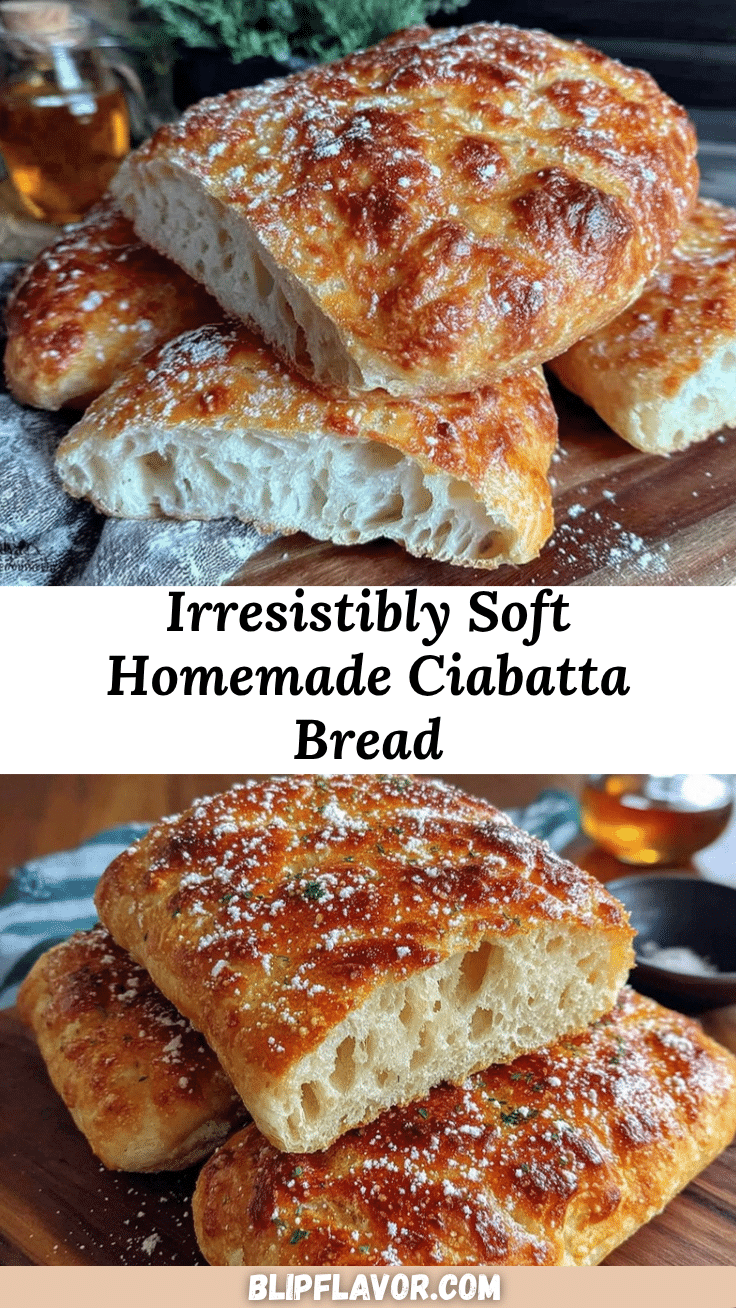
Perfect Homemade Ciabatta Bread Recipe in 5 Easy Steps

This easy ciabatta bread recipe delivers bakery-quality results with a golden crust and airy crumb, perfect for sandwiches, dipping, or enjoying with olive oil.
- Prep Time: 15 minutes
- Cook Time: 25 minutes
- Total Time: 3 hours 55 minutes
- Yield: 2 loaves 1x
- Category: Bread
- Cuisine: Italian
Ingredients
- 4 cups all-purpose flour (500g)
- 1 2/3 cups lukewarm water (400ml)
- 2 tsp instant yeast
- 2 tsp salt
- 2 tbsp olive oil
Instructions
- In a large mixing bowl, combine the flour, salt, and yeast. Gradually add the lukewarm water and olive oil, stirring with a wooden spoon until a sticky dough forms. This will take about 5 minutes.
- Cover the bowl with a clean kitchen towel and let the dough rest for 15 minutes. Then, lightly stretch and fold the dough over itself a few times to develop the gluten. Repeat this process every 30 minutes for the next 2 hours.
- After the stretching and folding, cover the bowl again and let the dough rise for 1-2 hours, or until it has doubled in size. You’ll know it’s ready when it’s puffed up and jiggly.
- Generously flour your work surface and gently turn out the dough. Divide it into two equal portions, being careful not to deflate it too much. Shape each piece into a rough rectangle by folding the edges inward.
- Place the shaped loaves on a well-floured baking sheet, cover them with a towel, and let them rise for another 30-45 minutes. Preheat your oven to 450°F (230°C) while they rise.
- Once the dough has risen, bake the loaves in the preheated oven for 20-25 minutes, or until the crust is golden brown and sounds hollow when tapped. Let cool on a wire rack before slicing.
Notes
[‘Ciabatta dough is meant to be sticky and wet to create air pockets in the final loaf.’, ‘Use floured hands and surfaces to handle sticky dough more easily.’, ‘Place a pan of hot water on the bottom rack of your oven while baking to create steam for a crispy crust.’, ‘Let the bread cool completely before slicing to avoid squishing the soft interior.’]
Nutrition
- Serving Size: 1 slice
- Calories: 120
- Sodium: 190
- Fat: 1
- Carbohydrates: 24
- Protein: 4
Keywords: ciabatta bread, homemade bread, Italian bread, easy bread recipe, bakery-style bread