Let me tell you, the sizzle of tender asparagus and sweet peas hitting a hot skillet, mingling with the grassy aroma of fresh parsley and dill, is enough to make my kitchen feel like a blooming spring garden. The colors pop—bright green flecks of spinach, sunny yellow eggs, and creamy white crumbles of goat cheese melting into every bite. The first time I made this spring garden vegetable frittata, I remember pausing right before the first forkful, just to admire how beautiful it looked (and to inhale that savory, herby fragrance). Honestly, it’s the kind of moment where you take a deep breath, grin, and think, “You know what? This is going to be something special.”
Years ago, when I was knee-high to a grasshopper, my grandma would whip up eggy garden bakes every weekend, tossing in whatever the backyard plot had to offer. This frittata isn’t just a recipe—it’s a family tradition, a way of celebrating the first real greens of spring. I first stumbled across this version at a neighbor’s brunch, trying to recreate the taste of that one perfect bite with goat cheese so tangy and soft it nearly melted on the tongue. I wish I’d discovered the power of fresh herbs in eggs years ago! They transform humble vegetables into something downright magical.
My family can’t resist sneaking wedges straight from the skillet while it’s still warm (and I can’t really blame them). Even the pickiest eaters end up grabbing seconds. This spring garden vegetable frittata with goat cheese is dangerously easy, packed with pure, nostalgic comfort, and just the thing for lazy Sunday brunches, last-minute potlucks, or a light lunch that brightens up your plate—and your Pinterest board. I’ve tested and tweaked this recipe more times than I can count (all in the name of research, of course), and it’s become a staple for family gatherings, gifting leftovers, or just when I need a meal that feels like a warm hug. Trust me, you’re going to want to bookmark this one.
Why You’ll Love This Spring Garden Vegetable Frittata Recipe with Goat Cheese
There’s something extra special about a spring garden vegetable frittata with goat cheese—it’s not just another egg bake. After plenty of trial runs and brunch table taste-tests, I can vouch for how this beauty stands out in a crowd. Here’s why you’ll love making (and eating) it:
- Quick & Easy: Comes together in under 40 minutes—great for busy mornings, lazy weekend brunches, or even “what’s for dinner?” nights.
- Simple Ingredients: You don’t need anything fancy—just fresh eggs, a handful of seasonal veggies, and some creamy goat cheese. Most of it’s probably in your fridge right now.
- Perfect for Brunch or Lunch: It’s the showstopper you want for Mother’s Day, Easter, or just a spring get-together with friends. Looks beautiful, tastes even better.
- Crowd-Pleaser: Kids and adults both go for seconds (and sometimes sneak thirds). Even veggie skeptics get on board with this one.
- Unbelievably Delicious: The combination of sweet, crisp garden vegetables, tangy goat cheese, and fresh herbs is pure comfort. Every bite is creamy, savory, and just a little bit fancy—without any of the fuss.
What sets this spring garden vegetable frittata apart? It’s the way the goat cheese softens into little pockets of creaminess, balancing the sweet crunch of asparagus and peas. (I blend a bit of milk into the eggs for a custardy texture, something I learned from a chef friend, and wow—it makes all the difference.) The fresh herbs sprinkle in a pop of flavor you won’t get from dried stuff. Plus, this recipe is naturally gluten-free and easy to adapt for low-carb diets.
But most of all, it’s the kind of brunch recipe that makes you want to close your eyes and savor the bite—light, bright, and satisfying but never heavy. There’s no stress, no complicated steps, just honest-to-goodness food that makes you feel good. You’ll impress your guests (with zero drama), and it’s just as lovely cold from the fridge as it is hot out of the oven. I’m telling you, this is comfort food with a spring in its step.
What Ingredients You Will Need for Spring Garden Vegetable Frittata with Goat Cheese and Herbs
This spring garden vegetable frittata keeps things simple yet bursting with flavor and color. The ingredients give you a taste of the season and are easy to grab at your local market (or maybe in your backyard garden if you’re lucky!). Here’s what you’ll need, plus a few substitution tips from my many attempts at making it just right:
- Large eggs (8) – The backbone of your frittata; I always go for free-range or local eggs for that golden color and rich taste.
- Whole milk (1/3 cup / 80 ml) – Makes the frittata fluffy and tender; you can swap for half-and-half for extra richness or use unsweetened almond milk for dairy-free.
- Kosher salt (3/4 teaspoon) and black pepper (1/2 teaspoon) – Season to taste; sometimes I’ll add a pinch of crushed red pepper for a little kick.
- Vegetables:
- Asparagus (1 cup / 100g, trimmed and cut into 1-inch pieces) – Look for thin, tender stalks; thick ones can be woody.
- Baby spinach leaves (2 cups / 60g, loosely packed) – Adds color and a mild green flavor; kale or Swiss chard also work.
- Fresh or frozen peas (1/2 cup / 75g) – Sweet pops of flavor (no need to defrost if using frozen—just toss them in).
- Green onions (2, thinly sliced) – Milder than regular onion and won’t overpower the frittata.
- Red bell pepper (1/2, diced) – Adds sweetness and color; yellow or orange peppers are great too.
- Goat cheese (4 oz / 115g, crumbled) – For that creamy, tangy bite; I love the Montchevre brand, but any fresh chevre will do.
- Fresh herbs:
- Dill (2 tablespoons, chopped) – Fragrant, fresh, and perfect for spring.
- Flat-leaf parsley (2 tablespoons, chopped) – Brightens up the flavor.
- Chives (1 tablespoon, chopped) – Optional, but adds a gentle onion note.
- Olive oil (2 tablespoons) – For sautéing; I use extra-virgin for the best flavor.
Ingredient Tips and Substitutions:
- Eggs: Farm-fresh eggs really do make a difference in color and flavor. If you want a lighter frittata, use 6 eggs plus 2 egg whites.
- Milk: Any unsweetened milk works—dairy or plant-based. Just avoid coconut milk (too strong).
- Goat cheese: If you’re not a fan, try feta or ricotta. For dairy-free, use a vegan soft cheese.
- Veggies: Mix it up with whatever’s in season—zucchini, mushrooms, or cherry tomatoes are all fair game.
- Herbs: Use what you have! Tarragon, basil, or even a touch of mint can be lovely.
Honestly, half the fun is using up what’s in your crisper drawer. Just keep the total veggie volume about the same, and you’re golden.
Equipment Needed
You don’t need a fancy chef’s kitchen to whip up this spring garden vegetable frittata with goat cheese. Here’s what I always grab before I get started:
- Oven-safe nonstick skillet (10-12 inch / 25-30cm): My favorite is a well-seasoned cast iron, but any nonstick or stainless pan that can go from stovetop to oven works. If you don’t have oven-safe, transfer the veggies to a greased pie dish before baking.
- Mixing bowls (medium and large): For whisking eggs and tossing veggies.
- Whisk or fork: For blending eggs, milk, salt, and pepper.
- Cutting board & sharp knife: For prepping all those lovely veggies and herbs.
- Measuring cups & spoons: Precision helps, especially with salt and herbs.
- Rubber spatula: For sautéing and scraping every last bit of egg mixture into the pan.
- Oven mitts: That skillet handle gets hot—ask my fingertips how I know!
Budget-friendly tip: I’ve made this frittata in a basic Pyrex pie dish when my skillet was busy—just sauté the veggies in a regular pan first. And if your skillet is older, double-check it’s oven-safe (look for an all-metal handle). For clean-up, a little baking soda paste keeps cast iron sparkling without much elbow grease.
How to Make Spring Garden Vegetable Frittata with Goat Cheese and Herbs

-
Preheat and Prep: Preheat your oven to 375°F (190°C). Place the oven rack in the center. While the oven heats, wash and prep all vegetables and herbs. Trim the asparagus, dice the pepper, slice the onions, and crumble your goat cheese.
Tip: Prepping everything before you start means you won’t scramble (pun intended) once the eggs hit the pan. -
Sauté the Veggies: Heat 2 tablespoons of olive oil in your oven-safe skillet over medium heat (about 2 minutes). Add asparagus and bell pepper; sauté for 3-4 minutes until they start to soften and turn bright. Stir in green onions and peas; cook for 2 minutes more.
Warning: If your pan is very hot, veggies can brown too quickly—lower the heat if needed. You want them crisp-tender, not mushy. -
Add Greens: Stir in baby spinach and a pinch of salt. Cook, stirring, until wilted (about 1 minute). Remove skillet from heat and spread veggies in an even layer.
Sensory cue: Spinach should be just glossy and bright green, not limp or watery. -
Mix Eggs & Herbs: In a large bowl, whisk together 8 eggs, 1/3 cup (80 ml) milk, 3/4 teaspoon kosher salt, and 1/2 teaspoon black pepper until frothy (about 1 minute). Stir in chopped dill, parsley, and chives.
Personal tip: Whisk longer than you think—the more air, the fluffier the frittata! -
Assemble Frittata: Pour the egg mixture evenly over the veggies in the skillet. Gently shake the skillet to settle the eggs. Sprinkle crumbled goat cheese evenly over the top.
Note: Don’t stir after adding eggs—let the layers form naturally. -
Cook on Stovetop: Place skillet back on medium-low heat. Cook for 2-3 minutes, just until the edges start to set. This gives you a head start before baking.
Warning: Don’t walk away—the bottom can brown quickly! -
Bake: Transfer skillet to preheated oven. Bake for 15-18 minutes, or until the center is just set and slightly puffed. (Insert a knife in the center; if it comes out clean, it’s done.)
Sensory cue: The top should look pale yellow with golden brown edges and little pockets of melted goat cheese. -
Rest and Serve: Carefully remove skillet from the oven (use mitts—seriously, it’s hot!). Let the frittata rest for 5 minutes. Run a rubber spatula around the edge to loosen, then slice into wedges.
Personal tip: The flavors deepen as it cools a bit—don’t rush!
If you hit a snag (like if the center’s still wobbly after baking), just cover loosely with foil and bake for 2-3 more minutes. For a little extra color, you can broil the top for 1 minute at the end, but watch closely—eggs brown fast! This frittata is pretty forgiving and comes together smoothly if you have everything ready to go. And yes, it’s just as good cold from the fridge the next day.
Cooking Tips & Techniques for the Best Spring Garden Vegetable Frittata
Making a frittata is pretty straightforward, but there are a few tricks I’ve learned (sometimes the hard way) to guarantee a great result every time:
- Whisk eggs well: Don’t skimp on whisking—the more air you beat in, the fluffier your frittata. If you’re in a hurry, use a blender for 10 seconds.
- Don’t overcook: The biggest mistake is overbaking, which leads to rubbery eggs. Pull it from the oven when it’s just set; the center should jiggle slightly.
- Layer flavors: Sautéing veggies first develops sweetness and keeps them from releasing water during baking. Always cook greens like spinach before adding eggs.
- Distribute fillings evenly: Spread veggies in a single layer before pouring eggs. This prevents “bare spots” and ensures every wedge is loaded with flavor.
- Let it rest: Giving the frittata 5 minutes to cool makes slicing easier and keeps it from falling apart.
- Use the right pan: Cast iron holds heat and cooks evenly, but make sure it’s well-oiled. Stainless pans work, too; just grease them well to prevent sticking.
- Don’t forget salt: Season the eggs and the veggies separately for best flavor. If you forget, a sprinkle of flaky salt on top helps rescue bland frittatas.
- Broil for color: If you love a golden top, switch the oven to broil for the last minute—but watch closely!
I’ll admit, I’ve had my share of frittatas stick to the pan (not fun), or turn out watery from not sautéing the veggies first. But with these little tweaks, you’ll have a creamy, flavorful brunch centerpiece every time. And don’t worry about perfection—a rustic look means nobody doubts it’s homemade!
Variations & Adaptations
The beauty of this spring garden vegetable frittata is how easy it is to riff on, depending on what’s in your fridge or who you’re feeding. Here are some of my favorite tweaks and swaps:
- Dairy-Free: Use a plant-based milk (like unsweetened almond or oat) and swap the goat cheese for a dairy-free cheese or leave it out entirely. It’s still delicious and packed with flavor from the herbs and veggies.
- Low-Carb or Keto: Skip the peas and bell pepper, and add extra leafy greens or chopped zucchini. You can also add cooked bacon or pancetta for a little extra protein.
- Seasonal Veggies: In summer, swap in chopped cherry tomatoes, zucchini, or fresh basil. In fall, try roasted butternut squash and sage with the goat cheese.
- Different Cheeses: Not a goat cheese fan? Feta, shredded cheddar, or even a dollop of ricotta all work. The tanginess of goat cheese is special, but don’t let it stop you from experimenting.
- Allergen Substitutes: Allergic to eggs? Try using a vegan egg substitute (like JUST Egg or a chickpea flour batter), though the texture will be slightly different. For nut allergies, always double-check your milk and cheese alternatives.
- Cooking Methods: No oven-safe skillet? Just sauté veggies in a regular pan, then pour everything into a greased baking dish and bake as usual. I’ve even made mini frittatas in muffin tins for grab-and-go lunches.
My personal favorite twist? Swapping out dill for fresh basil and adding a handful of halved cherry tomatoes in summer—so juicy! The frittata is a canvas, so don’t be shy about making it your own.
Serving & Storage Suggestions
For best results, serve your spring garden vegetable frittata with goat cheese warm or at room temperature. I like to slice it into wedges and top each piece with a sprinkle of extra fresh herbs or a grind of black pepper. If you want to get fancy, add a side salad with lemony vinaigrette or a basket of crusty bread.
It pairs beautifully with a glass of crisp white wine or a simple sparkling water with lemon. For brunch, a fruit salad or roasted potatoes makes a great sidekick. Honestly, I’ve also eaten leftovers cold, straight from the fridge, and it’s still fantastic!
To store, let the frittata cool completely. Wrap tightly in foil or transfer to an airtight container. It keeps in the refrigerator for up to 4 days. For longer storage, cut into wedges, wrap individually, and freeze for up to 2 months. Reheat slices gently in the microwave (about 30 seconds per wedge) or in a 300°F (150°C) oven, covered, until warmed through. The flavors actually deepen over time, so don’t be afraid to make it ahead for meal prep or easy lunches.
Nutritional Information & Benefits
Each wedge (assuming 6 servings) of this spring garden vegetable frittata with goat cheese is approximately 210 calories, 13g fat, 5g carbs, and 17g protein. It’s naturally gluten-free, and if you use plant-based milk and cheese, it’s easy to adapt for dairy-free diets.
The vegetables pack in fiber, vitamins A and C, and antioxidants—especially from the spinach, peas, and herbs. Eggs provide high-quality protein and healthy fats. Goat cheese is lower in lactose than many cheeses, making it easier to digest for some folks. Just a heads-up: this recipe contains eggs and dairy, so it’s not suitable for those with those allergies.
Personally, I love how this frittata makes me feel full and satisfied, but never weighed down. It’s a great way to sneak extra veggies into your day, and the balance of protein and healthy fats keeps energy steady (no mid-morning crash!).
Conclusion
If you’re looking for a spring brunch idea that’s as beautiful as it is tasty, this spring garden vegetable frittata with goat cheese might just be your new go-to. It’s easy to make, endlessly adaptable, and guaranteed to impress—whether you’re serving family, friends, or just yourself on a quiet Sunday morning. I love it because it brings together everything I crave in one dish: color, flavor, and a little bit of nostalgia.
Don’t be afraid to swap in your favorite veggies or herbs. This recipe is forgiving and flexible—just like the best kind of comfort food. If you give it a try, I’d love to hear your adaptations or see a photo! Drop a comment below, share your tweaks, or pin this recipe for later. Here’s to more weekends that taste like spring and meals that bring a little extra joy to your table.
Frequently Asked Questions
Can I make this spring garden vegetable frittata ahead of time?
Absolutely! You can bake the frittata the night before, let it cool, then refrigerate. Just reheat slices in the microwave or oven when you’re ready to serve.
What other vegetables can I use in this recipe?
You can use almost any quick-cooking or pre-cooked veggie: zucchini, mushrooms, cherry tomatoes, broccoli florets, or even leftover roasted veggies work well.
How do I keep my frittata from sticking to the pan?
Make sure to use a well-oiled nonstick or seasoned cast iron skillet. Let the frittata rest for a few minutes before slicing, and run a spatula around the edge to loosen.
Is this frittata suitable for a gluten-free diet?
Yes! The recipe contains no wheat or gluten-based ingredients, making it naturally gluten-free. Always check your cheese and milk labels just to be sure.
Can I freeze leftover frittata?
You sure can. Wrap individual wedges tightly and freeze for up to 2 months. To reheat, thaw overnight in the fridge and warm gently in the oven or microwave.
Pin This Recipe!
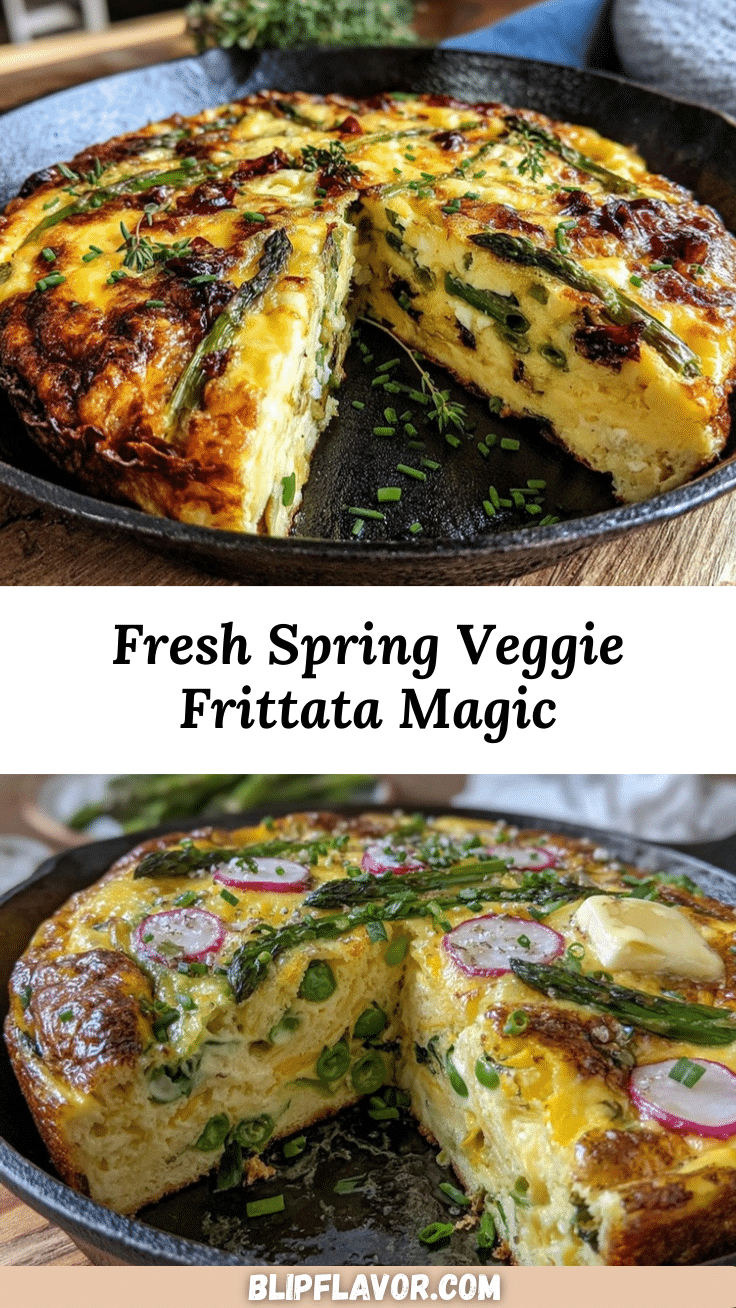
Spring Garden Vegetable Frittata with Goat Cheese

This easy spring garden vegetable frittata is packed with tender asparagus, sweet peas, fresh herbs, and creamy goat cheese. It’s a vibrant, comforting brunch centerpiece that’s naturally gluten-free and endlessly adaptable.
- Prep Time: 15 minutes
- Cook Time: 20 minutes
- Total Time: 35 minutes
- Yield: 6 servings 1x
- Category: Breakfast, Brunch
- Cuisine: American
Ingredients
- 8 large eggs
- 1/3 cup whole milk (or half-and-half, or unsweetened almond milk)
- 3/4 teaspoon kosher salt
- 1/2 teaspoon black pepper
- 1 cup asparagus, trimmed and cut into 1-inch pieces
- 2 cups baby spinach leaves, loosely packed
- 1/2 cup fresh or frozen peas
- 2 green onions, thinly sliced
- 1/2 red bell pepper, diced
- 4 oz goat cheese, crumbled
- 2 tablespoons fresh dill, chopped
- 2 tablespoons flat-leaf parsley, chopped
- 1 tablespoon chives, chopped (optional)
- 2 tablespoons olive oil
Instructions
- Preheat your oven to 375°F (190°C) and place the oven rack in the center. Wash and prep all vegetables and herbs. Trim asparagus, dice pepper, slice onions, and crumble goat cheese.
- Heat 2 tablespoons olive oil in an oven-safe skillet over medium heat. Add asparagus and bell pepper; sauté for 3-4 minutes until softened and bright. Stir in green onions and peas; cook for 2 minutes more.
- Stir in baby spinach and a pinch of salt. Cook, stirring, until wilted (about 1 minute). Remove skillet from heat and spread veggies in an even layer.
- In a large bowl, whisk together eggs, milk, kosher salt, and black pepper until frothy (about 1 minute). Stir in chopped dill, parsley, and chives.
- Pour the egg mixture evenly over the veggies in the skillet. Gently shake the skillet to settle the eggs. Sprinkle crumbled goat cheese evenly over the top.
- Place skillet back on medium-low heat. Cook for 2-3 minutes, just until the edges start to set.
- Transfer skillet to preheated oven. Bake for 15-18 minutes, or until the center is just set and slightly puffed. (Insert a knife in the center; if it comes out clean, it’s done.)
- Carefully remove skillet from the oven. Let the frittata rest for 5 minutes. Run a rubber spatula around the edge to loosen, then slice into wedges and serve.
Notes
Whisk eggs well for a fluffy texture. Sauté veggies before adding eggs to prevent watery frittata. Let the frittata rest before slicing for easier serving. Use a well-oiled skillet to prevent sticking. Adapt with seasonal veggies or different cheeses. Can be served warm, room temperature, or cold. Leftovers freeze well.
Nutrition
- Serving Size: 1 wedge (1/6 of frit
- Calories: 210
- Sugar: 3
- Sodium: 420
- Fat: 13
- Saturated Fat: 5
- Carbohydrates: 5
- Fiber: 2
- Protein: 17
Keywords: frittata, spring vegetables, goat cheese, brunch, gluten-free, easy, eggs, asparagus, spinach, peas, herbs