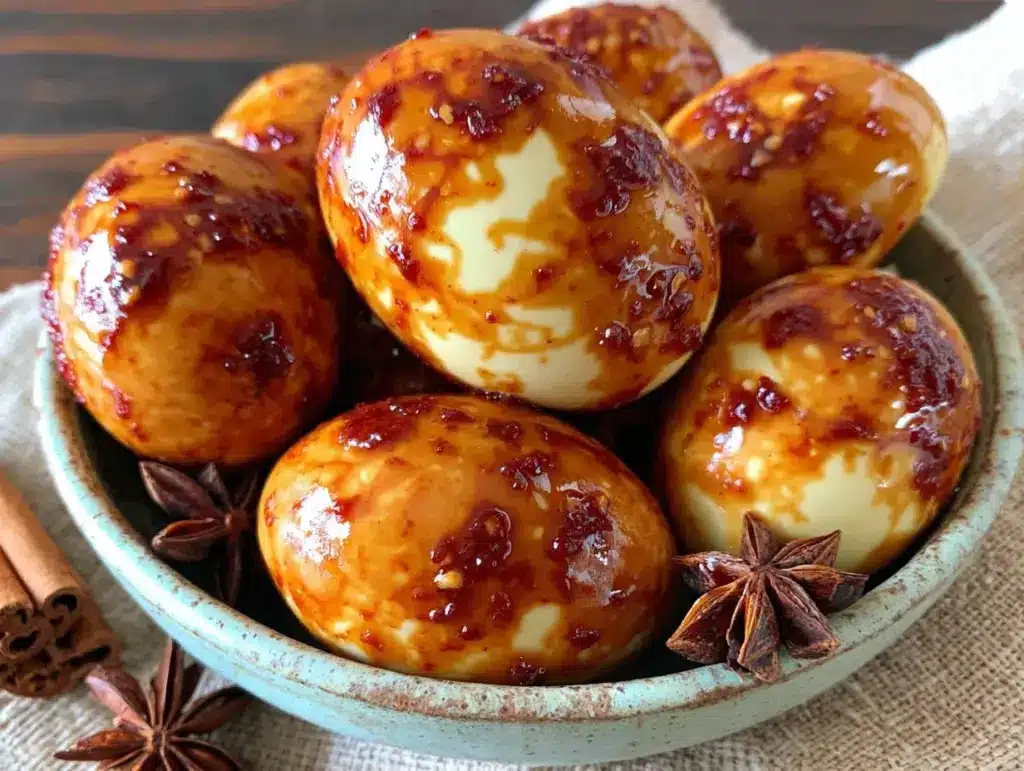
Let me tell you, the scent of simmering black tea, star anise, and cinnamon sticks filling my kitchen is enough to make anyone’s mouth water. The first time I made these savory Chinese tea eggs, I was instantly hooked—the kind of moment where you pause, take a deep breath, and just smile because you know you’re onto something truly special. Years ago, when I was knee-high to a grasshopper, my grandma used to make these for festive gatherings, and I always thought they were magical little treasures with their marbled patterns and deep, complex flavors.
You know what? I wish I’d discovered this recipe on a rainy weekend much earlier. My family couldn’t stop sneaking them off the cooling rack (and honestly, I can’t blame them). These eggs are dangerously easy but pack pure, nostalgic comfort in every bite. Perfect for brightening up your Pinterest cookie board or as a savory snack for your kids after school, these Chinese tea eggs have become a staple for family gatherings and gifting. After testing this recipe multiple times in the name of research, of course, I’m confident you’re going to want to bookmark this one.
Why You’ll Love This Recipe
Honestly, this savory Chinese tea eggs recipe has been a game changer in my kitchen, and here’s why you’re going to love it:
- Quick & Easy: Comes together in under 2 hours, mostly hands-off simmering—perfect for busy weeknights or last-minute cravings.
- Simple Ingredients: No fancy grocery trips needed; you likely already have everything in your pantry.
- Perfect for Snacking or Appetizers: Great for potlucks, lunchboxes, or cozy dinners with a side of steamed rice.
- Crowd-Pleaser: Always gets rave reviews from kids and adults alike—there’s just something magical about those marbled patterns and savory, spiced flavor.
- Unbelievably Delicious: The texture is just right—firm but creamy yolks with a perfectly infused, mellow spice blend.
What makes this recipe different? It’s all about the aromatic spices—the star anise, cinnamon, and black tea blend create a perfectly balanced seasoning profile that seeps deep into the eggshell cracks. Plus, the slow simmering and overnight steeping step means the flavors get a chance to really soak in. This isn’t just another boiled egg; it’s savory comfort food with a subtle, sophisticated twist. It’s the kind of recipe that makes you close your eyes after the first bite and sigh with satisfaction.
What Ingredients You Will Need
This recipe uses simple, wholesome ingredients to deliver bold flavor and satisfying texture without the fuss. Most are pantry staples, making it easy to whip up whenever the craving hits.
- Large eggs (12): Fresh, preferably free-range for the best taste and texture.
- Black tea bags (2): Strong black tea works best—English Breakfast or Pu-erh are my favorites for rich flavor.
- Star anise (3 whole): Adds warm, licorice-like aroma that defines the tea egg experience.
- Cinnamon sticks (2): Adds a subtle sweetness and depth.
- Sichuan peppercorns (1 teaspoon): For a mild numbing spice that balances the other flavors.
- Cloves (4 whole): Bring a fragrant, slightly sweet pungency.
- Fennel seeds (1 teaspoon): Adds a subtle anise note, enhancing complexity.
- Soy sauce (1/2 cup / 120 ml): Use light soy sauce for saltiness and umami depth.
- Dark soy sauce (2 tablespoons / 30 ml): For color and richer flavor (optional but recommended).
- Rock sugar or brown sugar (2 tablespoons): Balances saltiness with gentle sweetness.
- Water (6 cups / 1.4 liters): The base for the steeping broth.
- Salt (1 teaspoon): Enhances all the flavors.
If you want to swap things up, feel free to use coconut sugar instead of rock sugar, or tamari for a gluten-free soy sauce option. For a bit of a twist, some folks like adding a slice of ginger or a dried orange peel for extra aroma. I recommend loose-leaf black tea if you want a cleaner flavor, but quality tea bags work just fine too.
Equipment Needed
- Large saucepan or pot: Big enough to hold all the eggs and the steeping liquid comfortably. A heavy-bottomed pot works best to prevent burning the spices.
- Slotted spoon: Handy for gently lowering and removing eggs without cracking them prematurely.
- Mixing bowl: For an ice bath to cool the eggs quickly after boiling.
- Measuring cups and spoons: For precise seasoning measurements.
If you don’t have a large pot, a deep skillet with a lid can work in a pinch, but you’ll need to keep an eye on the liquid level more closely. I personally swear by a non-reactive stainless steel pot because it doesn’t impart any off-flavors to the broth. Maintenance tip: clean your pot thoroughly after simmering spices to avoid lingering smells.
Preparation Method
- Boil the eggs: Place the 12 large eggs in a single layer in your large pot. Cover with cold water by about 1 inch (2.5 cm). Bring to a rolling boil over medium-high heat, then immediately reduce to low and simmer for 7 minutes. This timing gives you firm whites with creamy yolks.
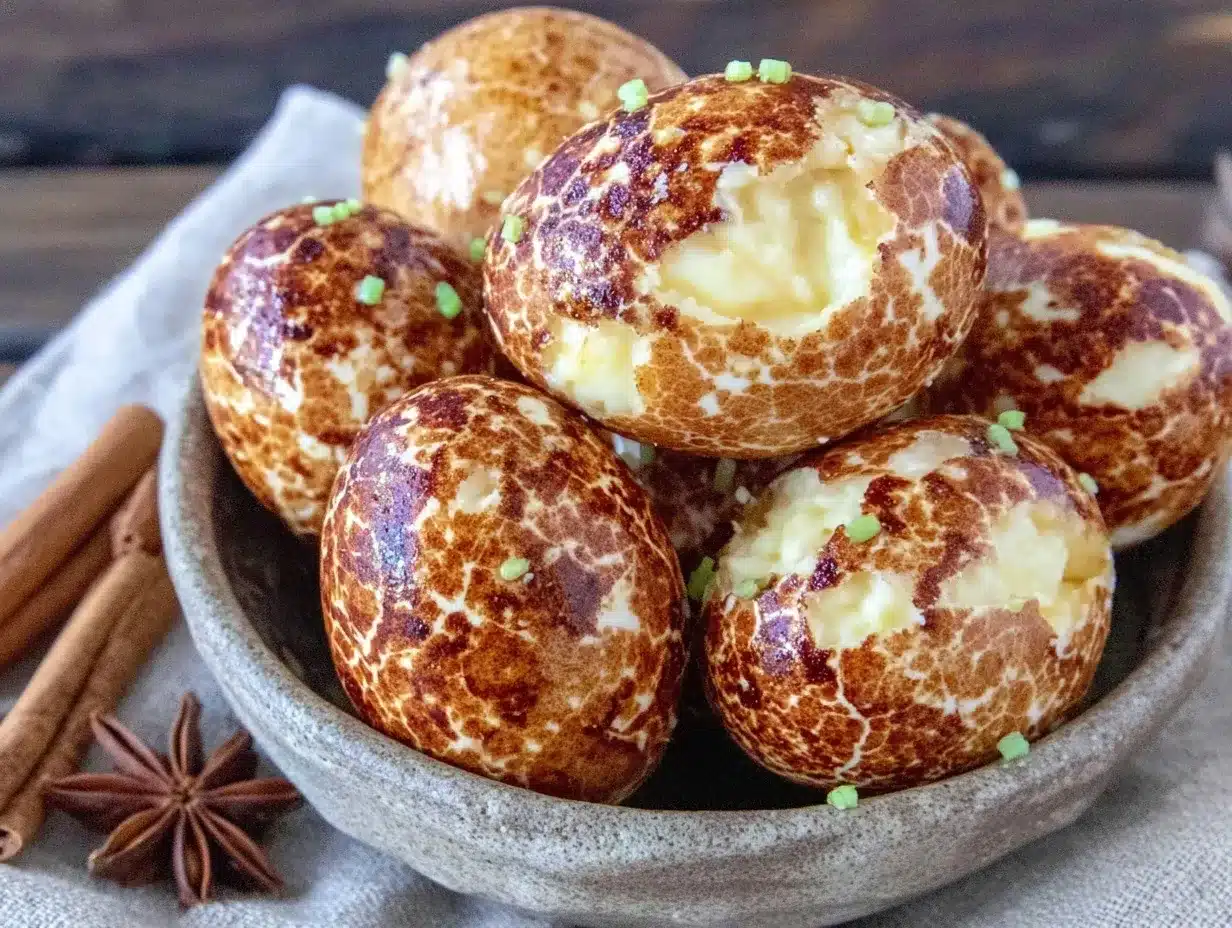
- Cool and crack the eggshells: Transfer the eggs to an ice bath for 10 minutes to stop cooking and make peeling easier. Once cool, gently tap each egg all over with the back of a spoon to crack the shells without peeling them off. The cracks let the flavor seep in, creating the signature marbled effect.
- Prepare the spiced tea broth: In the same pot (discard the water), add 6 cups (1.4 liters) of fresh water, 2 black tea bags, 3 star anise, 2 cinnamon sticks, 1 teaspoon Sichuan peppercorns, 4 cloves, 1 teaspoon fennel seeds, 1/2 cup (120 ml) light soy sauce, 2 tablespoons (30 ml) dark soy sauce, 2 tablespoons rock sugar, and 1 teaspoon salt. Bring this mixture to a gentle boil, stirring to dissolve the sugar and salt.
- Simmer the eggs in the broth: Carefully add the cracked eggs back into the simmering broth. Reduce heat to low and let them gently simmer for 1 hour, turning occasionally to ensure even color and flavor absorption.
- Steep overnight: After simmering, turn off the heat, cover the pot, and let the eggs steep in the spiced tea broth for at least 8 hours or overnight. This is when the magic happens—flavors deepen and the marbled pattern intensifies.
- Serve or store: Peel the eggs just before serving. They’re delicious warm or cold.
Pro tip: If you want a richer flavor, simmer for an additional 30 minutes before steeping. Watch the pot to add a splash of water if it gets too low. You’ll know it’s done when the eggs have a deep brown exterior and the aroma of spices fills the air.
Cooking Tips & Techniques
Okay, here’s the deal—getting those perfect savory Chinese tea eggs takes a bit of love but no rocket science. First off, cracking the shells without peeling is key to that stunning marbled effect. Don’t rush this step; gentle tapping all over the egg helps create just enough fissures for the flavors to seep in without losing the shell entirely.
One rookie mistake I made was simmering on too high heat—this can crack the eggshells too much and make the eggs tough. Keep the simmer gentle, and don’t let the broth boil hard. Also, don’t skip the overnight steeping. It might seem like a long wait, but the flavor difference is night and day.
Multi-tasking tip: While the eggs steep, you can prep other dishes or even make double batches to have on hand for snacks or lunchbox additions. These eggs hold up well for days in the fridge, and the flavor even deepens, so they’re great for meal prep.
Last but not least, use high-quality soy sauce and fresh spices. A little freshness in your star anise or cinnamon stick makes all the difference. If you don’t have Sichuan peppercorns, omit them rather than substitute with black pepper—it won’t taste quite right.
Variations & Adaptations
There’s room to play with this savory Chinese tea eggs recipe, and I love that about it!
- Vegetarian-friendly: Omit the soy sauce and use tamari or coconut aminos to keep it plant-based and gluten-free.
- Spicy kick: Add a dried chili or two to the broth for a subtle heat that pairs beautifully with the aromatic spices.
- Herbal twist: Swap out some of the spices for a few sprigs of fresh rosemary or a slice of ginger to change the flavor profile.
- Quick version: If short on time, simmer for 30 minutes and steep for 2 hours instead of overnight—still tasty, just less intense.
- Personal variation: I once added a splash of Shaoxing wine to the broth for a slightly boozy, deeper flavor that wowed my family at a dinner party.
Serving & Storage Suggestions
Serve these savory Chinese tea eggs warm or cold—both work like a charm. They’re fantastic sliced over steamed rice or tossed in a salad with a drizzle of sesame oil. Honestly, they make a perfect protein-packed snack to grab on the go.
For presentation, peeling the eggs just before serving keeps them looking fresh and the marbling vibrant. Arrange on a platter with fresh herbs like cilantro or scallions for a pop of color.
Store peeled or unpeeled eggs in an airtight container in the refrigerator for up to 5 days. If frozen, the texture changes, so I recommend refrigeration only. To reheat, pop them in hot water for a few minutes or microwave covered with a damp paper towel for 20-30 seconds.
Fun fact: the flavors actually get better after a day or two as the spices continue to infuse. So if you’re making ahead for a party, these eggs are your best friend.
Nutritional Information & Benefits
Each savory Chinese tea egg contains approximately 70-80 calories, packed with about 6 grams of protein and minimal carbs. They’re a great low-carb, high-protein snack that keeps you satisfied longer.
The spices bring more than flavor—they have health benefits too. Star anise and cinnamon have antioxidant properties and can aid digestion. Sichuan peppercorns may support circulation, while soy sauce adds umami with some sodium to watch for.
Gluten-free versions are easy with tamari or coconut aminos. Just watch the soy sauce sodium content if you’re on a low-sodium diet. Personally, I love this recipe as a nutritious, flavorful snack that feels indulgent without being heavy.
Conclusion
So there you have it—savory Chinese tea eggs with aromatic spices that are easy to make, packed with flavor, and perfect for so many occasions. Whether you want a savory snack, a protein boost, or a unique dish to impress guests, this recipe’s got your back.
Feel free to customize the spices and steeping time to match your taste buds. Honestly, this recipe has become a favorite in my family for good reason—it’s simple, satisfying, and downright delicious. I can’t wait to hear how you make it your own!
If you try this savory Chinese tea eggs recipe, please leave a comment or share your variations—I love seeing your kitchen adventures. Happy cooking and enjoy every flavorful bite!
Frequently Asked Questions
How long should I steep the eggs for best flavor?
For the best flavor and marbling, steep the eggs in the spiced tea broth overnight (8+ hours). A minimum of 2 hours works in a pinch but the taste will be milder.
Can I use hard-boiled eggs without cracking the shells?
Cracking the shells is essential to allow the flavors to seep in and create the signature marbled effect. Without cracking, the flavor won’t penetrate well.
Are Chinese tea eggs gluten-free?
They can be gluten-free if you use tamari or gluten-free soy sauce alternatives. Regular soy sauce contains wheat, so check labels if gluten is a concern.
Can I make these eggs ahead for meal prep?
Absolutely! They store well in the fridge for up to 5 days and actually taste better as the flavors deepen over time.
What can I serve with Chinese tea eggs?
They’re great with steamed rice, noodles, in salads, or simply as a savory snack. Pairing with sesame oil or fresh herbs like scallions adds a nice touch.
Pin This Recipe!
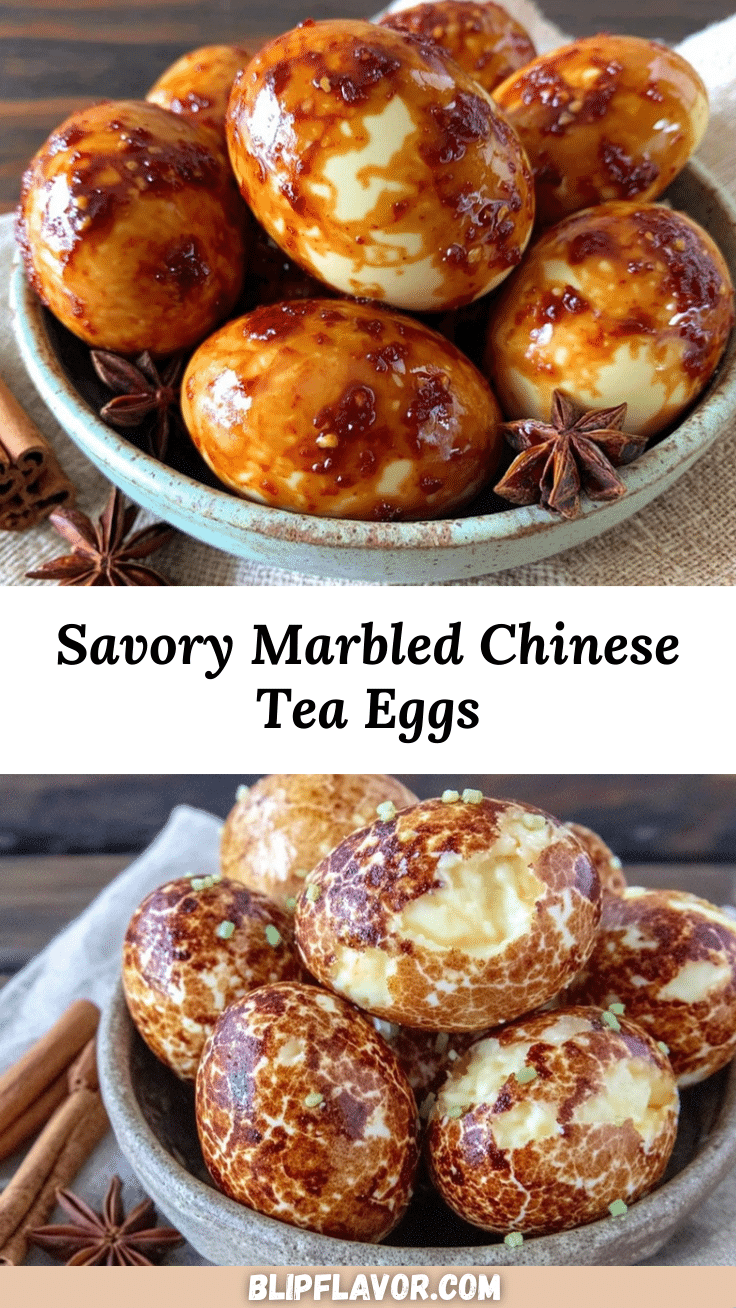
Savory Chinese Tea Eggs Recipe with Aromatic Spices Easy and Perfect
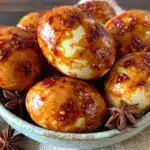
A flavorful and easy-to-make recipe for Chinese tea eggs infused with aromatic spices like star anise, cinnamon, and black tea. Perfect as a savory snack or appetizer with a beautiful marbled pattern and deep, complex flavors.
- Prep Time: 15 minutes
- Cook Time: 1 hour 7 minutes
- Total Time: 9 hours 22 minutes
- Yield: 12 servings 1x
- Category: Snack, Appetizer
- Cuisine: Chinese
Ingredients
- 12 large eggs (preferably free-range)
- 2 black tea bags (English Breakfast or Pu-erh recommended)
- 3 whole star anise
- 2 cinnamon sticks
- 1 teaspoon Sichuan peppercorns
- 4 whole cloves
- 1 teaspoon fennel seeds
- 1/2 cup (120 ml) light soy sauce
- 2 tablespoons (30 ml) dark soy sauce (optional but recommended)
- 2 tablespoons rock sugar or brown sugar
- 6 cups (1.4 liters) water
- 1 teaspoon salt
Instructions
- Place the 12 large eggs in a single layer in a large pot. Cover with cold water by about 1 inch (2.5 cm). Bring to a rolling boil over medium-high heat, then immediately reduce to low and simmer for 7 minutes.
- Transfer the eggs to an ice bath for 10 minutes to stop cooking and make peeling easier. Once cool, gently tap each egg all over with the back of a spoon to crack the shells without peeling them off.
- Discard the water from the pot. Add 6 cups (1.4 liters) of fresh water, 2 black tea bags, 3 star anise, 2 cinnamon sticks, 1 teaspoon Sichuan peppercorns, 4 cloves, 1 teaspoon fennel seeds, 1/2 cup (120 ml) light soy sauce, 2 tablespoons (30 ml) dark soy sauce, 2 tablespoons rock sugar, and 1 teaspoon salt. Bring to a gentle boil, stirring to dissolve sugar and salt.
- Carefully add the cracked eggs back into the simmering broth. Reduce heat to low and gently simmer for 1 hour, turning occasionally to ensure even color and flavor absorption.
- Turn off the heat, cover the pot, and let the eggs steep in the spiced tea broth for at least 8 hours or overnight.
- Peel the eggs just before serving. Serve warm or cold.
Notes
Cracking the eggshells without peeling is essential for the marbled effect and flavor infusion. Keep simmering heat low to avoid tough eggs. Overnight steeping is recommended for best flavor and marbling. Use high-quality soy sauce and fresh spices. For richer flavor, simmer an additional 30 minutes before steeping. Store in refrigerator up to 5 days; do not freeze.
Nutrition
- Serving Size: 1 egg
- Calories: 75
- Sugar: 1.5
- Sodium: 550
- Fat: 5
- Saturated Fat: 1.5
- Carbohydrates: 2
- Fiber: 0.5
- Protein: 6
Keywords: Chinese tea eggs, savory eggs, marbled eggs, star anise eggs, cinnamon eggs, aromatic spices, easy Chinese recipe, tea eggs recipe, protein snack