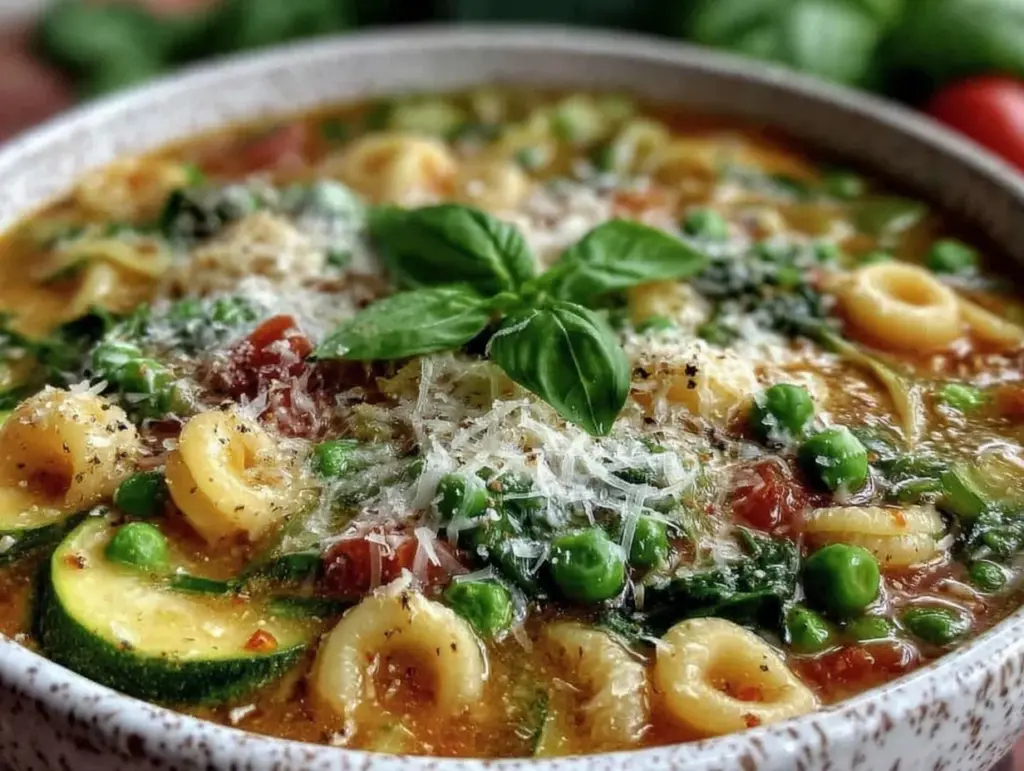
That afternoon, the spring rain was tapping steadily on my windows, a soft reminder that the season was still waking up. I’d been fiddling with vegetables in the fridge, not quite sure what to make, when I stumbled on a mix of fresh peas, baby carrots, and a few herbs I’d picked up at the farmer’s market earlier that week. Honestly, I wasn’t expecting much—just something quick and light to soothe the damp chill in the air. But one pot later, the kitchen filled with the gentle aroma of simmering broth, garlic, and fresh vegetables, and I realized this spring minestrone with Parmesan was something special.
At first, I was skeptical about how well these simple, fresh ingredients would come together without hours of cooking. But that first spoonful changed the game. The bright greens, tender beans, and that sharp, nutty Parmesan melted into the broth made for a comforting yet lively bite, like spring captured in a bowl. It wasn’t just soup—it was a gentle pause in a hectic day, a little moment of calm and flavor that stuck with me long after the last drop.
I find myself making this spring minestrone often now, especially when I want something fresh but satisfying. There’s just something about the way the Parmesan adds a subtle richness without overpowering the delicate veggies that keeps me coming back. It’s also a recipe that feels both humble and impressive—perfect for throwing together on a weekday or serving up when unexpected guests arrive.
So, if you’re in the mood for a soup that’s light, fresh, and packed with garden flavors but still warm and inviting, this fresh spring minestrone with Parmesan might just be the quiet comfort you didn’t know you needed. It’s a small ritual I’ve grown fond of, one that brings a little sunshine to even the grayest days.
Why You’ll Love This Fresh Spring Minestrone with Parmesan Recipe
After testing this soup more times than I can count, I’ve realized it checks all the boxes for what a fresh spring minestrone with Parmesan should be. Here’s why it’s become a staple in my kitchen:
- Quick & Easy: Ready in under 40 minutes, it’s perfect for busy weeknights or when you want something nourishing without fuss.
- Simple Ingredients: No need for fancy or hard-to-find items; most ingredients are pantry staples or fresh market finds you can grab anytime.
- Perfect for Spring: Showcases seasonal vegetables at their peak, making it ideal for welcoming warmer days with lighter meals.
- Crowd-Pleaser: Whether it’s family dinner or a casual lunch with friends, this minestrone tends to disappear fast thanks to its balanced flavors.
- Unbelievably Delicious: The Parmesan finishes the soup with a comforting umami kick that turns simple veggies into something truly satisfying.
What sets this recipe apart is the way it balances freshness with heartiness. I blend just enough Parmesan into the broth to give it body without weighing it down, and the medley of vegetables is chosen to offer a variety of textures—from tender beans to crisp carrots and sweet peas. It’s not just another minestrone; it’s one that feels homemade with a thoughtful touch, like the kind of soup you’d want on a gentle spring afternoon or paired alongside a flaky quiche.
This recipe isn’t just about flavor—it’s about that cozy feeling of knowing you’re eating something wholesome, made with care and a little bit of kitchen magic. And honestly, it’s the kind of soup that makes you pause and appreciate the season’s best offerings.
What Ingredients You Will Need for Fresh Spring Minestrone with Parmesan
This fresh spring minestrone brings together simple, wholesome ingredients to deliver bright flavors and a satisfying texture without any fuss. Most of these are pantry or market staples, easy to swap if needed.
- Olive oil – 2 tablespoons (extra virgin for best flavor)
- Yellow onion, finely chopped – 1 medium (adds sweetness and depth)
- Garlic cloves, minced – 3 large (the aromatic backbone)
- Celery stalks, diced – 2 medium (for subtle crunch)
- Carrots, peeled and diced – 2 medium (for natural sweetness)
- Fresh green beans, trimmed and cut into 1-inch pieces – 1 cup (adds snap and color)
- Fresh or frozen peas – 1 cup (sweet burst of spring)
- Cannellini beans, drained and rinsed – 1 can (15 oz / 425 g) (for creamy protein)
- Vegetable broth – 6 cups (1.4 liters) (I prefer a low-sodium brand like Swanson for control)
- Diced tomatoes, canned – 1 can (14.5 oz / 410 g) (adds acidity and brightness)
- Small pasta shells or ditalini – ¾ cup (about 75 g) (optional but adds heartiness; gluten-free pasta works too)
- Fresh spinach, roughly chopped – 2 cups (loosely packed) (adds vibrant green color)
- Fresh parsley, chopped – ¼ cup (for garnish and fresh herbal notes)
- Parmesan cheese, grated – ½ cup (about 50 g) plus extra for serving (look for Parmigiano-Reggiano if possible)
- Salt and freshly ground black pepper – to taste
- Red pepper flakes – a pinch (optional, for a subtle kick)
If you want to adjust, swapping the beans for chickpeas or adding zucchini works wonderfully too. For a dairy-free version, skip the Parmesan or use a plant-based cheese alternative—it won’t be quite the same, but still tasty. In summer, I sometimes swap frozen peas for fresh ones straight from the pod, which feels extra special and sweet.
Equipment Needed
- Large heavy-bottomed pot or Dutch oven (a 5-quart / 5-liter size works great for even cooking)
- Wooden spoon or silicone spatula for stirring
- Sharp chef’s knife for chopping vegetables
- Cutting board
- Measuring cups and spoons
- Grater for fresh Parmesan cheese
- Colander or sieve (for rinsing beans and draining pasta)
If you don’t have a Dutch oven, a deep saucepan will do, but be sure it has a thick base to prevent burning. I once tried making this soup in a thin pan, and the bottom scorched slightly—lesson learned. For grating Parmesan, a microplane works best for fine shreds, but a box grater is perfectly fine too. Investing in a good quality chef’s knife makes chopping the fresh veggies much more enjoyable and quicker, trust me.
Preparation Method for Fresh Spring Minestrone with Parmesan
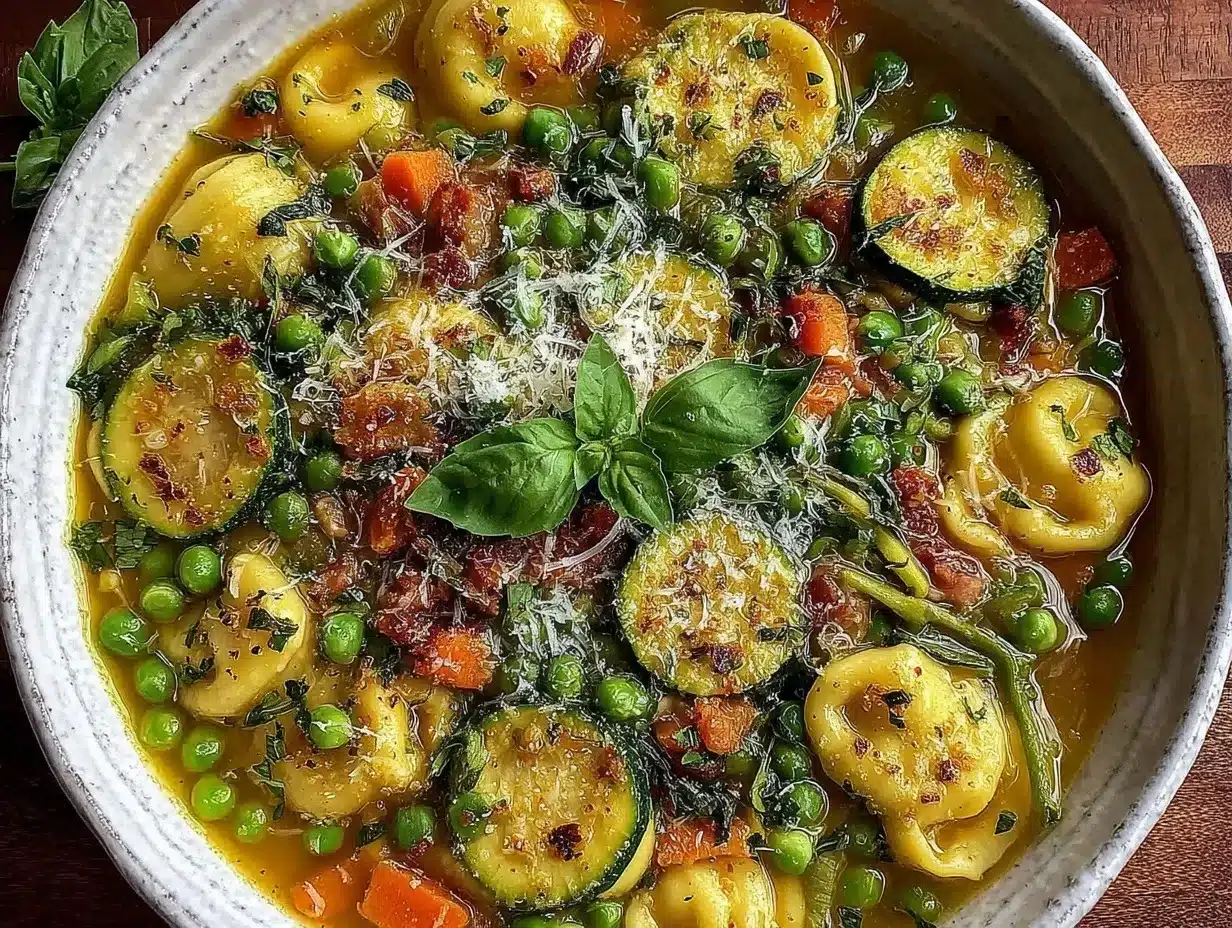
- Prep your vegetables: Dice the onion, carrots, and celery finely so they cook evenly. Trim and cut the green beans into 1-inch pieces. Mince the garlic cloves and roughly chop the spinach and parsley. This prep should take about 10-15 minutes.
- Heat olive oil: Place your large pot over medium heat and add 2 tablespoons of olive oil. Once shimmering, add the chopped onion, celery, and carrots. Sauté gently for 5-7 minutes until they begin to soften and the onion turns translucent. Stir occasionally to avoid browning.
- Add garlic and green beans: Stir in the garlic and green beans, cooking for another 2-3 minutes until fragrant. The kitchen should start smelling aromatic and fresh now.
- Pour in broth and tomatoes: Add the vegetable broth and canned diced tomatoes with their juices. Give it a good stir and bring the mixture to a gentle boil. Lower heat to a simmer and cook uncovered for 10 minutes. This step lets the flavors meld and the green beans soften.
- Add beans and pasta: Stir in the rinsed cannellini beans and pasta shells (if using). Continue simmering for another 10 minutes or until the pasta is tender but not mushy. Keep an eye on the pasta texture to avoid overcooking.
- Finish with peas and spinach: Toss in the fresh or frozen peas and chopped spinach. Cook for 3-4 more minutes until the peas are bright green and the spinach has wilted.
- Season and add Parmesan: Remove the pot from heat. Stir in the grated Parmesan cheese, salt, pepper, and a pinch of red pepper flakes if you like a bit of heat. The cheese will melt into the broth, thickening it slightly and giving a silky mouthfeel.
- Garnish and serve: Ladle the soup into bowls and sprinkle with fresh parsley and extra Parmesan. Serve warm with crusty bread for dipping.
If the soup seems too thick, add a splash of broth or water to loosen it. Taste and adjust seasoning as needed—sometimes a little more salt or pepper makes all the difference. The whole process typically takes around 35-40 minutes, making it a practical option for a flavorful, fresh meal any day.
Cooking Tips & Techniques for Perfect Spring Minestrone
Honestly, making this fresh spring minestrone is straightforward, but a few tricks help get it just right every time. First, don’t rush the sautéing of your aromatics—the onion, celery, and carrots. Softening them gently releases their sweetness and builds the soup’s base flavor. I’ve learned the hard way that blasting the heat at this stage can burn garlic and turn the soup bitter.
When adding pasta, timing matters. Cook it just until al dente because it will continue to soak up broth and soften, especially if you plan to store leftovers. If you’re worried about overcooking, consider cooking the pasta separately and adding it to individual bowls when serving.
Another tip: use freshly grated Parmesan rather than pre-grated powder. It melts better and adds a richer, nuttier flavor. I usually keep a wedge in the fridge just for this soup. Also, adding the cheese off the heat prevents the broth from breaking or becoming grainy.
Multitasking can save time here. While the broth simmers, prep your garnish and grate the cheese. This way, everything comes together quickly once the soup is ready. Lastly, always taste at the end and adjust seasoning—broth brands vary widely in saltiness, so it’s best to add gradually.
Variations & Adaptations for Fresh Spring Minestrone
This soup is wonderfully flexible, which means you can tailor it to your preferences or what’s on hand. Here are a few ways I’ve tweaked it:
- Protein boost: Add cooked shredded chicken or turkey for a heartier version. It’s also great with a drizzle of pesto stirred in just before serving.
- Vegetarian or vegan: Stick to vegetable broth and skip the Parmesan or use a vegan cheese alternative. Nutritional yeast also adds a cheesy flavor without dairy.
- Seasonal swap: In early summer, I replace the green beans with tender zucchini and add fresh basil instead of parsley for a fragrant twist.
- Low-carb option: Skip the pasta and add extra beans and vegetables such as diced cauliflower or shredded cabbage to keep it filling yet lighter on carbs.
- Spice it up: For a bit more heat, I sometimes toss in a diced jalapeño with the garlic or sprinkle crushed red pepper flakes generously.
One of my favorite personal variations was inspired by a friend’s garden bounty: swapping canned tomatoes for fresh heirloom cherry tomatoes, which added a vibrant sweetness and a bit of texture that made the soup feel even more special. Feel free to experiment and make this spring minestrone your own!
Serving & Storage Suggestions
This fresh spring minestrone with Parmesan is best served warm, ideally right after cooking when the flavors are bright and the Parmesan is perfectly melted. I love to serve it in rustic bowls with a sprinkle of fresh parsley and an extra shaving of Parmesan on top. Pair it with crusty bread or a light salad for a complete meal.
Leftovers store beautifully in the refrigerator for up to 3 days. If the pasta has absorbed too much broth, simply add a splash of broth or water when reheating to loosen the soup. It reheats well on the stove over medium heat or in the microwave. For longer storage, you can freeze the soup (without pasta) in airtight containers for up to 3 months. When ready to eat, thaw overnight and add freshly cooked pasta or extra vegetables to refresh the texture.
Interestingly, the flavors tend to deepen after a day or two, making it a great make-ahead option. Just remember to add any delicate greens or Parmesan fresh when serving to keep that fresh spring brightness alive.
Nutritional Information & Benefits
This fresh spring minestrone is a nourishing bowl packed with vitamins, fiber, and plant-based protein. Per serving (about 1.5 cups / 350 ml), you’re getting approximately:
| Calories | 220-250 kcal |
|---|---|
| Protein | 10-12 grams |
| Carbohydrates | 30-35 grams |
| Fiber | 7-8 grams |
| Fat | 5-7 grams (mainly from olive oil and Parmesan) |
The vegetables provide antioxidants, vitamin C, and potassium, while the beans add a satisfying dose of fiber and protein, helping you feel full longer. Olive oil contributes healthy monounsaturated fats, and Parmesan adds calcium and a rich flavor punch.
This recipe suits gluten-free diets easily by swapping pasta for gluten-free options. It’s also low in saturated fat and free from added sugars. If you’re mindful of sodium, choosing a low-sodium broth and moderating added salt ensures it remains heart-healthy.
Conclusion
This fresh spring minestrone with Parmesan has become one of those recipes I turn to when I want something that feels like a hug in a bowl—light, fresh, yet comforting. It’s versatile enough to adapt to your pantry and preferences, but reliable enough to impress without stress.
Whether you’re new to homemade soups or a seasoned home cook, this recipe offers a simple way to celebrate the season’s best produce. I love it because it’s honest and straightforward, yet full of flavor and texture that keeps me coming back.
If you try making this soup, I’d love to hear how you customize it or what twists you add. Sharing those little kitchen discoveries is part of what makes cooking so rewarding, don’t you think? Here’s to many cozy spring meals ahead!
Frequently Asked Questions About Fresh Spring Minestrone with Parmesan
Can I make this soup ahead of time?
Yes! The soup tastes great reheated. Store the soup without pasta in the fridge for up to 3 days, and add freshly cooked pasta when serving to keep the texture perfect.
What can I use instead of Parmesan cheese?
You can use Pecorino Romano for a sharper flavor or nutritional yeast for a dairy-free vegan option. Keep in mind the flavor profile will change slightly.
Is this soup suitable for freezing?
Absolutely. Freeze the soup without pasta in airtight containers for up to 3 months. Thaw overnight and add fresh pasta or veggies when reheating.
Can I substitute other vegetables for those listed?
Yes! Zucchini, kale, or asparagus work well in spring variations. Feel free to use what you have on hand or what’s fresh at the market.
How do I make this recipe gluten-free?
Simply use gluten-free pasta or omit the pasta and add extra beans and vegetables to maintain heartiness.
For a cozy brunch idea pairing wonderfully with this soup, you might enjoy the quiche Lorraine recipe or the light and fluffy lemon ricotta pancakes. Both bring different but delicious vibes to your spring table.
Pin This Recipe!
Fresh Spring Minestrone Recipe Easy Homemade Soup with Parmesan

A light and fresh spring minestrone soup packed with seasonal vegetables, beans, and finished with Parmesan for a comforting yet lively flavor. Ready in under 40 minutes, perfect for a nourishing meal any day.
- Prep Time: 15 minutes
- Cook Time: 25 minutes
- Total Time: 40 minutes
- Yield: 6 servings 1x
- Category: Soup
- Cuisine: Italian
Ingredients
- 2 tablespoons extra virgin olive oil
- 1 medium yellow onion, finely chopped
- 3 large garlic cloves, minced
- 2 medium celery stalks, diced
- 2 medium carrots, peeled and diced
- 1 cup fresh green beans, trimmed and cut into 1-inch pieces
- 1 cup fresh or frozen peas
- 1 can (15 oz / 425 g) cannellini beans, drained and rinsed
- 6 cups (1.4 liters) vegetable broth (low-sodium preferred)
- 1 can (14.5 oz / 410 g) diced tomatoes
- ¾ cup (about 75 g) small pasta shells or ditalini (optional, gluten-free pasta works too)
- 2 cups fresh spinach, roughly chopped (loosely packed)
- ¼ cup fresh parsley, chopped
- ½ cup (about 50 g) grated Parmesan cheese plus extra for serving
- Salt and freshly ground black pepper to taste
- Pinch of red pepper flakes (optional)
Instructions
- Dice the onion, carrots, and celery finely. Trim and cut the green beans into 1-inch pieces. Mince the garlic cloves and roughly chop the spinach and parsley. (10-15 minutes prep)
- Heat 2 tablespoons olive oil in a large pot over medium heat. Add chopped onion, celery, and carrots. Sauté gently for 5-7 minutes until softened and onion is translucent, stirring occasionally.
- Add garlic and green beans. Cook for 2-3 minutes until fragrant.
- Pour in vegetable broth and canned diced tomatoes with juices. Stir and bring to a gentle boil. Lower heat and simmer uncovered for 10 minutes.
- Stir in rinsed cannellini beans and pasta shells (if using). Simmer for another 10 minutes until pasta is tender but not mushy.
- Add peas and chopped spinach. Cook for 3-4 minutes until peas are bright green and spinach is wilted.
- Remove pot from heat. Stir in grated Parmesan cheese, salt, pepper, and red pepper flakes if using. Cheese will melt into broth, thickening it slightly.
- Ladle soup into bowls. Garnish with fresh parsley and extra Parmesan. Serve warm with crusty bread.
Notes
Do not rush sautéing the aromatics to avoid bitterness. Cook pasta just until al dente to prevent over-softening. Use freshly grated Parmesan for best flavor and melt it off heat to avoid graininess. Adjust seasoning gradually due to varying broth saltiness. For dairy-free, omit Parmesan or use vegan cheese alternatives. Pasta can be cooked separately and added when serving to maintain texture. Leftovers store well; add broth when reheating if too thick.
Nutrition
- Serving Size: About 1.5 cups (350
- Calories: 220250
- Sugar: 5
- Sodium: 400600
- Fat: 57
- Saturated Fat: 1.5
- Carbohydrates: 3035
- Fiber: 78
- Protein: 1012
Keywords: spring minestrone, minestrone soup, homemade soup, Parmesan soup, easy soup recipe, vegetable soup, healthy soup, quick soup, vegetarian soup, gluten-free option