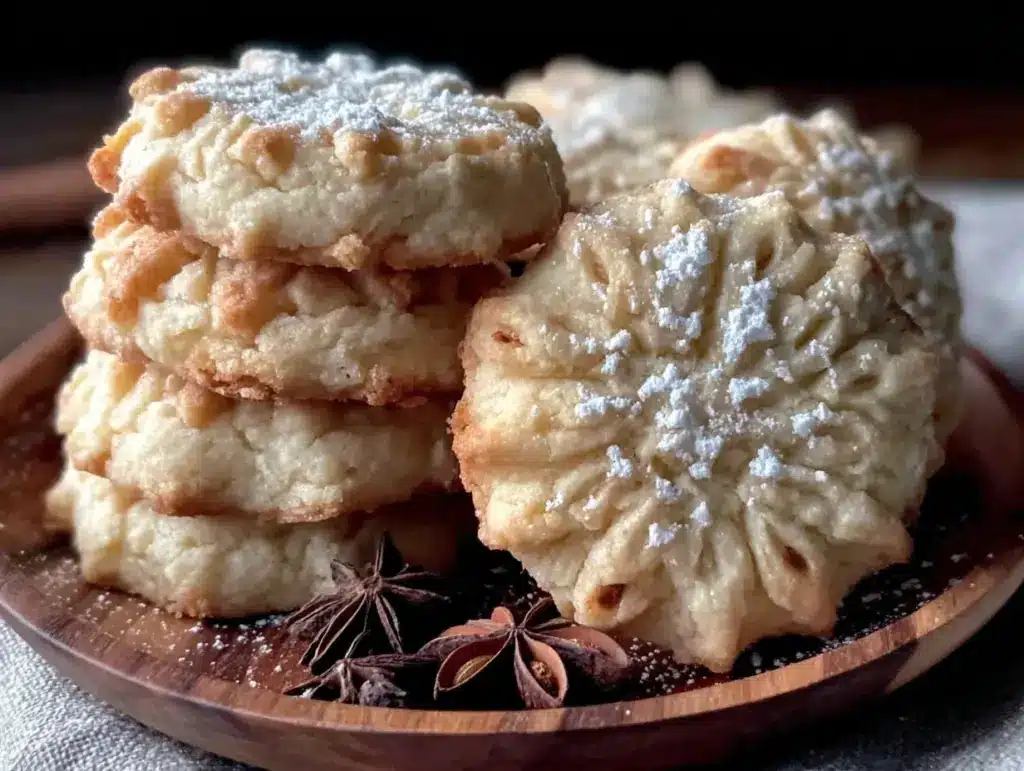
Let me tell you, the moment the warm aroma of anise wafted from my oven, I knew I was onto something truly special with these delicious Springerle cookies. The scent is like a gentle whisper of old-world charm, instantly transporting you to cozy kitchens filled with laughter and stories. The first time I baked these delicate treats, I was instantly hooked—there’s just something about the way the intricate patterns hold a promise of pure, nostalgic comfort that makes you pause, take a deep breath, and smile.
Growing up, my grandma used to make Springerle cookies every holiday season, and I remember being knee-high to a grasshopper watching her press the wooden molds into the dough with such care. Years ago, I stumbled upon this traditional anise-flavored recipe during a rainy weekend baking spree, hoping to recreate that magic. Honestly, I wish I had discovered these delicious Springerle cookies years ago—they’ve become a staple for family gatherings, gifting, and those quiet moments when you just want a sweet treat that feels like a warm hug.
My family couldn’t stop sneaking them off the cooling rack (and I can’t really blame them). These cookies are dangerously easy to make, yet they look like you spent hours fussing over them. Perfect for potlucks, holiday celebrations, or brightening up your Pinterest cookie board, this recipe brings a bit of tradition and a lot of flavor to your kitchen. After testing it multiple times in the name of research, of course, I’m confident you’re going to want to bookmark this one.
Why You’ll Love This Recipe
Honestly, this delicious Springerle cookies recipe is a keeper for so many reasons. It’s not just about the taste—it’s about the experience, the tradition, and the sheer joy of working with a dough that’s both simple and rewarding. Here’s what makes it stand out:
- Quick & Easy: Comes together in under 30 minutes of active prep, perfect for busy days or last-minute baking urges.
- Simple Ingredients: No need for fancy shopping trips; most of the ingredients are pantry staples you probably already have on hand.
- Perfect for Holidays: These anise-flavored treats are a classic for Christmas or any festive gathering, adding a touch of elegance and nostalgia.
- Crowd-Pleaser: The unique anise flavor and delicate texture always get rave reviews from kids and adults alike.
- Unbelievably Delicious: The crisp edges with a slightly chewy center create a texture and flavor combo that delivers pure comfort food vibes.
This isn’t just any Springerle recipe—it’s the one that captures the traditional anise flavor beautifully while keeping the dough tender and easy to work with. The secret? A little patience during drying and the perfect balance of spices. It’s the kind of recipe that makes you close your eyes after the first bite and smile because you know you’ve found something truly special. Whether you want to impress guests or indulge in a timeless treat, this recipe hits the sweet spot without stress.
What Ingredients You Will Need
This recipe uses simple, wholesome ingredients to deliver that authentic Springerle cookie flavor and texture without any fuss. Most of these are pantry staples, and you can swap a few if needed.
- Large eggs, room temperature (about 3; these add richness and help with the texture)
- Granulated sugar, 1 cup (200g) (for sweetness and structure)
- Powdered sugar, 1 cup (120g) (helps create a smooth dough)
- All-purpose flour, 3 cups (375g) (you can use pastry flour for a lighter texture)
- Ground anise seed, 2 teaspoons (the star flavor—don’t skimp on this!)
- Almond extract, 1 teaspoon (optional but adds a lovely depth)
- Salt, 1/4 teaspoon (balances sweetness)
- Powdered egg whites, 1 tablespoon (optional; helps with the traditional springy texture)
Ingredient Tips: I personally recommend using fresh ground anise seeds—pre-ground can sometimes lose its punch. For flour, a trusted brand like King Arthur works great for consistent results. If you want a gluten-free option, almond flour can be tried, but the texture will be different.
Equipment Needed
- Mixing bowls: For combining ingredients smoothly; glass or stainless steel works best.
- Electric mixer: A handheld or stand mixer will make beating the eggs and sugars easier, but whisking by hand is doable if you’re patient.
- Rolling pin: For rolling out the dough to the perfect thickness.
- Springerle cookie molds or rolling pins with embossed designs: Essential for creating the beautiful traditional patterns. If you don’t have these, you can use cookie stamps or even a small fork for texture.
- Baking sheets: Non-stick or lined with parchment paper.
- Cooling racks: To let the cookies dry properly after baking.
For those on a budget, wooden spoons and a sturdy glass can substitute for some specialized tools, but the molds really do make a difference in authentic appearance. I’ve found that keeping the molds lightly dusted with cornstarch prevents sticking and keeps the patterns crisp. After each use, hand wash molds with warm water (no soap) and dry immediately to keep them in tip-top shape.
Preparation Method
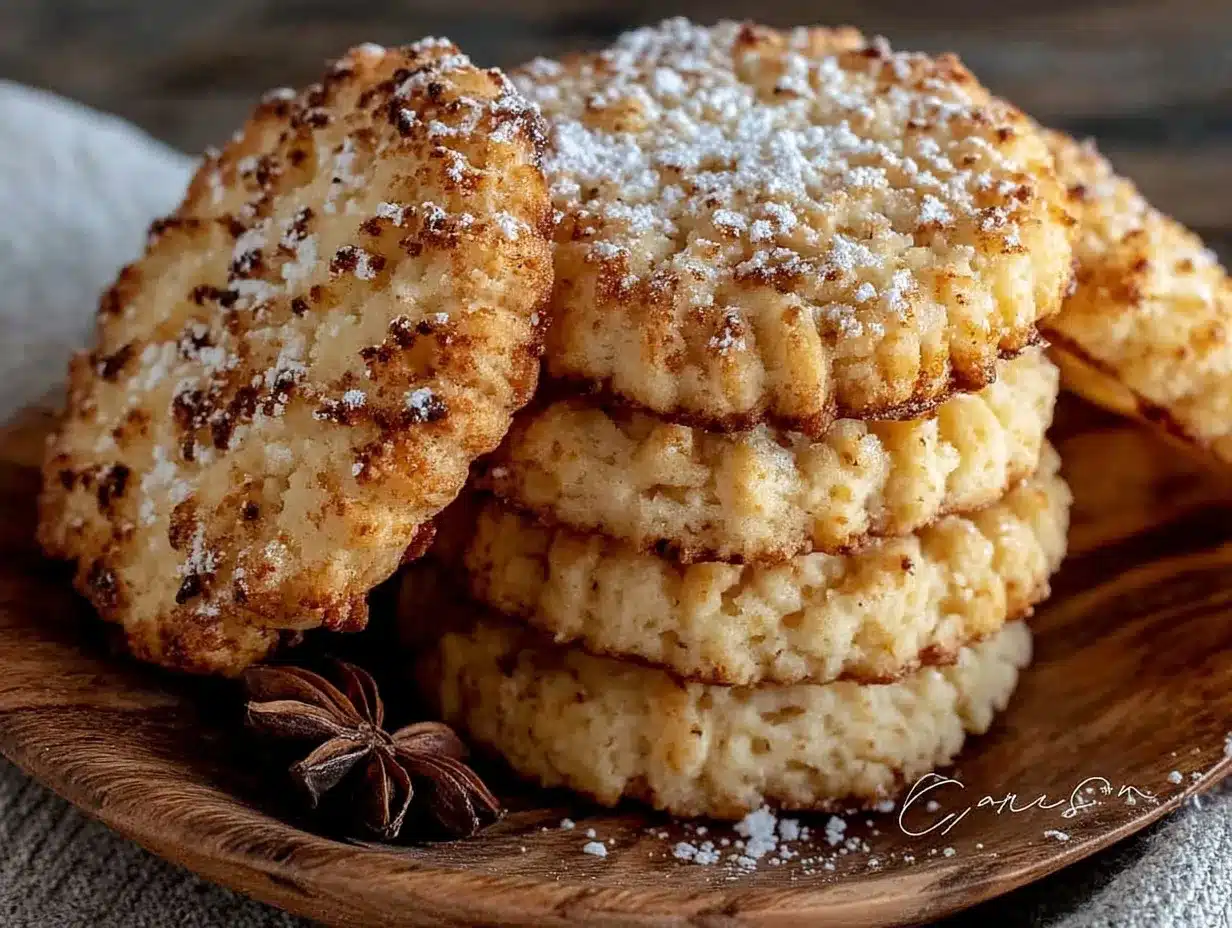
- Beat the eggs and sugars: In a large bowl, use an electric mixer to beat 3 large eggs (room temperature), 1 cup granulated sugar, and 1 cup powdered sugar together until the mixture is pale, thick, and fluffy—this usually takes about 5-7 minutes. You’ll know it’s ready when the batter ribbons off the beaters.
- Add flavorings: Mix in 2 teaspoons ground anise seed, 1 teaspoon almond extract (if using), and 1/4 teaspoon salt. Stir gently to combine without deflating the batter.
- Incorporate dry ingredients: In a separate bowl, sift together 3 cups all-purpose flour and 1 tablespoon powdered egg whites (optional). Gradually fold this into the wet mixture, about half a cup at a time, until a firm dough forms. The dough should be pliable but not sticky. If it’s too sticky, add a bit more flour; if too dry, add a teaspoon of water.
- Chill the dough: Wrap the dough in plastic wrap and refrigerate for at least 2 hours or overnight. This step is crucial as it helps the dough firm up, making it easier to roll and imprint.
- Roll out the dough: On a lightly floured surface, roll the dough to about 1/4 inch (6 mm) thickness. Keep it even for consistent baking and beautiful patterns.
- Stamp or mold the cookies: Press your Springerle molds or cookie stamps firmly into the dough. If you’re using a rolling pin with an embossed pattern, roll it gently over the dough. Cut cookies into desired shapes with a knife or cookie cutter, making sure the designs remain intact.
- Dry the cookies: This is a key step—place the cookies on parchment-lined baking sheets and let them air dry at room temperature for 12-24 hours. The surface should harden before baking. This drying process ensures the characteristic crisp top and soft bottom.
- Bake: Preheat your oven to 300°F (150°C). Bake the cookies for 20-25 minutes until the bottoms are lightly golden but the tops remain pale. Avoid overbaking to keep them tender inside.
- Cool completely: Transfer cookies to cooling racks. They’ll firm up more as they cool and develop that lovely chewiness inside.
Pro tip: Don’t skip the drying step! I learned that the hard way once, and the cookies didn’t hold their patterns as beautifully. Also, keep an eye on oven temperature—it’s better to bake low and slow for these delicate treats.
Cooking Tips & Techniques
Springerle cookies have their quirks, but once you get the hang of it, they’re quite forgiving. One key technique is the drying phase; it’s not just tradition—it’s what gives these cookies their signature texture and embossed detail. I usually set a timer and check them after 12 hours, but sometimes they need a full day, especially in humid kitchens.
Another tip is to avoid overworking the dough. The gluten development can toughen the cookies, so fold gently when adding flour. Also, keep your hands floured but not too much; too much flour can dry the dough out.
Common mistakes include baking at too high a temperature, causing the cookies to brown and lose their delicate flavor, or skipping the powdered egg whites, which can affect that springy texture. I once baked mine at 350°F (175°C) and regretted it—the cookies cracked and dried out.
Multitasking is your friend here. While the dough chills, prep your molds and line baking sheets. When drying the cookies, make sure the room is dry—if it’s too humid, set up a fan nearby (but not blowing directly) to help the surface firm up.
Consistency comes with practice. I keep notes on timing and moisture levels depending on the season, so I know exactly when to pull them from the oven for that perfect snap-yet-chewy bite.
Variations & Adaptations
If you want to switch things up with these delicious Springerle cookies, there are a few fun variations you can try. One of my favorites is swapping ground anise with fennel seeds for a milder licorice flavor—great if you’re not a big anise fan. You can also add a teaspoon of lemon zest to brighten the flavor for springtime treats.
For a gluten-free twist, try using a blend of almond flour and tapioca starch, but know the texture will be softer and less crisp. I tested this once, and while the flavor stayed true, the dough was a bit more fragile to work with (so handle carefully).
If you prefer a vegan version, replace eggs with an aquafaba mixture (3 tablespoons) and use powdered sugar without bone char. The texture shifts slightly, but you still get lovely patterns and that traditional anise flavor.
Finally, you can adapt the baking method by baking these cookies on a pizza stone for a crisper bottom or even try a convection oven setting for more even baking—just reduce the temperature by 25°F (about 15°C) to avoid overbrowning.
Serving & Storage Suggestions
Springerle cookies are best served at room temperature, letting their delicate anise flavor and tender texture shine through. They make a charming gift when stacked in a pretty tin, perfect for sharing during holidays or cozy gatherings.
Pair them with a hot cup of chai tea or a robust coffee to complement the licorice notes. For a festive spread, arrange them alongside spiced nuts and dried fruit for a nostalgic holiday vibe.
Store these cookies in an airtight container at room temperature for up to two weeks. They actually improve with a day or two of resting as the flavors meld beautifully. If you want to keep them longer, freeze them in layers separated by parchment paper for up to three months. To refresh after freezing, let them thaw fully before serving.
When reheating, avoid microwaving (it makes them rubbery). Instead, warm them gently in a low oven (250°F / 120°C) for 5-7 minutes to bring back that fresh-baked aroma and slight crispness.
Nutritional Information & Benefits
Each delicious Springerle cookie (about 30g) contains approximately 120 calories, with moderate amounts of fat and carbohydrates, making them a satisfying yet reasonable treat. The anise seed is more than just flavor—it’s known for its digestive benefits and soothing properties, which is a nice little bonus after a big meal.
This recipe is naturally free from artificial additives and can be adapted for gluten-free or vegan diets, making it accessible to many. The use of whole eggs provides protein, while the balanced sugar content means you get the sweet fix without going overboard.
From a wellness perspective, these cookies are a perfect occasional indulgence that brings comfort without guilt, especially when shared with loved ones during special moments.
Conclusion
In the end, these delicious Springerle cookies with traditional anise flavor are more than just a treat—they’re a little piece of history and heart you get to bake at home. Whether it’s your first time or you’re rekindling a family tradition, this recipe makes the process approachable and the results truly delightful.
I love how these cookies bring people together, sparking conversations and smiles with their timeless charm. Feel free to customize the flavor or patterns to suit your style—you know, make them your own.
Give this recipe a try, and don’t forget to share your baking stories or tweaks in the comments. I’m excited to hear how your Springerle cookies turn out and what memories they create in your kitchen. Happy baking!
FAQs About Delicious Springerle Cookies with Traditional Anise Flavor
What makes Springerle cookies different from regular cookies?
Springerle cookies are unique because of their embossed patterns made using special molds and their distinctive anise flavor. They also require a drying period before baking, which gives them a crisp top and soft bottom texture.
Can I use fresh anise instead of ground anise seed?
Fresh anise isn’t typically used in baking as the seeds provide concentrated flavor. It’s best to stick with ground anise seeds for consistent taste.
How long do I need to dry Springerle cookies before baking?
Drying time ranges from 12 to 24 hours, depending on humidity. The surface should feel dry and firm to the touch before baking to preserve the designs.
Can I freeze Springerle cookies after baking?
Yes, you can freeze baked Springerle cookies layered with parchment paper in an airtight container for up to three months. Thaw completely before serving.
What can I use if I don’t have Springerle molds?
You can use cookie stamps, rolling pins with embossed patterns, or even small cookie cutters. While the traditional molds give the best look, these alternatives still make charming cookies.
Pin This Recipe!
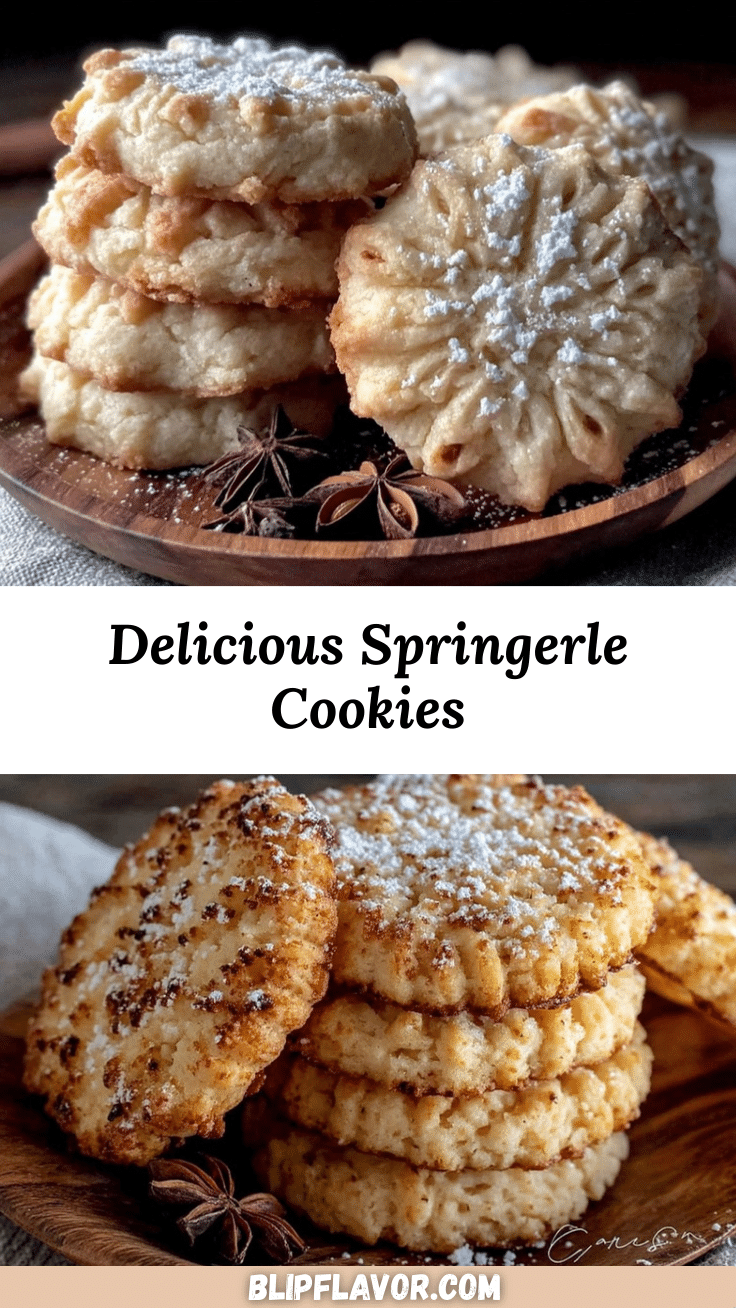
Delicious Springerle Cookies Recipe Easy Traditional Anise Flavor Treats
These traditional Springerle cookies feature a delicate anise flavor and embossed patterns, offering a nostalgic treat perfect for holidays and gatherings. They have crisp edges with a slightly chewy center and are easy to make with simple pantry ingredients.
- Prep Time: 20 minutes
- Cook Time: 25 minutes
- Total Time: 12 hours 45 minutes
- Yield: 24 cookies 1x
- Category: Dessert
- Cuisine: German
Ingredients
- 3 large eggs, room temperature
- 1 cup granulated sugar (200g)
- 1 cup powdered sugar (120g)
- 3 cups all-purpose flour (375g)
- 2 teaspoons ground anise seed
- 1 teaspoon almond extract (optional)
- 1/4 teaspoon salt
- 1 tablespoon powdered egg whites (optional)
Instructions
- Beat the eggs and sugars: In a large bowl, use an electric mixer to beat 3 large eggs (room temperature), 1 cup granulated sugar, and 1 cup powdered sugar together until the mixture is pale, thick, and fluffy—about 5-7 minutes.
- Add flavorings: Mix in 2 teaspoons ground anise seed, 1 teaspoon almond extract (if using), and 1/4 teaspoon salt. Stir gently to combine without deflating the batter.
- Incorporate dry ingredients: In a separate bowl, sift together 3 cups all-purpose flour and 1 tablespoon powdered egg whites (optional). Gradually fold this into the wet mixture, about half a cup at a time, until a firm dough forms. Adjust with flour or water if needed.
- Chill the dough: Wrap the dough in plastic wrap and refrigerate for at least 2 hours or overnight to firm up.
- Roll out the dough: On a lightly floured surface, roll the dough to about 1/4 inch (6 mm) thickness evenly.
- Stamp or mold the cookies: Press Springerle molds or cookie stamps firmly into the dough. Cut into desired shapes, preserving the patterns.
- Dry the cookies: Place cookies on parchment-lined baking sheets and air dry at room temperature for 12-24 hours until the surface is hard.
- Bake: Preheat oven to 300°F (150°C). Bake cookies for 20-25 minutes until bottoms are lightly golden but tops remain pale.
- Cool completely: Transfer cookies to cooling racks to firm up and develop chewiness.
Notes
Do not skip the drying step (12-24 hours) to preserve the embossed patterns and achieve the signature texture. Bake at a low temperature (300°F) to avoid browning and maintain tenderness. Keep molds lightly dusted with cornstarch to prevent sticking. For gluten-free, use almond flour and tapioca starch but expect a softer texture. For vegan, replace eggs with 3 tablespoons aquafaba and use powdered sugar without bone char.
Nutrition
- Serving Size: 1 cookie (about 30g)
- Calories: 120
- Sugar: 15
- Sodium: 40
- Fat: 2
- Saturated Fat: 0.2
- Carbohydrates: 25
- Fiber: 0.5
- Protein: 2
Keywords: Springerle cookies, anise cookies, traditional German cookies, holiday cookies, embossed cookies, anise flavor, easy Springerle recipe