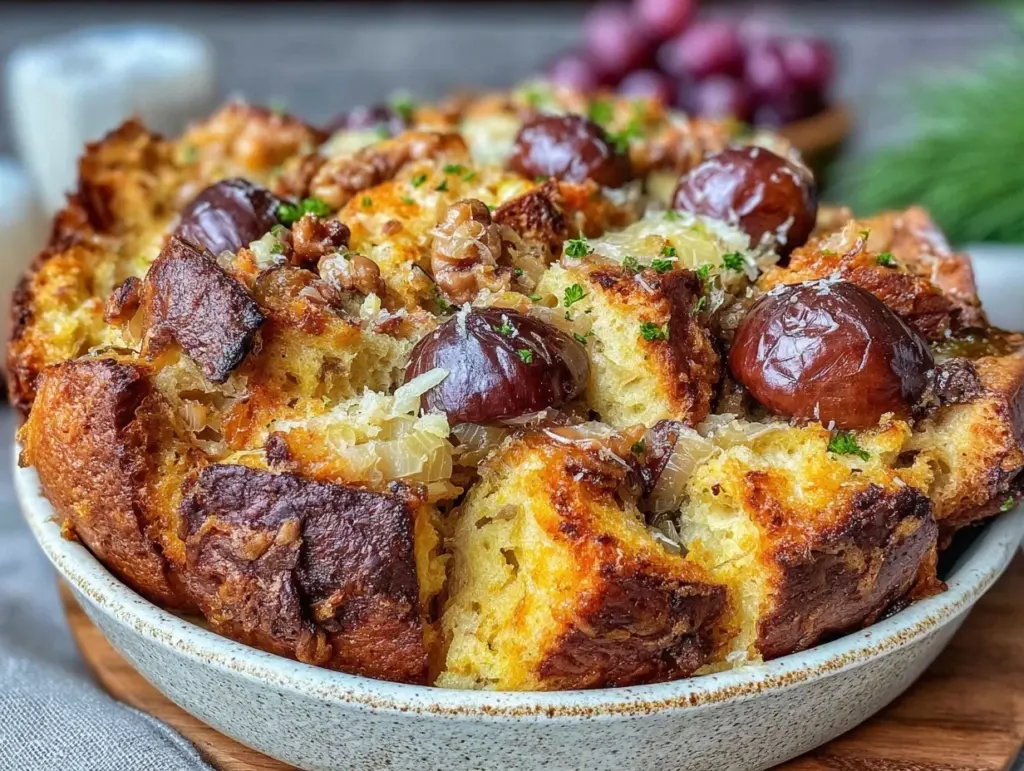
Picture this: the kitchen fills with the earthy aroma of roasted chestnuts, sweet caramelized onions, and toasted bread, mingling with sage and thyme. It’s the kind of scent that makes you close your eyes and just breathe it in (and maybe find yourself lingering a little longer by the oven than you meant to). The first time I made this savory chestnut stuffing, I was instantly pulled back to my grandmother’s cozy kitchen—where laughter and the clatter of pans were as much a part of Thanksgiving as the turkey itself. I can still remember her hands, quick and sure, tossing together handfuls of herbs and cubes of golden bread, chestnuts scattered in with a wink—“for luck,” she’d say.
Honestly, stuffing is one of those side dishes that can easily steal the spotlight. At least, that’s what happened when I brought this to our family’s holiday table for the first time. My family couldn’t stop sneaking bites straight from the casserole dish before dinner even started (and who can blame them?). There’s just something about the combination of sweet, nutty chestnuts and savory, herby bread that feels like a warm hug you didn’t even know you needed.
I stumbled on this recipe during a rainy weekend years ago, trying to recreate a stuffing I’d had at a tiny bistro in Paris. Let’s face it—most stuffings are fine, but rarely memorable. This savory chestnut stuffing recipe, though? It’s become a staple at every gathering, from Thanksgiving feasts to simple Sunday roasts. It’s dangerously easy, deeply flavorful, and pure, nostalgic comfort food. It’s perfect for potlucks, a sweet treat for your kids, or just to brighten up your Pinterest board with something a little different.
After testing (and re-testing) this recipe more times than I care to admit—in the name of research, of course—it’s earned a permanent place in my holiday spread. If you’re searching for a savory chestnut stuffing that feels like a special occasion but tastes like home, you’re going to want to bookmark this one.
Why You’ll Love This Savory Chestnut Stuffing Recipe
Let me tell you, after years of making holiday stuffings (and more than a few soggy disasters), this savory chestnut stuffing recipe stands out for all the right reasons. Here’s why it’s a favorite with both my family and friends:
- Quick & Easy: Comes together in about 30 minutes of prep—no complicated techniques, just honest, hands-on cooking. Perfect for busy holiday mornings or last-minute gatherings.
- Simple Ingredients: No chasing down specialty items. Most of what you need is likely in your pantry or fridge already, and chestnuts are easy to find in most grocery stores during fall and winter.
- Perfect for Holidays & Beyond: This stuffing shines at Thanksgiving, Christmas, or any cozy dinner. It’s also fantastic alongside roast chicken or even as a vegetarian main with a salad.
- Crowd-Pleaser: The sweet, nutty chestnuts and deep, savory herbs make this irresistible to kids and adults alike. I’ve seen even the pickiest eaters ask for seconds—no joke.
- Unbelievably Delicious: The caramelized onions bring a mellow sweetness, while the fresh herbs and rustic bread give every forkful texture and depth. It’s comfort food at its best.
What really makes this stuffing recipe different? It’s all about the layering of flavor. Caramelizing the onions low and slow, using a mix of fresh sage, thyme, and parsley, and folding in roasted chestnuts (which I chop just rough enough for a little crunch) gives this a complexity you just don’t get from the boxed stuff. I also toast the bread cubes before mixing—trust me, it makes all the difference for texture.
This is the recipe you’ll want when you need something dependable but special. It’s not just another stuffing. It’s the one that makes people pause, close their eyes, and savor that first bite. It’s for when you want to create memories, not just fill bellies. And maybe, like me, you’ll find yourself making it “just because”—no holiday required.
What Ingredients You Will Need
This savory chestnut stuffing recipe uses simple, wholesome ingredients to deliver bold flavor and that classic, comforting texture. Most elements are pantry staples, and a few thoughtful swaps mean you can adapt it for almost any gathering or dietary need.
- Bread: About 1 pound (450g) crusty bread, cut into 1-inch (2.5cm) cubes (day-old sourdough, rustic white, or French bread all work great. For gluten-free, use your favorite GF loaf.)
- Cooked Chestnuts: 1 1/2 cups (200g) peeled, roasted chestnuts, coarsely chopped (vacuum-packed or jarred chestnuts save time—Trader Joe’s is my go-to.)
- Onions: 2 large yellow onions (about 2 cups/300g), thinly sliced (for deep, sweet caramelized flavor)
- Celery: 3 stalks (1 cup/120g), diced (adds crunch and that classic savory note)
- Garlic: 3 cloves, minced (for a subtle aromatic kick)
- Butter: 6 tablespoons (85g) unsalted butter (for richness; sub olive oil for dairy-free)
- Fresh Herbs: 2 tablespoons each chopped fresh sage, thyme, and parsley (or 2 teaspoons dried each, though fresh really makes this pop)
- Eggs: 2 large eggs, beaten (binds everything together; use a vegan egg replacer if needed)
- Vegetable or Chicken Broth: 2 to 2 1/2 cups (480-600ml), low-sodium (adds moisture and flavor—go with veggie broth for a vegetarian version)
- Salt & Black Pepper: To taste (I start with 1 1/2 teaspoons kosher salt and 1/2 teaspoon freshly ground pepper, then adjust)
- Optional: 1/2 cup (60g) toasted chopped walnuts or pecans (for extra crunch), 1/2 cup (70g) dried cranberries (for a touch of sweetness), 1 tablespoon chopped rosemary (if you love a piney note)
Ingredient Tips: For the bread, I like to cube and toast it in advance—this keeps the stuffing from turning mushy. If you buy pre-cooked chestnuts, give them a quick rough chop so you get little nuggets in each bite. And when it comes to herbs, don’t be shy! Fresh sage and thyme are the soul of this recipe.
Substitutions: Swap the butter for olive oil for a vegan version. If you can’t find chestnuts, try hazelnuts or roughly chopped pecans for a different twist. Gluten-free bread works beautifully here too.
In summer, I’ve even swapped in fresh corn kernels for the chestnuts—so don’t be afraid to play around with what’s in season!
Equipment Needed
- Large Mixing Bowl: For tossing together all the ingredients. A big salad bowl works in a pinch.
- Sharp Knife & Cutting Board: For chopping onions, celery, and chestnuts. I’ve used a serrated bread knife for the cubes—helps prevent squishing soft bread.
- 12-inch (30cm) Skillet or Sauté Pan: For caramelizing onions and sautéing veggies. Cast iron holds the heat well, but any heavy-bottomed pan will do.
- Baking Sheet: For toasting bread cubes. If you don’t have one, use a roasting pan or even your broiler tray.
- Whisk: For beating eggs and broth together. A fork will work if you’re in a hurry.
- 3-Quart (2.8L) Casserole Dish: For baking the stuffing. I’ve used both glass and ceramic—just grease it well to prevent sticking.
- Aluminum Foil: To cover the stuffing while baking. Parchment paper works in a pinch.
- Oven Mitts: Because, let’s be honest, holiday chaos means hot dishes everywhere.
If you’re short on specialty equipment, you can caramelize the onions and sauté the veggies in any large pot. For a crispy top, a broiler is handy but not essential—just uncover for the last 10 minutes of baking. I’ve made this in both a classic casserole dish and a disposable foil pan for easy cleanup—both work great!
Budget tip: Thrift stores often have sturdy casserole dishes and mixing bowls for a fraction of the price. Just give them a good scrub, and you’re good to go.
Preparation Method
- Prep the Bread: Preheat your oven to 350°F (175°C). Spread 1 lb (450g) bread cubes on a baking sheet and toast for 12-15 minutes, stirring once, until golden and dry. Let cool. (Tip: No need to oil—just dry toasting brings out the bread’s flavor and helps it absorb broth later.)
- Caramelize the Onions: In a large skillet over medium-low heat, melt 4 tablespoons (56g) butter. Add the sliced onions and cook, stirring every 5 minutes, for 20-25 minutes until deep golden and very soft. If they start to brown too quickly, lower the heat and add a splash of water. (You want sweet, jammy onions—not burnt ones. Patience pays off!)
- Sauté the Veggies: Add the celery and a pinch of salt to the onions. Increase heat to medium and cook another 5-7 minutes until celery is just tender. Stir in the garlic and cook 1 minute until fragrant. Remove from heat.
- Mix the Aromatics: In your large mixing bowl, toss together the toasted bread cubes, chopped chestnuts, sautéed veggies, fresh herbs, and (if using) nuts or dried cranberries. Give everything a gentle toss so the bread doesn’t break up too much.
- Prepare the Wet Ingredients: In a separate bowl, whisk together 2 cups (480ml) broth, 2 eggs, and the remaining 2 tablespoons (28g) melted butter. Season with 1 1/2 teaspoons kosher salt and 1/2 teaspoon pepper. (If you like a moister stuffing, use the full 2 1/2 cups/600ml broth.)
- Combine and Rest: Pour the egg-broth mixture evenly over the bread mixture, tossing as you go. Let sit for 10 minutes, gently turning once or twice, until most of the broth is absorbed but mixture is still moist. (It should feel damp but not soggy—add a bit more broth if it seems dry, or a handful more bread if too wet.)
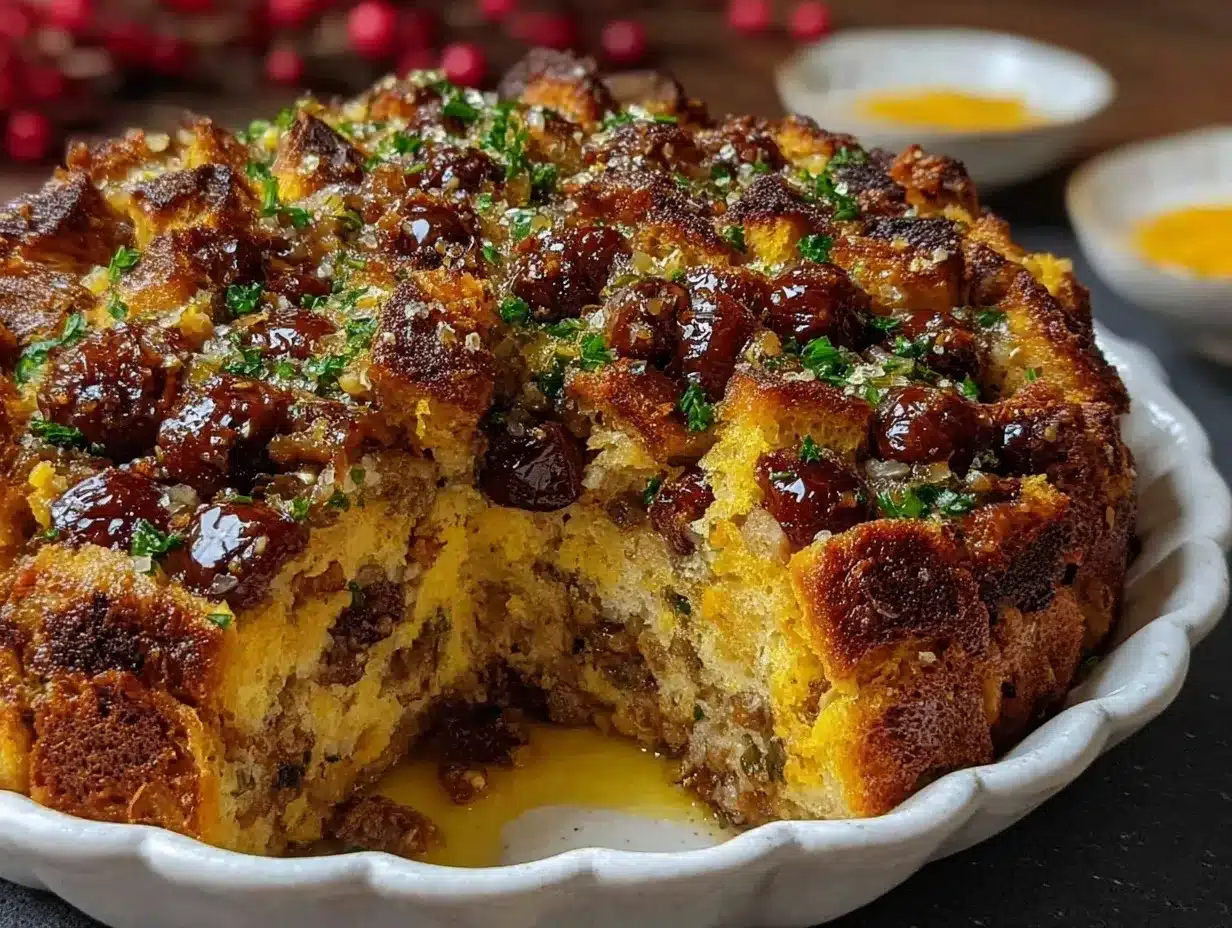
- Transfer and Bake: Grease your casserole dish with butter or oil. Spoon in the stuffing, pressing lightly to pack (but don’t squish!). Cover with foil and bake at 350°F (175°C) for 30 minutes.
- Crisp the Top: Remove foil and bake another 15-20 minutes, until the top is golden brown and crisp around the edges. (If you love extra crunch, broil for 2-3 minutes at the end—but watch closely!)
- Serve: Let rest 10 minutes before serving. The stuffing will firm up as it cools, making it easier to slice or scoop. Garnish with extra herbs if you’re feeling fancy.
Troubleshooting: If your stuffing is too dry, drizzle in extra warm broth before serving and fluff with a fork. If too wet, bake uncovered a little longer. And if you over-brown the top, a quick scrape with a fork usually saves the day (been there, done that!).
My biggest tip: taste a little before baking and adjust seasoning. Every bread is a bit different, and a little extra salt can make those chestnuts sing.
Cooking Tips & Techniques
After lots of trial and error (and a few stuffing mishaps), I’ve picked up some tricks that really make this savory chestnut stuffing recipe shine:
- Caramelize Low and Slow: The biggest mistake is rushing the onions. Take your time—let them get truly golden and sweet. It’s worth every minute.
- Toast the Bread Cubes: Don’t skip this step! Toasted bread holds its shape and soaks up flavor without turning to mush. If you use fresh bread, your stuffing might come out soggy (ask me how I know).
- Balance Moisture: Add broth gradually. The bread should feel moist but not soggy—different breads absorb differently, so go by feel as much as measurement.
- Taste as You Go: Season at each stage—onions, veggies, and final mix. Stuffing can taste flat if you wait to season at the end.
- Don’t Over-Mix: Gently fold everything together to keep the bread’s structure. Over-mixing makes it dense.
- Let It Rest: A 10-minute rest after baking helps everything set up and the flavors meld. Plus, it won’t burn your mouth (I’ve learned that the hard way!).
- Prep Ahead: You can toast bread and caramelize onions a day ahead. Just keep bread in a paper bag and onions in the fridge.
One time, I tried skipping the toasting step—big mistake. The stuffing ended up gluey, and not even gravy could rescue it. Also, if you don’t have enough fresh herbs, add a tiny splash of apple cider vinegar or lemon juice at the end to brighten things up. And if you want to multitask, toast your bread cubes while the onions caramelize. Efficiency is the name of the game during the holidays!
Most importantly: don’t stress if it isn’t perfect. The rustic, uneven bits are part of the charm. The stuffing will still taste amazing, and no one will remember if the cubes look a little wonky.
Variations & Adaptations
One of the best things about this savory chestnut stuffing recipe is how easy it is to make your own—whether you’re working around allergies, going plant-based, or just feeling creative.
- Gluten-Free: Use your favorite gluten-free bread. I’ve had great luck with Canyon Bakehouse or Schär. Just toast it a little longer, since GF bread sometimes holds moisture differently.
- Vegan: Swap the butter for olive oil or vegan butter, eggs for a flax “egg” (2 tbsp ground flax + 5 tbsp water, whisked and rested 5 minutes), and use vegetable broth. The flavor is still fantastic.
- Seasonal Add-Ins: Try adding sautéed mushrooms, diced apples, or dried cherries for a twist. In spring, fresh ramps or leeks are lovely instead of onions. In winter, I sometimes toss in a handful of roasted Brussels sprouts.
- Different Nuts: If chestnuts aren’t available, hazelnuts or pecans give great crunch and a similar nutty vibe.
- Make it a Meal: Stir in cooked crumbled sausage or lentils for a heartier, main-dish stuffing.
- Cooking Methods: This stuffing can be baked in a casserole for a crispy top, or cooked inside a turkey or chicken (though I like the crunchy edges best when baked separately).
Personally, I’ve added roasted fennel and a pinch of smoked paprika for a Mediterranean kick—it was a hit! Don’t be afraid to experiment based on what’s hanging out in your fridge. The stuffing is forgiving, and every version brings something new to the table.
Serving & Storage Suggestions
This savory chestnut stuffing tastes best served warm, fresh from the oven. I usually let it cool for about 10 minutes, then spoon it into a pretty serving dish and sprinkle with extra parsley or thyme for color. If you want to get a little fancy, garnish with a few whole roasted chestnuts on top.
It pairs beautifully with classic turkey, roast chicken, or even a simple green salad. For a vegetarian meal, serve alongside a creamy butternut squash soup or roasted root vegetables. A glass of dry white wine or sparkling cider on the side doesn’t hurt, either!
To store, cool the stuffing completely, then cover tightly and refrigerate for up to 4 days. For longer storage, pack into an airtight container and freeze for up to 1 month. (I’ve admittedly eaten it cold from the fridge more than once—still delicious!)
To reheat, bake at 350°F (175°C) covered with foil for 20-25 minutes, or until hot throughout. Sprinkle with a little extra broth if it seems dry. For a crisp top, uncover for the last 5-10 minutes. The flavors deepen after a day, so leftovers are never a bad thing!
Nutritional Information & Benefits
This savory chestnut stuffing recipe yields about 8 servings. Each serving contains roughly:
- Calories: 260
- Protein: 6g
- Fat: 9g
- Carbohydrates: 38g
- Fiber: 4g
- Sugar: 6g
Chestnuts are a wonderful source of vitamins C and B6, fiber, and minerals, and they’re lower in fat than most other nuts. The fresh herbs add antioxidants, and using whole-grain bread bumps up the fiber. This stuffing is naturally vegetarian, and can easily be made gluten-free or vegan with a couple of swaps. Allergens to watch for: gluten (bread), tree nuts (chestnuts), eggs (can be omitted or replaced), and dairy (butter).
From a wellness perspective, this recipe is hearty and satisfying but not heavy—perfect for a holiday treat without the food coma.
Conclusion
If you’re searching for a side that feels both nostalgic and a little bit special, this savory chestnut stuffing recipe is a must-try. It’s packed with flavor, easy to adapt, and (if you ask my family) just as tempting as the main course. I love how it brings people together—everyone reaching for seconds, swapping stories, and sneaking bites from the pan before dinner even starts.
Don’t be afraid to put your own twist on it, whether that means swapping in your favorite bread, tossing in extra herbs, or making it gluten-free. That’s the fun of cooking—making recipes your own! If you give this a try, I’d love to hear how it turns out. Leave a comment, snap a photo, or share your family’s tweaks. Recipes like this are meant to be passed down, adapted, and enjoyed for years to come.
Happy cooking, and may your stuffing always be golden, herby, and just a little bit rustic!
FAQs About Savory Chestnut Stuffing with Herbs and Caramelized Onion
Can I make this savory chestnut stuffing in advance?
Yes! You can assemble the stuffing (up to the baking step) a day ahead. Cover and refrigerate, then bake as directed, adding a few extra minutes if it’s cold from the fridge.
What if I can’t find chestnuts?
No worries—hazelnuts or pecans work well, or just add extra sautéed mushrooms for a different but tasty twist.
How do I keep my stuffing from getting soggy?
Toast the bread cubes well and add the broth gradually, stopping when the bread feels damp but not soaked. Every bread absorbs differently!
Is this savory chestnut stuffing recipe vegetarian?
Absolutely—just use vegetable broth. For a vegan version, swap butter and eggs for plant-based alternatives as mentioned above.
Can I freeze leftover stuffing?
Yes, the stuffing freezes well. Cool completely, pack into an airtight container, and freeze for up to a month. Reheat in the oven, covered, until hot and delicious again.
Pin This Recipe!
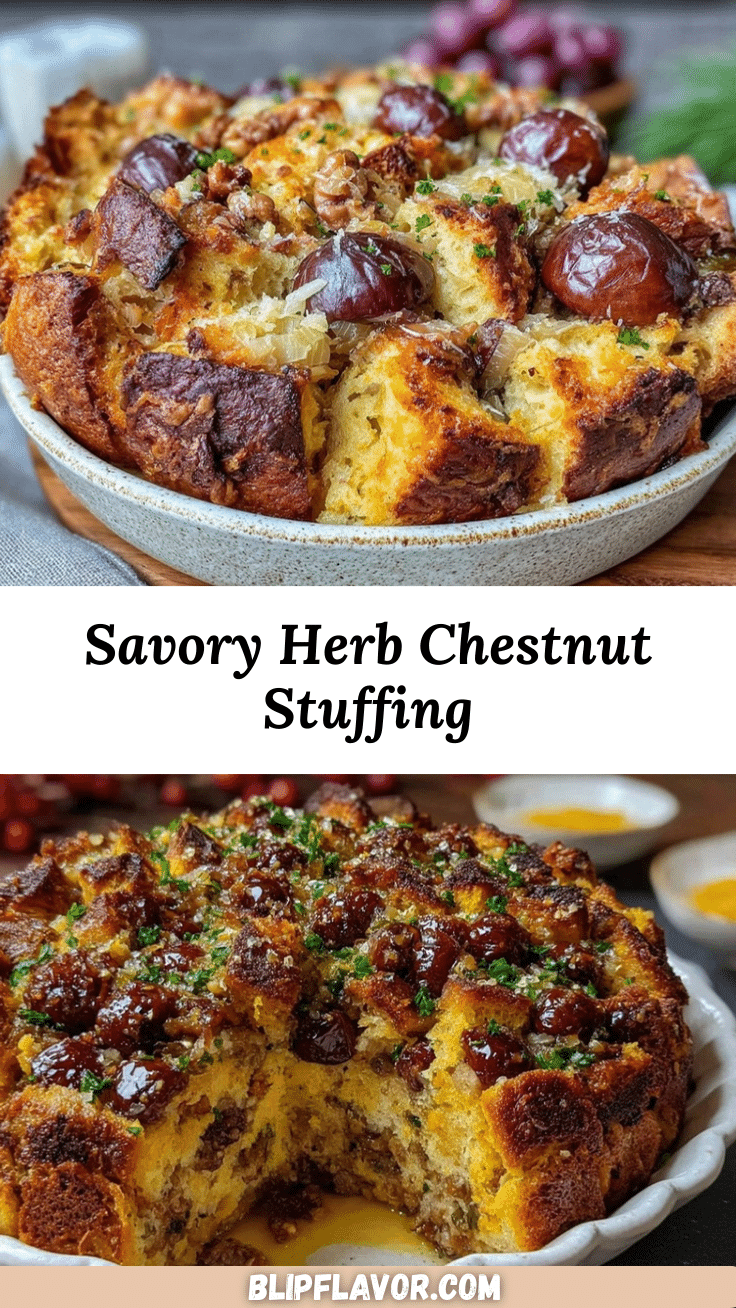
Savory Chestnut Stuffing

This easy homemade stuffing combines roasted chestnuts, caramelized onions, toasted bread, and fresh herbs for a deeply flavorful, nostalgic holiday side dish. Perfect for Thanksgiving, Christmas, or any cozy dinner, it’s a crowd-pleaser that’s simple to adapt for vegetarian, vegan, or gluten-free diets.
- Prep Time: 30 minutes
- Cook Time: 45 minutes
- Total Time: 1 hour 15 minutes
- Yield: 8 servings 1x
- Category: Side Dish
- Cuisine: American
Ingredients
- 1 lb (about 16 cups) crusty bread, cut into 1-inch cubes (day-old sourdough, rustic white, or French bread; use gluten-free bread if needed)
- 1 1/2 cups peeled, roasted chestnuts, coarsely chopped (vacuum-packed or jarred)
- 2 large yellow onions, thinly sliced (about 2 cups)
- 3 stalks celery, diced (about 1 cup)
- 3 cloves garlic, minced
- 6 tablespoons unsalted butter (substitute olive oil for dairy-free/vegan)
- 2 tablespoons chopped fresh sage
- 2 tablespoons chopped fresh thyme
- 2 tablespoons chopped fresh parsley
- 2 large eggs, beaten (use vegan egg replacer if needed)
- 2 to 2 1/2 cups low-sodium vegetable or chicken broth
- 1 1/2 teaspoons kosher salt, plus more to taste
- 1/2 teaspoon freshly ground black pepper, plus more to taste
- Optional: 1/2 cup toasted chopped walnuts or pecans
- Optional: 1/2 cup dried cranberries
- Optional: 1 tablespoon chopped rosemary
Instructions
- Preheat oven to 350°F (175°C). Spread bread cubes on a baking sheet and toast for 12-15 minutes, stirring once, until golden and dry. Let cool.
- In a large skillet over medium-low heat, melt 4 tablespoons butter. Add sliced onions and cook, stirring every 5 minutes, for 20-25 minutes until deep golden and very soft. Lower heat and add a splash of water if onions brown too quickly.
- Add celery and a pinch of salt to onions. Increase heat to medium and cook another 5-7 minutes until celery is just tender. Stir in garlic and cook 1 minute until fragrant. Remove from heat.
- In a large mixing bowl, toss together toasted bread cubes, chopped chestnuts, sautéed veggies, fresh herbs, and optional nuts or dried cranberries. Gently toss to avoid breaking up bread.
- In a separate bowl, whisk together 2 cups broth, 2 eggs, and remaining 2 tablespoons melted butter. Season with 1 1/2 teaspoons kosher salt and 1/2 teaspoon pepper. Use up to 2 1/2 cups broth for a moister stuffing.
- Pour egg-broth mixture evenly over bread mixture, tossing as you go. Let sit for 10 minutes, gently turning once or twice, until most broth is absorbed but mixture is still moist. Add more broth if dry, or more bread if too wet.
- Grease a 3-quart casserole dish with butter or oil. Spoon in stuffing, pressing lightly to pack (do not squish). Cover with foil and bake at 350°F for 30 minutes.
- Remove foil and bake another 15-20 minutes, until top is golden brown and crisp around edges. For extra crunch, broil for 2-3 minutes at the end, watching closely.
- Let rest 10 minutes before serving. Garnish with extra herbs if desired.
Notes
Toast bread cubes for best texture. Caramelize onions slowly for deep flavor. Adjust broth for desired moisture. For gluten-free or vegan, use appropriate bread and substitutes. Taste and adjust seasoning before baking. Prep bread and onions a day ahead for convenience.
Nutrition
- Serving Size: About 1 cup per serv
- Calories: 260
- Sugar: 6
- Sodium: 480
- Fat: 9
- Saturated Fat: 4
- Carbohydrates: 38
- Fiber: 4
- Protein: 6
Keywords: chestnut stuffing, holiday side dish, Thanksgiving stuffing, vegetarian stuffing, easy stuffing recipe, caramelized onion stuffing, homemade stuffing, gluten-free stuffing, vegan stuffing