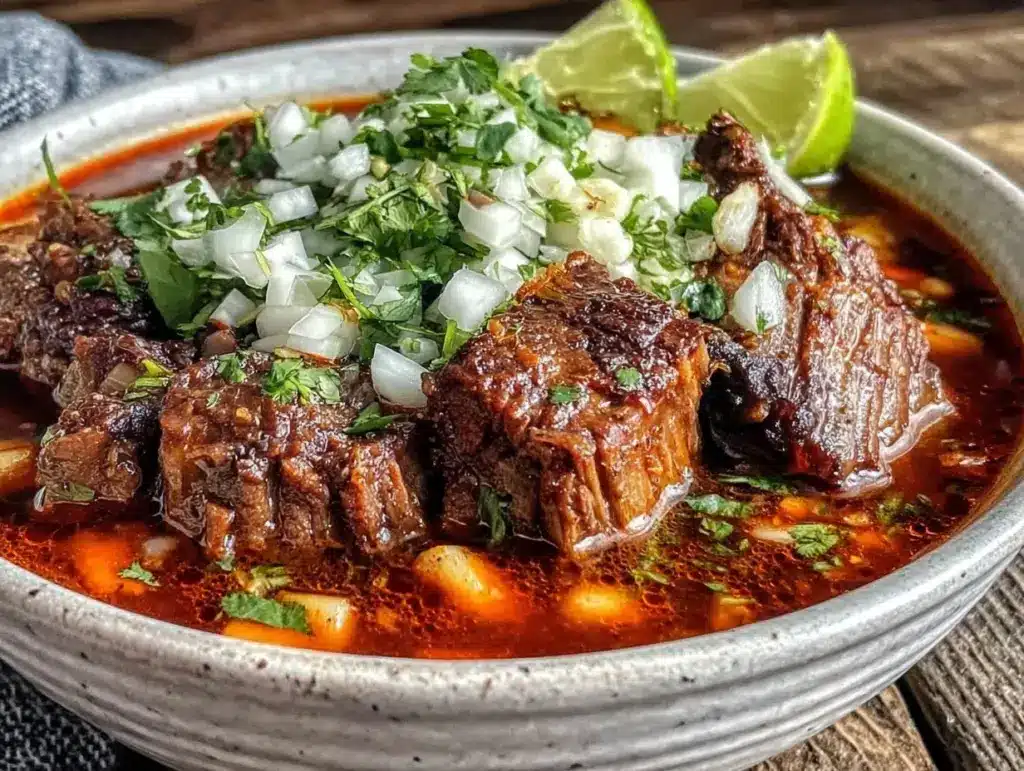
“You’re telling me this red soup is just pork and some chili? Nah, it can’t be that simple,” my cousin said, eyeing my pot suspiciously. That afternoon, the kitchen smelled like smoky firewood and sweet hominy, mingling with the scent of slow-simmered pork that had been bubbling away for hours. Honestly, I was half-expecting skepticism. Pozole rojo isn’t the kind of dish you whip up on a whim, but that day I found myself with a handful of dried chiles, a pack of pork shoulder, and a craving that wouldn’t quit.
The magic began almost by accident—what started as a quick fix for a chilly evening ended in a simmering pot of comfort that prompted friends to ask for the recipe again and again. The rich, deep red broth, kissed by toasted guajillo and ancho chiles, wrapped around tender, fall-apart pork and plump hominy kernels. Each spoonful felt like a warm hug, grounding me after a long day.
What’s funny is how this recipe became my go-to for cozy gatherings. It wasn’t perfect at first, but after a few tries—tweaking the chili blend just right, slow-cooking the pork until it shredded easily, and layering in fresh toppings—it settled into something truly authentic. Every time I serve this classic authentic pozole rojo with tender pork, there’s a quiet moment when everyone pauses, savoring the flavors before diving back in. That’s when I know I got it right.
There’s something about this stew that feels like a little secret passed down quietly—no fuss, just honest ingredients and time-tested tradition. It’s not flashy, but it’s soulfully satisfying. And honestly? That’s why it sticks with you.
Why You’ll Love This Classic Authentic Pozole Rojo Recipe
After testing this recipe multiple times, I can say it’s one of those dishes that delivers every single time—whether you’re cooking for yourself or a crowd. Here’s why this classic authentic pozole rojo recipe stands out:
- Quick & Easy: While pozole seems like a labor of love, this recipe comes together in about 2.5 hours, which is pretty manageable for a homemade stew that tastes like it simmered all day.
- Simple Ingredients: You likely have most of these staples in your pantry or local market: dried chiles, hominy, pork shoulder, and common aromatics like garlic and onion.
- Perfect for Gatherings: Pozole is the ultimate party stew—whether for a chilly winter night or a festive occasion, it’s always a crowd-pleaser.
- Crowd-Pleaser: Kids and adults alike love the mild heat balanced by the fresh crunch of radishes and cabbage toppings.
- Unbelievably Delicious: The combination of smoky chiles, tender pork, and hearty hominy creates a flavor and texture that just melts in your mouth.
What really makes this pozole rojo different? It’s the chili blend—roasting and soaking guajillo and ancho chiles before blending them into a smooth sauce creates a depth that’s next-level. Plus, gently simmering the pork shoulder until tender ensures every bite is juicy and flavorful, not tough or dry.
This isn’t just another stew recipe; it’s the kind of comforting meal that makes you close your eyes and savor the moment. It’s hearty, wholesome, and wrapped in tradition, yet simple enough for a weeknight meal. You might find yourself coming back to it again and again, just like I did.
What Ingredients You Will Need for Classic Authentic Pozole Rojo
This recipe uses straightforward, wholesome ingredients to build a bold, satisfying stew without fuss. Most are pantry staples or easy to find at your local market. Here’s what you’ll want to have on hand:
- Pork shoulder (2 to 3 lbs / 900 to 1350 g), cut into chunks – Look for well-marbled meat; it breaks down beautifully when simmered.
- Hominy (2 cans, drained, about 28 oz / 800 g total) – Essential for that classic pozole texture; canned works fine, but you can use dried soaked overnight if you prefer.
- Dried guajillo chiles (4 to 5 chiles) – These give a fruity, smoky warmth. I like La Costeña brand for consistent quality.
- Dried ancho chiles (2 chiles) – Adds mild heat and a deep, slightly sweet flavor.
- White onion (1 medium, quartered) – For the broth base.
- Garlic cloves (4 to 5, peeled) – Roasted or raw, they add essential aroma.
- Bay leaves (2) – For subtle herbal notes.
- Ground cumin (1 tsp) – Adds earthiness.
- Oregano (preferably Mexican oregano, 1 tsp) – For authentic flavor.
- Salt and black pepper – To taste.
- Vegetable oil (2 tbsp) – For toasting chiles and sautéing.
- Fresh garnishes (optional but recommended):
- Shredded cabbage or lettuce
- Thinly sliced radishes
- Chopped white onion
- Fresh lime wedges
- Dried oregano
- Avocado slices
- Tortilla chips or tostadas
For substitutions, you can swap pork shoulder with pork butt or even chicken thighs for a lighter stew. If you want a gluten-free or lower-carb twist, hominy is naturally gluten-free, so no worries there.
Equipment Needed
- Large heavy-bottomed pot or Dutch oven: A wide pot with a lid is perfect for slow simmering. I’ve found my 6-quart Dutch oven works wonders, keeping heat even and helping the pork get tender without drying out.
- Blender or food processor: To puree the soaked chiles into a smooth sauce. A high-speed blender like a Vitamix is great, but a regular blender or even an immersion blender works fine.
- Strainer or fine mesh sieve: For removing chile skins and seeds after soaking and blending, ensuring a silky broth without gritty bits.
- Wooden spoon or slotted spoon: For stirring and skimming foam during cooking.
- Knife and cutting board: For prepping pork and garnishes.
- Optional: A slow cooker can also be used if you prefer a hands-off approach, though the flavor from stovetop is more intense.
Pro tip: Keep your knives sharp and your blender lid secure—pureeing hot chile can be a bit tricky if you’re not careful! Also, cleaning your Dutch oven right after use keeps it in great shape for years of hearty meals.
Preparation Method for Classic Authentic Pozole Rojo with Tender Pork
- Toast the dried chiles (10 minutes): Remove stems and seeds from guajillo and ancho chiles. Heat a dry skillet over medium heat and toast chiles for about 1-2 minutes per side until fragrant but not burnt. This step brings out smoky flavors. Transfer chiles to a bowl and cover with hot water. Let soak for 20-30 minutes until softened.
- Prepare the pork and aromatics (10 minutes): While chiles soak, rinse pork shoulder chunks under cold water and pat dry. In your large pot, place pork, quartered onion, garlic cloves, bay leaves, and cover with 10 cups (2.4 liters) cold water. Bring to a boil over medium-high heat. Skim off any foam or impurities that rise to the surface for a clear broth.
- Simmer the pork (1.5 to 2 hours): Reduce heat to low, cover partially, and let the pork simmer gently until tender enough to shred easily with a fork. This slow simmer is key to tender pork and rich broth. Check occasionally and add water if needed.
- Make the chile sauce (10 minutes): Drain soaked chiles, reserving soaking liquid. In a blender, combine chiles, 1 cup (240 ml) of the soaking liquid, cumin, oregano, and a pinch of salt. Blend until smooth. Strain the sauce through a fine sieve to remove skins and seeds, pressing with a spoon.
- Cook the chile sauce (10 minutes): In a skillet, heat 2 tablespoons vegetable oil over medium heat. Pour in chile sauce and cook, stirring frequently, for about 5-7 minutes until sauce thickens and darkens slightly. This step deepens the flavor and mellows the raw chile taste.
- Add sauce and hominy to the pork broth (15 minutes): Once pork is tender, remove onion, garlic, and bay leaves from the pot. Add the cooked chile sauce and drained hominy to the broth. Stir gently and simmer uncovered for another 15 minutes to allow flavors to marry and hominy to heat through.
- Final seasoning and shredding (5 minutes): Remove pork chunks, shred with two forks, and return to the pot. Taste and adjust salt and pepper as needed. Simmer an additional 5 minutes if desired for flavor melding.
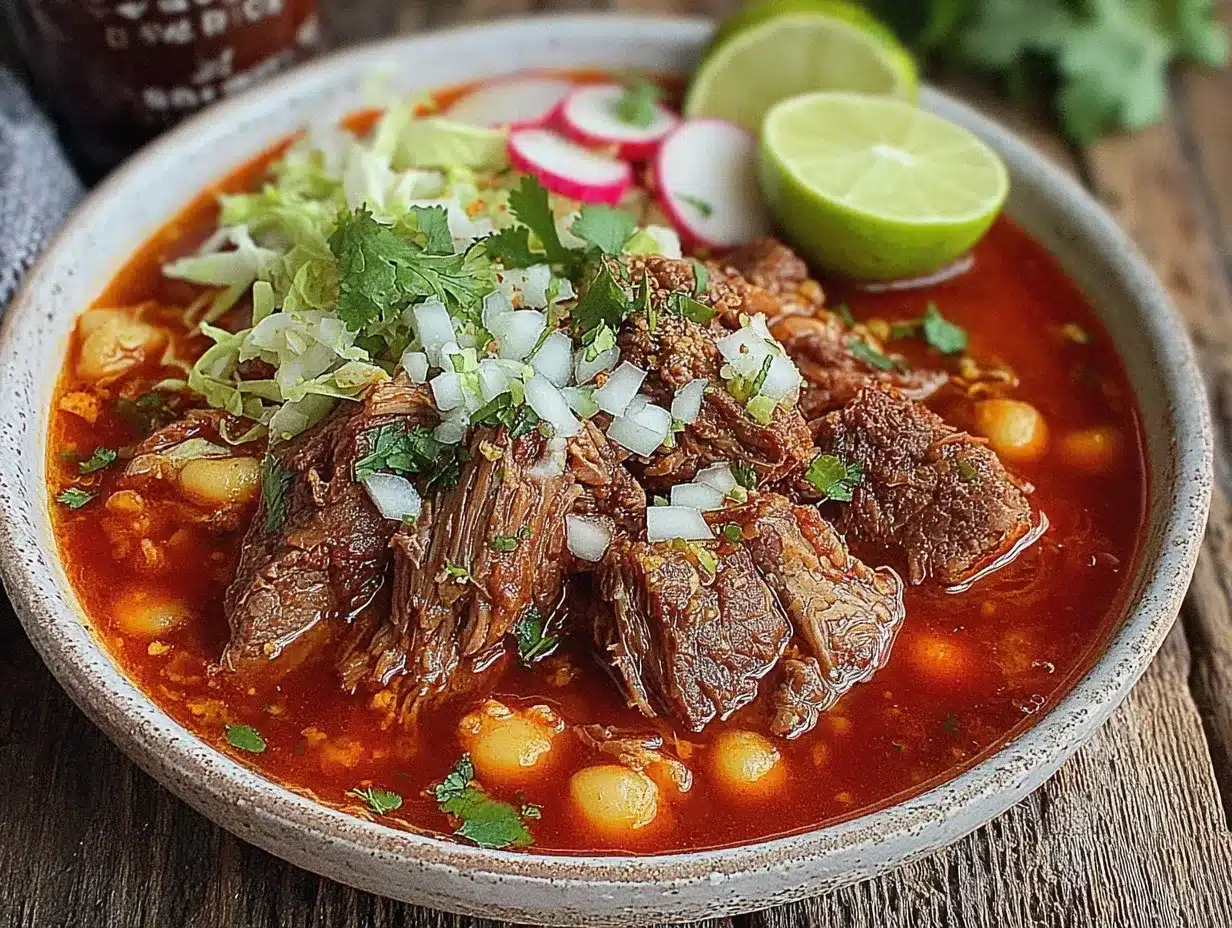
- Serve: Ladle pozole rojo into bowls and offer traditional garnishes—shredded cabbage, sliced radishes, chopped onions, lime wedges, and oregano. Serve with warm tortillas or crispy tostadas for a full experience.
If the broth tastes a bit flat, a splash of fresh lime juice brightens it right up. And if your pork isn’t shredding as tenderly as you like, sometimes an extra 15 minutes of gentle simmer can work wonders.
Cooking Tips & Techniques for Perfect Pozole Rojo
Getting pozole rojo just right is all about balance and patience. Here are some tips I’ve learned the hard way:
- Don’t rush the pork simmering: The tender pork shoulder takes time but rewards you with melt-in-your-mouth pieces that soak up that rich broth.
- Toast chiles gently: Burnt chiles turn bitter, so keep the heat moderate and flip often.
- Strain the chile sauce thoroughly: Bits of skin or seeds can make the broth gritty, which is a bummer in an otherwise smooth stew.
- Skim the broth: Skimming foam during the pork simmer keeps the broth clear and appealing.
- Layer flavors: Adding the cooked chile sauce after the pork broth is done lets the flavors stay vibrant instead of overcooking the chiles.
- Multitask: Soak your chiles while the pork starts simmering to save time without cutting corners.
- Fresh garnishes matter: The crisp radishes and tangy lime are not just decoration — they cut through the richness and add textural contrast.
One time, I forget to strain the chile sauce well, and let me tell you, the little specks made the broth feel a bit grainy. Lesson learned! Also, using a heavy pot with a lid helps keep the heat steady for slow cooking. If you’re pressed for time, pressure cooking the pork is an option, but traditional slow simmering has a charm all its own.
Variations & Adaptations
Classic pozole rojo is deeply satisfying, but it can be tweaked to suit different tastes and dietary needs. Here are a few variations I’ve enjoyed:
- Chicken Pozole Rojo: Swap pork for bone-in chicken thighs or drumsticks. Simmer until tender, then shred. The broth is lighter but still flavorful.
- Vegetarian Pozole: Skip the meat and use vegetable broth. Add extra hominy, mushrooms, and hearty beans like black or pinto for protein.
- Spice Level Adjustments: If you like it hotter, add a few de-seeded chipotle chiles or a pinch of cayenne to the chile sauce. For milder, reduce the chiles or use just guajillo.
- Slow Cooker Method: Brown pork shoulder, then transfer to a slow cooker with chiles and aromatics. Cook on low 6-8 hours until pork is tender, then add hominy near the end.
- Hominy Variations: Use fresh hominy if you can find it at specialty markets for a slightly different texture and sweetness.
I once made a batch with smoked paprika added to the chile sauce for an extra smoky twist that friends loved. Don’t be afraid to experiment with your favorite chili powders or fresh herbs to make the recipe your own.
Serving & Storage Suggestions
Pozole rojo is best served hot, straight from the pot, with plenty of fresh garnishes on the side. A sprinkle of shredded cabbage or lettuce adds crunch, while the acidity from lime wedges brightens the rich stew.
It pairs wonderfully with warm corn tortillas or crispy tostadas for scooping. For something a bit different, try serving alongside a simple Mexican rice or refried beans to round out the meal.
Leftovers store beautifully in the refrigerator for up to 3 days and freeze well for up to 3 months. When reheating, add a splash of water or broth to loosen the stew and gently warm on the stove—avoid boiling to keep the pork tender.
Flavors tend to deepen after a day or two, so sometimes leftovers taste even better than the first serving. Just be sure to add fresh garnishes when serving to keep the texture lively.
Nutritional Information & Benefits
This classic pozole rojo recipe is a balanced meal rich in protein, fiber, and vitamins. Here’s a rough estimate per serving (makes about 6 servings):
| Calories | 350-400 kcal |
|---|---|
| Protein | 30 g |
| Carbohydrates | 35 g |
| Fat | 10-15 g |
| Fiber | 6-8 g |
Hominy provides a good source of dietary fiber and essential minerals like magnesium and phosphorus. Pork shoulder contributes high-quality protein and B vitamins. The dried chiles offer antioxidants and boost metabolism slightly.
This recipe is naturally gluten-free and can be made dairy-free by skipping cheese toppings or sour cream. It’s a wholesome comfort food that fits well into many balanced diet plans.
Conclusion
Classic authentic pozole rojo with tender pork isn’t just a recipe; it’s a bowl full of stories, traditions, and warm memories. Whether you’re feeding a family or just craving something honest and satisfying, this stew hits all the right notes. The simplicity of ingredients paired with slow-cooked richness makes every spoonful feel like a small celebration.
Feel free to make it your own—adjust the spice, swap proteins, or add your favorite garnishes. It’s a recipe that welcomes creativity without losing its heart.
Trust me, once you try this pozole rojo, it will become a staple in your kitchen, just like it did in mine. I’d love to hear how your batch turns out or what variations you try—don’t be shy to share your stories!
Frequently Asked Questions about Classic Pozole Rojo
What is the difference between pozole rojo and pozole blanco?
Pozole rojo uses a red chili sauce made from dried chiles like guajillo and ancho, giving it a rich, smoky flavor and red color. Pozole blanco is a clear broth without the chili sauce, often seasoned more simply.
Can I make pozole rojo in a slow cooker?
Yes! Brown the pork first for extra flavor, then cook with aromatics and soaked chiles on low for 6-8 hours. Add hominy in the last 30 minutes.
What cut of pork is best for pozole?
Pork shoulder or pork butt is ideal because it has enough fat and connective tissue to become tender and flavorful when slow cooked.
Is canned hominy okay to use?
Absolutely. Canned hominy is convenient and works well for pozole. Just drain and rinse before adding. If you want a chewier texture, soak dried hominy overnight instead.
What garnishes go best with pozole rojo?
Traditional toppings include shredded cabbage or lettuce, sliced radishes, chopped onion, fresh lime wedges, oregano, and avocado. Tortilla chips or tostadas are perfect for scooping.
For a cozy brunch twist, you might enjoy pairing this stew with fluffy lemon ricotta pancakes or a fresh spring garden vegetable frittata for a full meal experience.
Pin This Recipe!

Classic Authentic Pozole Rojo Recipe Easy Homemade Tender Pork Stew

A rich and smoky red pork stew made with toasted guajillo and ancho chiles, tender pork shoulder, and hearty hominy, perfect for cozy gatherings and traditional Mexican comfort food.
- Prep Time: 20 minutes
- Cook Time: 2 hours 30 minutes
- Total Time: 2 hours 50 minutes
- Yield: 6 servings 1x
- Category: Main Course
- Cuisine: Mexican
Ingredients
- 2 to 3 lbs pork shoulder, cut into chunks
- 2 cans hominy (about 28 oz total), drained
- 4 to 5 dried guajillo chiles
- 2 dried ancho chiles
- 1 medium white onion, quartered
- 4 to 5 garlic cloves, peeled
- 2 bay leaves
- 1 tsp ground cumin
- 1 tsp oregano (preferably Mexican oregano)
- Salt and black pepper to taste
- 2 tbsp vegetable oil
- Optional fresh garnishes: shredded cabbage or lettuce, thinly sliced radishes, chopped white onion, fresh lime wedges, dried oregano, avocado slices, tortilla chips or tostadas
Instructions
- Remove stems and seeds from guajillo and ancho chiles. Toast chiles in a dry skillet over medium heat for 1-2 minutes per side until fragrant but not burnt. Transfer to a bowl and cover with hot water. Soak for 20-30 minutes until softened.
- Rinse pork shoulder chunks under cold water and pat dry. In a large heavy-bottomed pot or Dutch oven, place pork, quartered onion, garlic cloves, bay leaves, and cover with 10 cups (2.4 liters) cold water. Bring to a boil over medium-high heat. Skim off any foam or impurities.
- Reduce heat to low, cover partially, and simmer gently for 1.5 to 2 hours until pork is tender and shreds easily. Add water if needed during simmering.
- Drain soaked chiles, reserving soaking liquid. In a blender, combine chiles, 1 cup (240 ml) soaking liquid, cumin, oregano, and a pinch of salt. Blend until smooth. Strain sauce through a fine mesh sieve to remove skins and seeds.
- Heat 2 tablespoons vegetable oil in a skillet over medium heat. Cook chile sauce, stirring frequently, for 5-7 minutes until thickened and darkened slightly.
- Remove onion, garlic, and bay leaves from pork broth. Add chile sauce and drained hominy to the pot. Stir gently and simmer uncovered for 15 minutes to blend flavors and heat hominy.
- Remove pork chunks, shred with two forks, and return to the pot. Taste and adjust salt and pepper as needed. Simmer an additional 5 minutes if desired.
- Serve hot with traditional garnishes such as shredded cabbage, sliced radishes, chopped onions, lime wedges, oregano, avocado slices, and warm tortillas or tostadas.
Notes
Toast chiles gently to avoid bitterness. Skim foam during pork simmering for a clear broth. Strain chile sauce thoroughly to avoid gritty texture. If pork is not tender enough, simmer an extra 15 minutes. A splash of fresh lime juice brightens the broth. Leftovers store well refrigerated up to 3 days or frozen up to 3 months. Reheat gently with added water or broth.
Nutrition
- Serving Size: About 1 bowl (approx
- Calories: 375
- Sugar: 3
- Sodium: 600
- Fat: 12
- Saturated Fat: 4
- Carbohydrates: 35
- Fiber: 7
- Protein: 30
Keywords: pozole rojo, pork stew, Mexican stew, hominy, guajillo chiles, ancho chiles, traditional Mexican recipe, slow simmer, comfort food